
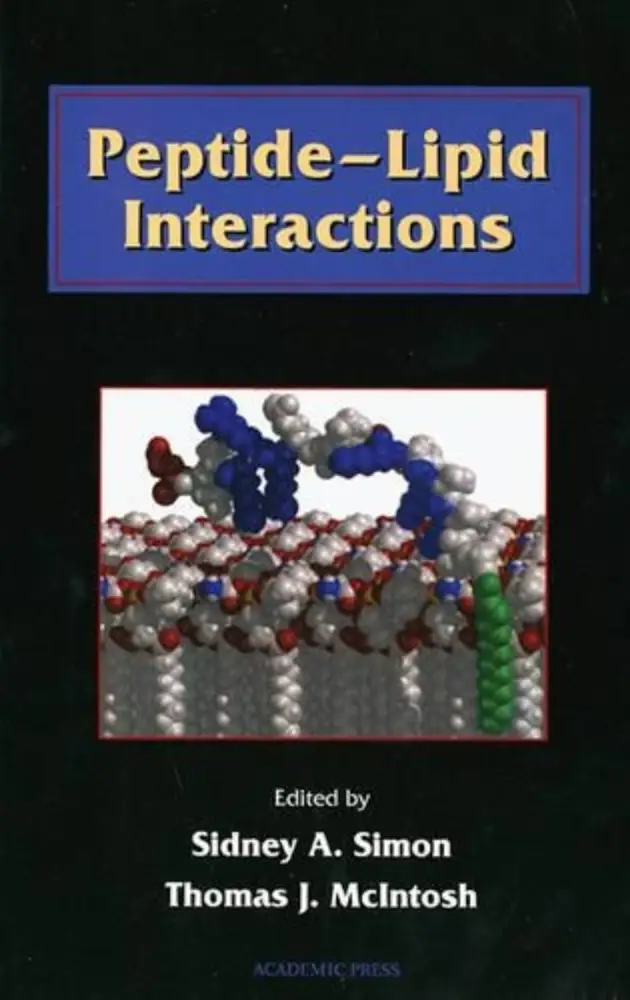


Peptide–Lipid Interactions (Current Topics in Membranes, Vol. 52)
Peptide–Lipid Interactions (Current Topics in Membranes, Vol. 52) is a specialized scientific volume that explores the complex and dynamic relationships between peptides and lipid membranes. As part of the well-regarded Current Topics in Membranes series, this book provides an in-depth examination of how peptides interact with biological membranes, an area of study that is crucial for understanding fundamental cellular processes as well as the development of therapeutic agents.
Biological membranes are primarily composed of lipid bilayers that serve as barriers and functional platforms for cellular activities. Peptides, which are short chains of amino acids, often interact with these membranes in ways that influence their structure, stability, and function. The book begins by introducing the basic principles of membrane structure and peptide chemistry, setting the stage for a detailed exploration of their interactions. It highlights how the amphipathic nature of many peptides—containing both hydrophilic and hydrophobic regions—enables them to associate with lipid bilayers.
A Peptide–Lipid Interactions central theme of the book is the mechanism by which peptides bind to and penetrate membranes. Different models are discussed, such as the barrel-stave, toroidal pore, and carpet mechanisms, which describe how peptides can disrupt or integrate into lipid bilayers. These mechanisms are particularly relevant for antimicrobial peptides, which exert their effects by compromising the integrity of microbial membranes. Understanding these processes is essential for the design of new antibiotics, especially in the face of increasing antimicrobial resistance.
The volume also explores the role of peptide–lipid interactions in cellular signaling and membrane protein function. Many peptides act as signaling molecules or hormones that interact with membrane receptors, triggering cascades of biochemical events داخل the cell. Additionally, membrane-active peptides can influence membrane curvature, fluidity, and phase behavior, thereby affecting processes such as vesicle formation, fusion, and transport.
Advanced experimental techniques used to study peptide–lipid interactions are another key focus of the book. Methods such as nuclear magnetic resonance (NMR) spectroscopy, fluorescence spectroscopy, X-ray diffraction, and electron microscopy are discussed in detail. These techniques allow researchers to observe structural and dynamic aspects of peptide–membrane interactions at molecular resolution. The integration of experimental and computational approaches provides a comprehensive understanding of these complex systems.
The book also addresses the thermodynamics and kinetics of peptide binding to membranes. Peptide–Lipid Interactions Factors such as peptide concentration, lipid composition, temperature, and pH are examined for their influence on interaction dynamics. This quantitative perspective helps in predicting how peptides will behave under different physiological conditions and in designing peptides with specific properties.
In addition to biological significance, the volume highlights practical applications of peptide–lipid interactions. These include drug delivery systems, where peptides are used to facilitate the transport of therapeutic molecules across cell membranes, and the development of biosensors and nanomaterials. Peptide–Lipid Interactions The ability to manipulate membrane interactions opens new possibilities in biotechnology and medicine.
As a scholarly resource, Peptide–Lipid Interactions (Current Topics in Membranes, Vol. 52) is intended for researchers, postgraduate students, and professionals in biochemistry, biophysics, molecular biology, and related fields. Its detailed and research-focused content makes it more suitable for advanced study rather than introductory learning.
Overall, Peptide–Lipid Interactions this volume provides a thorough and insightful exploration of peptide–lipid interactions, emphasizing their importance in both fundamental biology and applied science. By combining theoretical concepts with experimental findings, it contributes significantly to the understanding of membrane dynamics and the development of innovative biomedical applications.




Reviews
There are no reviews yet