
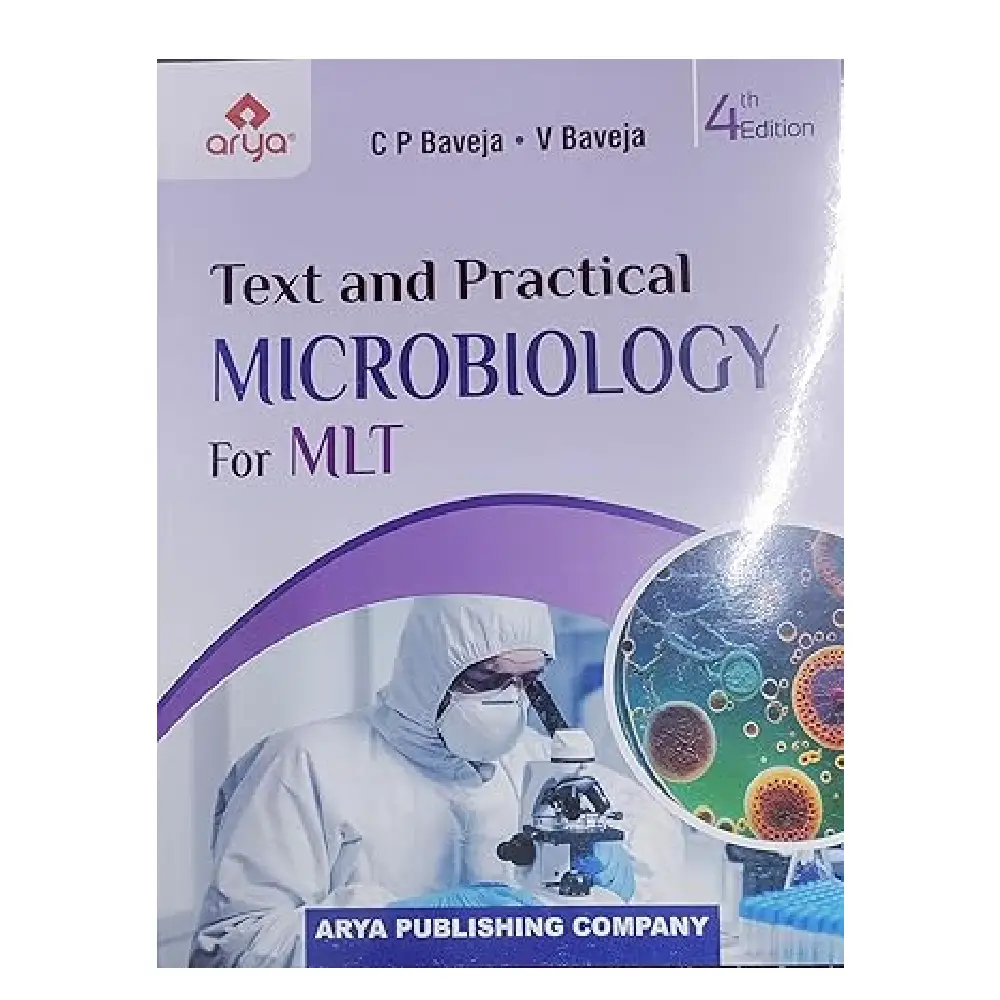
Text and Practical Microbiology for MLT (4th Edition)
Text and Practical Microbiology for MLT (Medical Laboratory Technology) is a widely used textbook designed to provide students with a strong foundation in both the theoretical and practical aspects of microbiology. Specifically tailored for MLT programs, this book bridges the gap between classroom theory and laboratory application, equipping students with the knowledge and skills necessary for accurate microbiological analysis and diagnostics.
📘 Purpose and Scope
Microbiology is an essential component of the Medical Laboratory Technology curriculum. Microorganisms — including bacteria, viruses, fungi, and parasites — are responsible for numerous human diseases. A microbiology technologist must not only understand microbial structure and function but also master laboratory techniques to identify pathogens and interpret results with precision.
This 4th edition is updated to reflect current laboratory practices, recent scientific discoveries, and standardized protocols used in diagnostic microbiology laboratories worldwide.
Structure of the Book
The book is broadly divided into two major sections:
1. Theoretical (Text) Microbiology
This section lays the scientific groundwork. It covers key concepts that are crucial for understanding microbial behavior, growth, and interaction with the human host.
Fundamental Concepts
-
History and Scope of Microbiology: Contributions of pioneering scientists (like Koch, Pasteur, and Fleming), branches of microbiology, and its importance in clinical settings.
-
Microbial Structure and Function: Detailed study of bacterial, viral, fungal, and parasitic morphology; cellular components; metabolic pathways; and growth characteristics.
-
Microbial Genetics: Gene structure, mutation, plasmids, transduction, conjugation, and implications for antibiotic resistance.
-
Immunology Basics: Host defense mechanisms, antigen–antibody reactions, immunoglobulins, vaccines, and serological tests.
Pathogenic Microorganisms
-
Bacteriology: Common disease-causing bacteria (e.g., Staphylococcus, Streptococcus, Escherichia coli, Mycobacterium tuberculosis) and their laboratory identification.
-
Virology: Structure and classification of viruses with emphasis on clinically relevant viruses (HIV, Hepatitis viruses, Herpesviruses).
-
Mycology: Fungal diseases (e.g., Candida, Aspergillus) and routine lab techniques for their diagnosis.
-
Parasitology: Protozoan and helminth infections; life cycles and diagnostic features.
2. Practical Microbiology
This portion emphasizes laboratory techniques, standard procedures, and quality control — all essential skills for an MLT professional.
Sample Collection and Processing
Proper specimen collection, storage, and transport are emphasized to minimize contamination and ensure reliable results. This includes:
-
Sterile swab collection
-
Blood, urine, sputum processing
-
Handling CSF and biopsy specimens
Microscopy Techniques
-
Preparing and staining slides
-
Gram staining and its interpretation
-
Acid-fast staining (Ziehl–Neelsen)
-
Wet mounts for parasitology
High-quality images and diagrams help learners correctly identify stain characteristics and differentiate microorganisms based on morphology.
Culture and Isolation
-
Preparation of culture media (nutrient, selective, and differential media)
-
Inoculation methods
-
Incubation conditions
-
Colony morphology interpretation
Detailed charts compare typical bacterial growth patterns and colony characteristics, crucial for preliminary identification.
Biochemical Identification
Series of biochemical tests (e.g., catalase, coagulase, oxidase, sugar fermentation tests) are explained with expected results, helping students deduce bacterial identity.
Antibiotic Sensitivity Testing
This chapter provides step-by-step procedures for:
-
Kirby–Bauer disc diffusion method
-
Interpretation of results
-
Clinical significance of antibiotic resistance patterns
Understanding antimicrobial susceptibility is critical for therapeutic decisions in clinical practice.
Lab Safety and Quality Assurance
Working with pathogenic organisms increases risk. Therefore, the book dedicates sections to:
-
Biosafety procedures
-
Personal protective equipment (PPE)
-
Autoclaving, disinfection, and waste disposal
-
Quality control, laboratory ethics, and documentation
These sections ensure students understand the importance of maintaining safety and accuracy in all laboratory activities.
Serological and Molecular Techniques
While the focus is on practical methods, the book also introduces advanced diagnostic techniques:
-
Serological Methods: ELISA, rapid antigen/antibody tests, precipitation and agglutination reactions
-
Molecular Techniques: PCR basics and its application in pathogen detection
These chapters give students insight into modern diagnostic tools used in state-of-the-art laboratories.
Student-Friendly Features
The 4th edition is updated with features that enhance learning:
✔ Clear explanations with defined objectives at the start of each chapter
✔ Tables, flowcharts, and comparison charts for quick revision
✔ Illustrated diagrams and high-resolution images for microscopy and culture interpretation
✔ Case-based scenarios and practical tips for exams and real-world practice
✔ Review questions and viva voce sections at the end of each chapter
These features help reinforce concepts and improve retention.
Importance in MLT Training
For MLT students, mastering microbiology is not optional — it is central to their role as diagnosticians. Graduates must be able to:
- Accurately identify pathogens
- Perform reliable laboratory procedures
- Interpret and report results appropriately
- Maintain safety and quality standards
This textbook provides a unified platform to gain both knowledge and practical competencies required to achieve these goals. Its balanced emphasis on theory and laboratory work prepares students for both academic examinations and hands-on clinical practice.
Conclusion
Text and Practical Microbiology for MLT (4th Edition) is a thorough, well-structured, and student-centric textbook tailored for Medical Laboratory Technology programs. By combining foundational microbiology with practical laboratory techniques — supported by visuals, problem-solving tools, and exam preparation resources — this book empowers learners to become confident, skilled, and safety-conscious laboratory professionals.
Reviews
There are no reviews yet