

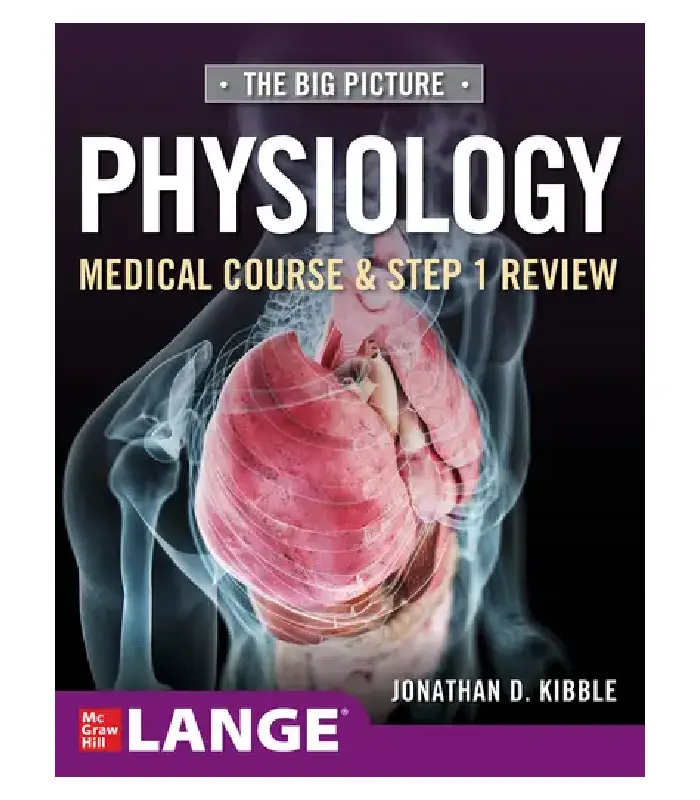
Physiology: Medical Course and Step 1 Review
Physiology: Medical Course and Step 1 Review is a focused and high-yield resource designed primarily for medical students preparing for licensing examinations such as USMLE Step 1 and other similar entrance or qualifying exams. The book aims to simplify complex physiological concepts while aligning its content with exam-oriented requirements. It serves as both a primary review text and a supplementary guide to standard physiology textbooks.
One of the most important features of this book is its exam-focused approach. Unlike traditional textbooks that provide extensive detail, this review book concentrates on essential concepts that are frequently tested in exams. It presents information in a concise, structured format, enabling students to quickly revise large portions of the syllabus. High-yield facts, key formulas, and important mechanisms are emphasized throughout the text.
The book is organized systematically according to the major systems of the human body. It begins with general physiology, covering fundamental topics such as cell membrane transport, resting membrane potential, action potentials, and basic principles of homeostasis. These concepts form the foundation for understanding more complex physiological processes and are explained in a simplified manner for easy comprehension.
The cardiovascular system section is particularly detailed, as it is a heavily tested area in Step 1 examinations. Topics such as cardiac cycle, blood pressure regulation, cardiac output, and vascular resistance are discussed with clarity. The book also includes important clinical correlations, such as shock, heart failure, and hypertension, which help students link theoretical knowledge with clinical practice.
Another key area covered is the respiratory system, including lung volumes, gas exchange, oxygen transport, and regulation of breathing. The explanations focus on understanding physiological mechanisms and interpreting graphs and equations, which are commonly tested in exams. The inclusion of diagrams and flowcharts enhances understanding and retention.
The renal system section addresses kidney function, glomerular filtration, tubular reabsorption, and electrolyte balance. Acid-base regulation is explained in a step-by-step manner, helping students grasp a concept that is often considered challenging. Clinical conditions such as metabolic acidosis and alkalosis are also discussed, providing practical insights.
The gastrointestinal system and endocrine system are covered with equal emphasis. Topics such as digestion, absorption, hormone synthesis, and mechanisms of hormone action are presented in a clear and concise format. The book highlights important hormones and their functions, along with related disorders, making it easier for students to remember key details.
The nervous system section includes neurophysiology, synaptic transmission, reflexes, and higher brain functions. Special senses such as vision and hearing are also discussed. These topics are simplified using diagrams and summaries, which are particularly useful for revision.
A major strength of the book is its inclusion of clinical correlations and integrated concepts. By connecting physiology with pathology and pharmacology, the text helps students develop a deeper understanding of disease processes. This integrated approach is essential for solving complex multiple-choice questions in exams.
The book also features practice questions and review sections, which allow students to assess their knowledge and identify weak areas. These questions are designed to reflect the style and difficulty level of actual exam questions, making them an effective tool for self-assessment.
Additionally, the use of tables, mnemonics, and summary points enhances memory retention and facilitates quick revision. The layout is student-friendly, with clear headings and organized content that makes navigation easy.
In conclusion, Physiology: Medical Course and Step 1 Review is an excellent resource for exam preparation. Its concise, high-yield content, combined with clinical relevance and practice questions, makes it a valuable tool for mastering physiology and succeeding in competitive medical examinations.

Reviews
There are no reviews yet