
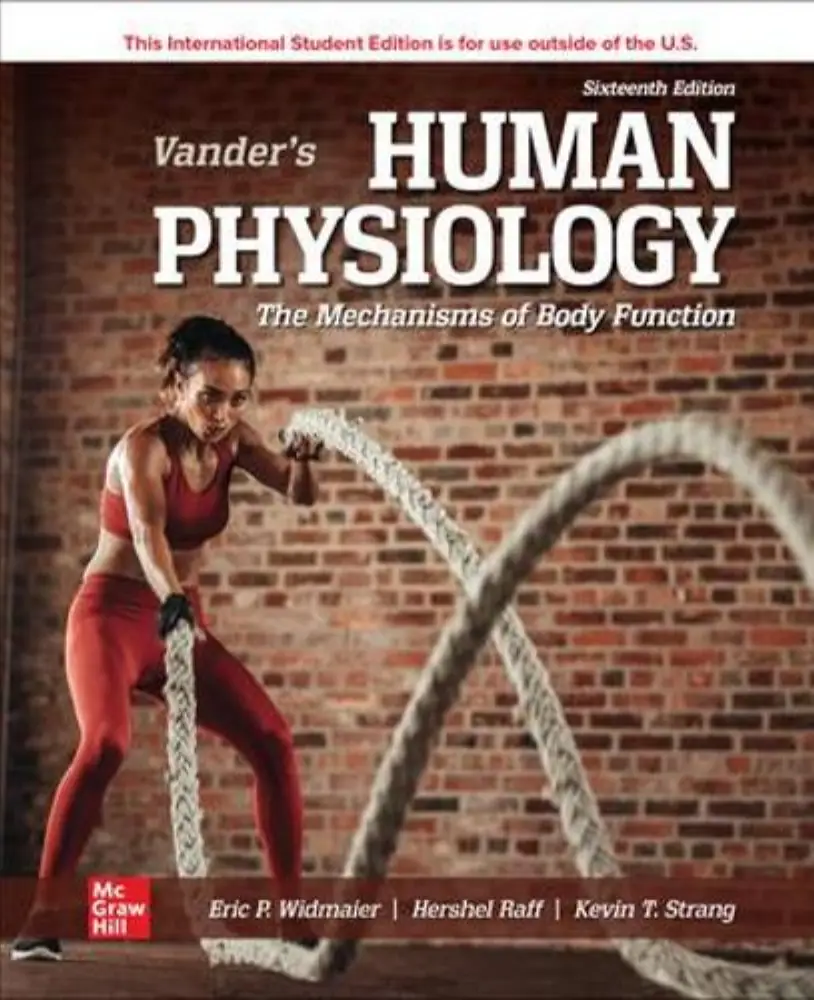

Vander’s Human Physiology ISE, Sixteenth Edition
Vander’s Human Physiology: The Mechanisms of Body Function (ISE), Sixteenth Edition is a widely respected textbook that provides a comprehensive and student-friendly understanding of human physiology. Known for its clear explanations and strong emphasis on physiological mechanisms, the book is designed primarily for undergraduate and medical students who need a solid foundation in how the human body functions.
One of the defining characteristics of this textbook is its focus on mechanistic understanding. Rather than simply describing physiological processes, the book explains how and why these processes occur. This approach helps students develop critical thinking skills and apply their knowledge to clinical and real-world situations. The text emphasizes cause-and-effect relationships, making complex concepts easier to grasp and remember.
The book is organized into well-structured sections that cover all major systems of the human body. It begins with basic cell physiology, including membrane transport, cell signaling, and metabolism. These foundational concepts are essential for understanding more advanced topics. The text then progresses to the nervous system, where it explains neuronal function, synaptic transmission, and the organization of the brain and spinal cord.
Another major section focuses on the muscular system, detailing the mechanisms of muscle contraction and the differences between skeletal, cardiac, and smooth muscle. This is followed by the cardiovascular system, which covers heart function, blood flow, and regulation of blood pressure. The book explains these topics with clarity, often using diagrams and flowcharts to illustrate complex processes.
The respiratory system is also thoroughly addressed, including the mechanics of breathing, gas exchange, and the regulation of respiration. The text highlights how the body maintains oxygen and carbon dioxide levels, which is crucial for homeostasis. Similarly, the renal system section explains kidney function, fluid balance, and electrolyte regulation, emphasizing the importance of these processes in maintaining internal stability.
A key strength of the book is its coverage of homeostasis, a central theme throughout the text. Each physiological system is discussed in terms of how it contributes to maintaining a stable internal environment. Feedback mechanisms, both negative and positive, are explained in detail, helping students understand how the body responds to changes and maintains balance.
The textbook also includes chapters on the digestive system, endocrine system, and reproductive physiology. These sections provide insights into nutrient absorption, hormonal regulation, and reproductive processes. The integration of these systems demonstrates how different parts of the body work together to support overall function.
Another notable feature is the inclusion of clinical applications and real-life examples. These elements help bridge the gap between theoretical knowledge and practical understanding. By relating physiological concepts to medical conditions, the book enhances student engagement and highlights the relevance of physiology in healthcare.
The sixteenth edition has been updated with improved illustrations, enhanced explanations, and current scientific information. Visual aids such as diagrams, graphs, and summary tables are used extensively to support learning. Additionally, the book includes review questions and summaries at the end of chapters, allowing students to test their understanding and reinforce key concepts.
The writing style is clear, concise, and accessible, making it suitable for students at various levels of study. Complex topics are broken down into manageable sections, and key terms are highlighted to aid comprehension. This user-friendly approach has contributed to the book’s long-standing popularity in physiology education.
In conclusion, Vander’s Human Physiology ISE, Sixteenth Edition is an essential resource for understanding the mechanisms of human body function. Its emphasis on clarity, integration, and clinical relevance makes it an invaluable tool for students preparing for exams and building a strong foundation in physiology.

Reviews
There are no reviews yet