
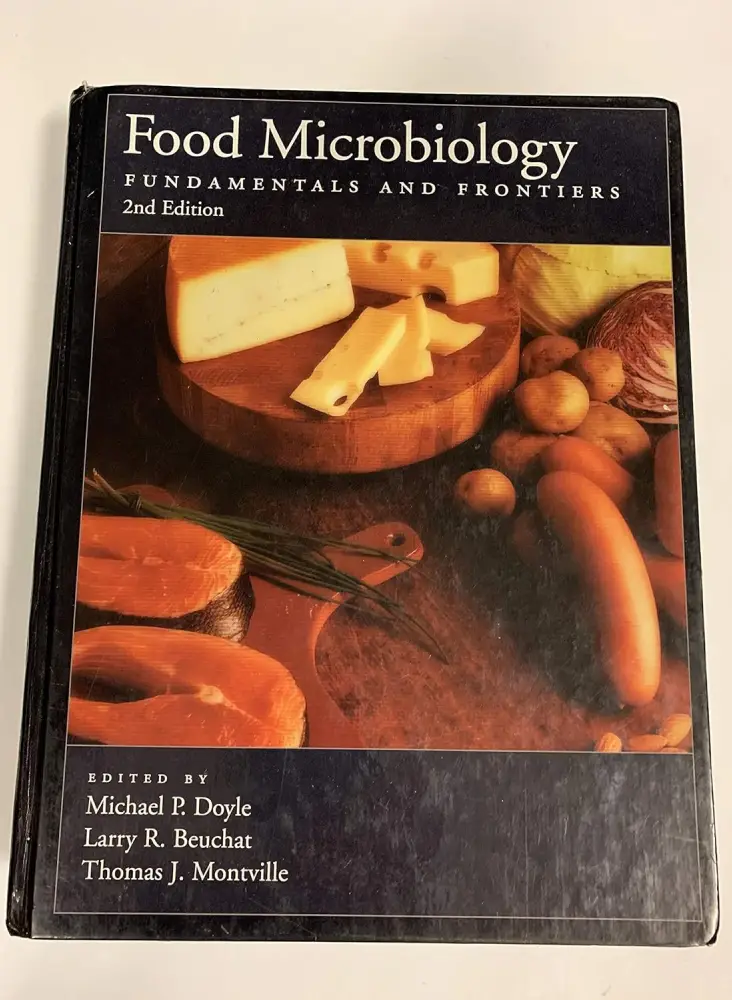
Food Microbiology: Fundamentals and Frontiers
Food Microbiology: Fundamentals and Frontiers is a comprehensive and authoritative textbook that explores the role of microorganisms in food, focusing on both their beneficial and harmful impacts. Widely used by students, researchers, and professionals in food science, microbiology, and public health, the book provides a deep understanding of microbial behavior, food safety, and modern advances in the field.
The book is structured to cover fundamental principles as well as cutting-edge developments in food microbiology. It begins with an introduction to microorganisms relevant to food, including bacteria, viruses, fungi, and parasites. These chapters explain microbial structure, physiology, growth requirements, and environmental factors affecting survival. Understanding these basics is essential for controlling microbial activity in food systems.
A major portion of the book focuses on foodborne pathogens, which are microorganisms that cause illness when transmitted through contaminated food. Important pathogens such as Salmonella, Listeria monocytogenes, Escherichia coli, and Campylobacter are discussed in detail. The text explains their sources, modes of transmission, virulence factors, and the diseases they cause. This knowledge is critical for identifying risks and preventing outbreaks.
In addition to pathogens, the book highlights spoilage microorganisms that affect food quality rather than safety. These organisms cause undesirable changes in taste, odor, texture, and appearance. The authors describe how spoilage occurs in different types of foods, including dairy, meat, seafood, fruits, and vegetables, and explain methods to detect and control it.
Another key theme is the role of beneficial microorganisms in food production. The book explores fermentation processes used in making products such as yogurt, cheese, bread, beer, and fermented vegetables. It explains how specific microbes contribute to flavor, texture, and preservation, emphasizing the importance of controlled microbial activity in food processing.
Food preservation and safety are central topics in the book. Various preservation methods—such as refrigeration, freezing, drying, irradiation, and the use of chemical preservatives—are examined in terms of their effects on microbial growth. The concept of hurdle technology, which combines multiple preservation techniques to enhance safety and shelf life, is also discussed.
The book places strong emphasis on food safety systems and regulatory approaches. It introduces Hazard Analysis and Critical Control Points (HACCP), a systematic method used to identify and control potential hazards in food production. It also discusses global food safety standards, risk assessment, and the role of government agencies in ensuring safe food supply chains.
Modern techniques in food microbiology are another important aspect of the text. The book covers advanced methods such as molecular detection techniques, genomics, and rapid diagnostic tools used to identify microorganisms. These technologies have improved the ability to detect contamination quickly and accurately, enhancing food safety management.
Emerging issues and future challenges are also addressed. Topics such as antimicrobial resistance, climate change, global food trade, and new foodborne pathogens are explored. The book highlights how these factors influence microbial risks and require continuous adaptation of food safety strategies.
One of the strengths of Food Microbiology: Fundamentals and Frontiers is its balance between theory and application. It provides detailed scientific explanations while also addressing practical concerns faced by the food industry. The inclusion of real-world examples, case studies, and current research findings makes the content relevant and engaging.
In conclusion, Food Microbiology: Fundamentals and Frontiers is an essential resource that offers a thorough understanding of microorganisms in food systems. By combining foundational knowledge with modern advancements, it equips readers with the tools needed to ensure food quality, safety, and innovation in an increasingly complex global food environment.

Reviews
There are no reviews yet