
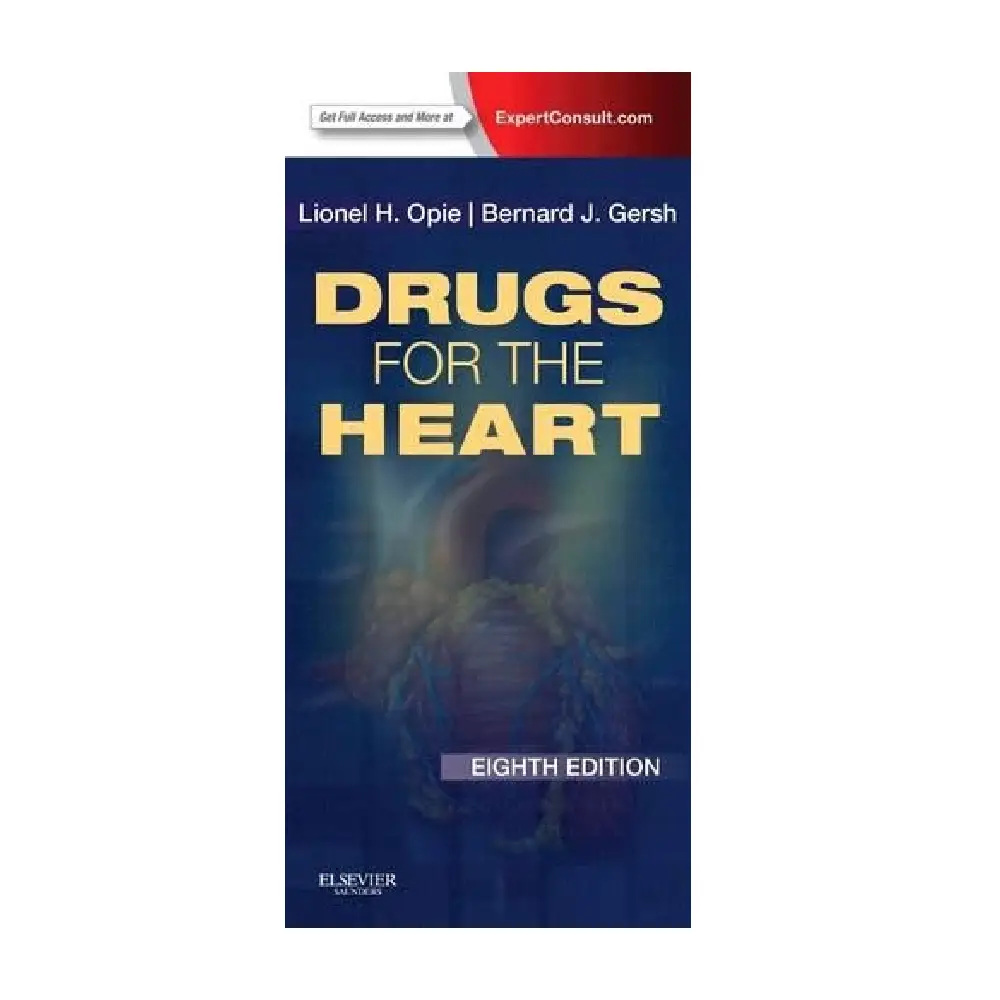


Drugs for the Heart (8th Edition)
Drugs for the Heart, 8th Edition is a comprehensive and clinically focused guide to cardiovascular pharmacology authored by Lionel H. Opie and Bernard J. Gersh. Published in 2013, this edition reflects contemporary evidence-based practices in cardiology and integrates major advances in drug therapy for heart disease. The book is designed for cardiologists, internists, residents, pharmacists, and other healthcare professionals who require practical and scientifically grounded guidance on cardiovascular medications.
The central aim of the book is to provide a clear understanding of how cardiovascular drugs work and how they should be used in real-world clinical settings. Rather than presenting pharmacology in isolation, the authors integrate pathophysiology, clinical trial evidence, and guideline recommendations. This makes the text highly practical for bedside decision-making.
One of the foundational sections addresses antihypertensive therapy. Hypertension is a major modifiable risk factor for cardiovascular morbidity and mortality. The 8th edition thoroughly reviews diuretics, beta-blockers, calcium channel blockers, angiotensin-converting enzyme (ACE) inhibitors, and angiotensin receptor blockers (ARBs). The mechanisms of action of each class are explained in detail, along with their effects on cardiac output, vascular resistance, and neurohormonal pathways. Special attention is given to selecting therapy based on patient-specific factors such as age, ethnicity, diabetes, and renal disease.
The management of ischemic heart disease is another major focus. The book discusses antianginal drugs, including nitrates, beta-blockers, and calcium channel blockers, emphasizing their role in reducing myocardial oxygen demand and improving coronary blood flow. Antiplatelet therapy, particularly aspirin and P2Y12 inhibitors, is described as essential for preventing thrombosis in coronary artery disease. The role of lipid-lowering agents, especially statins, is highlighted in both primary and secondary prevention strategies.
Heart failure therapy receives detailed coverage in this edition. The authors outline the neurohormonal model of heart failure and explain how ACE inhibitors, ARBs, beta-blockers, and mineralocorticoid receptor antagonists improve survival by counteracting maladaptive pathways. Diuretics are discussed for symptom relief in congestive states. The book also reviews newer therapeutic approaches emerging at the time, including combination therapies aimed at optimizing long-term outcomes.
Arrhythmia management is presented using a clear electrophysiologic framework. Antiarrhythmic drugs are categorized according to their effects on ion channels and cardiac conduction. The Vaughan Williams classification system is used to explain sodium channel blockers, beta-blockers, potassium channel blockers, and calcium channel blockers. The text emphasizes both therapeutic benefits and the potential for proarrhythmic effects. Management strategies for atrial fibrillation, including rate control, rhythm control, and anticoagulation, are explained in practical detail.
Antithrombotic therapy is another critical component of the book. Warfarin and newer anticoagulants available at the time are discussed in terms of mechanism, monitoring requirements, and clinical indications. The importance of balancing thrombotic risk with bleeding risk is emphasized, especially in patients with atrial fibrillation, prosthetic heart valves, or venous thromboembolism.
A distinctive and highly valued feature of Drugs for the Heart is the chapter titled “Which Drug for Which Disease.” This section provides quick-reference guidance, allowing clinicians to match specific cardiovascular conditions with the most appropriate pharmacologic options. It is particularly useful in busy clinical settings.
The 8th edition also discusses adverse effects, drug interactions, and considerations in special populations. Elderly patients, those with renal or hepatic impairment, and individuals on multiple medications require careful dose adjustment and monitoring. The authors stress the importance of individualized therapy and patient adherence.
In addition to established therapies, the book incorporates data from contemporary clinical trials available up to 2013. It evaluates how trial results have influenced guideline recommendations and clinical practice. This evidence-based orientation ensures that therapeutic recommendations are grounded in solid scientific data.
Overall, Drugs for the Heart, 8th Edition serves as a practical, authoritative resource on cardiovascular pharmacotherapy. Its strength lies in combining mechanistic pharmacology with clinical application. By presenting complex drug information in a clear and structured manner, the book supports rational prescribing and improved patient outcomes in cardiovascular care.



Reviews
There are no reviews yet