
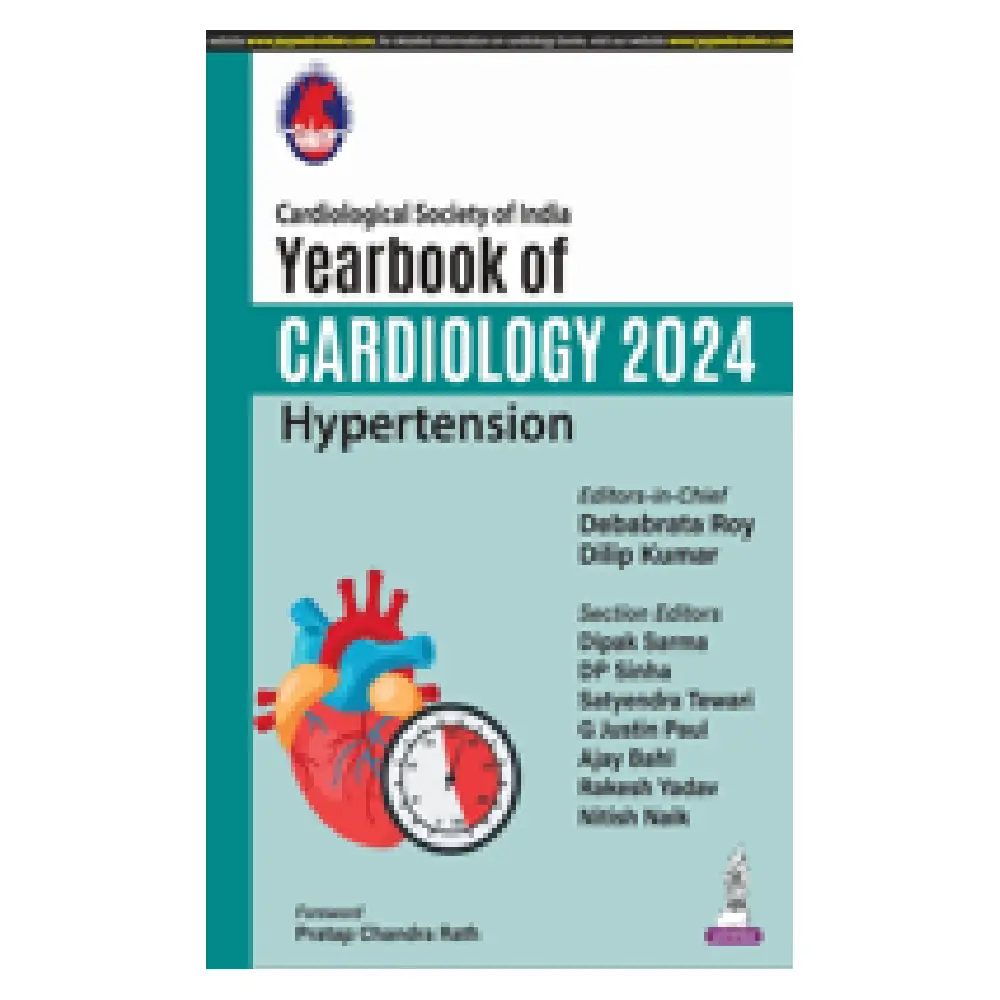
Yearbook of Cardiology 2024: Hypertension
The Yearbook of Cardiology 2024: Hypertension is a concise yet authoritative reference that captures the most relevant developments, research findings, and evidence-based practices in the field of hypertension — one of the most important cardiovascular risk factors worldwide. Edited and compiled by experts in cardiology, this yearbook is designed to serve as a clinical update for practitioners, trainees, and educators. Rather than being a traditional textbook, it functions as a curated snapshot of the latest scientific and clinical advances relating specifically to high blood pressure in 2024.
Why Hypertension Matters
Hypertension (high blood pressure) is a leading contributor to cardiovascular morbidity and mortality globally. It significantly increases the risk of coronary artery disease, heart failure, stroke, kidney disease, and peripheral vascular complications. Despite decades of research, many patients remain undiagnosed or inadequately treated due to clinical inertia, lifestyle factors, socioeconomic limitations, and variations in guideline interpretation.
The Yearbook of Cardiology 2024: Hypertension situates itself within this clinical context, offering evidence summaries, expert perspectives, and practical guidance aimed at improving the detection and management of elevated blood pressure in real-world settings.
Structure and Themes
The book is methodically organized into seven thematic sections, each addressing key aspects of hypertension from basic science to clinical applications:
1. Blood Pressure Measurement and Diagnosis
Accurate blood pressure measurement is fundamental to diagnosing hypertension. This section emphasizes standardization techniques, including patient preparation, cuff selection, positioning, and repeated measurements. It also discusses the role of ambulatory blood pressure monitoring (ABPM) and home blood pressure monitoring (HBPM), which help capture “white-coat” and “masked” hypertension — conditions where clinical readings may misrepresent true blood pressure.
2. Epidemiology and Risk Stratification
This section reviews global and regional prevalence trends. Recent studies show increasing hypertension rates in low- and middle-income countries due to urbanization, dietary shifts, and aging populations. The book also highlights demographic disparities — such as gender differences, ethnic variations, and age-related risks — that inform personalized care.
3. Pathophysiology and Mechanisms
An understanding of the biological mechanisms underlying hypertension aids in targeted therapy. This section explores genetic predispositions, neurohormonal dysregulation (e.g., renin-angiotensin-aldosterone system), endothelial dysfunction, and metabolic contributors like insulin resistance. Insights into these mechanisms help clinicians tailor therapies beyond simple blood pressure reduction.
4. Lifestyle and Preventive Strategies
Lifestyle modification is a cornerstone of hypertension management. The book reviews evidence on dietary approaches (e.g., the DASH diet), sodium reduction, weight management, physical activity, and stress reduction. It emphasizes that lifestyle interventions — although sometimes underutilized — have profound effects on blood pressure control and cardiovascular risk reduction.
5. Therapeutic Advances and Pharmacologic Treatment
This section focuses on drug therapy, including first-line antihypertensive classes (ACE inhibitors, ANG-II receptor blockers, beta-blockers, calcium channel blockers, and thiazide diuretics). Recent clinical trial results are summarized, offering insight into combination therapies, novel agents, and individualized treatment protocols. The yearbook underscores the importance of treatment adherence and tailored therapy based on comorbid conditions such as diabetes, chronic kidney disease, or coronary artery disease.
6. Hypertension in Special Populations
Certain populations require tailored management:
-
Women: The book discusses pregnancy-related hypertension disorders such as preeclampsia, as well as gender-specific risk profiles.
-
Elderly Patients: Blood pressure targets in older adults must balance the benefits of control with risks like orthostatic hypotension and medication side effects.
-
Pediatric Considerations: Childhood hypertension is increasingly recognized in the context of obesity and metabolic syndrome, signaling the need for early detection and lifestyle interventions.
7. Control Strategies and Public Health Initiatives
This section addresses barriers to effective blood pressure control at population and community levels. It discusses patient education, system-based interventions (e.g., team-based care, community screening), and public health campaigns. It also reviews policy approaches, such as salt reduction in processed foods and guideline dissemination strategies aimed at standardizing care.
Relevance to Clinical Practice
The Yearbook of Cardiology 2024: Hypertension fills an important niche. For busy clinicians, it offers:
-
Condensed reviews of major hypertension studies
-
Practical summaries of guideline recommendations
-
Actionable insights for daily practice
-
Expert commentary contextualizing research findings
For cardiologists and general physicians alike, this yearbook functions as a practical update that improves understanding of disease mechanisms while directly informing clinical decisions.
Evidence-Based but Clinically Grounded
Although rooted in scientific literature, the yearbook goes beyond rigid study summaries. Each section connects evidence with clinical applicability, helping physicians answer questions such as:
-
What is the most appropriate blood pressure target for this patient?
-
When should ambulatory monitoring be used?
-
How do we integrate lifestyle changes with pharmacotherapy?
-
How can we improve patient adherence to long-term treatment?
By framing answers in a clinical context, this text bridges the gap between research and practice — a key feature that differentiates it from conventional textbooks.
Utility for Trainees and Educators
Trainees benefit from concise definitions of key concepts, summaries of significant trials, and synthesis of guideline recommendations. Educators can use the book as a supplemental resource in teaching modules on cardiovascular risk management and preventive cardiology.
Conclusion
The Yearbook of Cardiology 2024: Hypertension is an essential, up-to-date clinical resource that thrives on clarity, relevance, and practical value. It distills the most important advances in hypertension science and care, offering clinicians an informed and evidence-based toolkit to improve diagnostic accuracy, guide therapeutic decisions, and optimize patient outcomes. Whether used as a reference during clinical practice or as a study tool for trainees, this yearbook strengthens understanding of hypertension and elevates standards of cardiovascular care.



Reviews
There are no reviews yet