
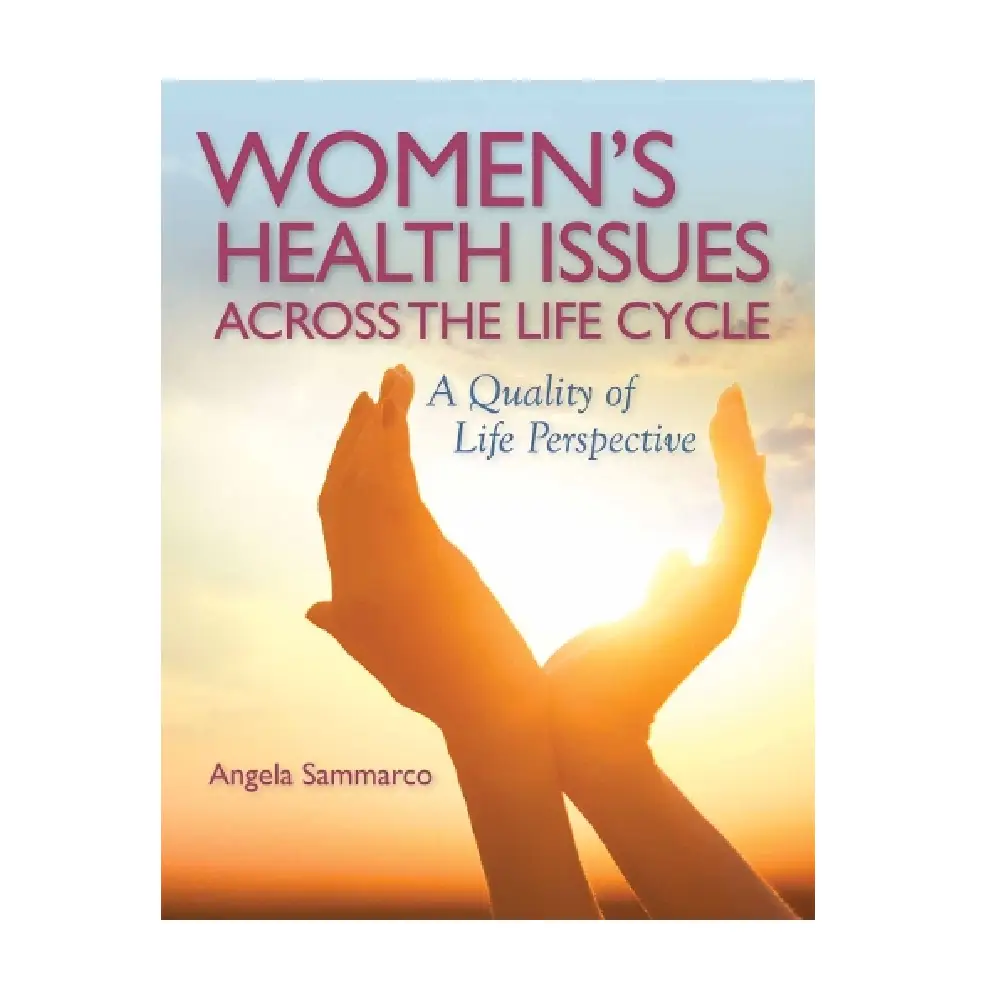


Women’s Health Issues Across the Life Cycle: A Quality of Life Perspective
Women’s Health Issues Across the Life Cycle: A Quality of Life Perspective is a comprehensive academic resource that examines women’s health from adolescence through older adulthood using a quality-of-life framework. Rather than focusing solely on disease management, the book emphasizes holistic well-being, prevention, health promotion, and the social, psychological, and cultural factors that influence women’s experiences across different life stages. It is widely used in nursing, public health, and allied health education programs to prepare students and practitioners to deliver gender-sensitive, patient-centered care.
The core philosophy of the book is that women’s health cannot be understood only through biological events such as menstruation, pregnancy, or menopause. Instead, health is shaped by socioeconomic conditions, education, employment, family roles, mental health, cultural norms, and access to healthcare services. By adopting a life-cycle approach, the text demonstrates how early life experiences influence health outcomes in adulthood and later years. This perspective encourages preventive strategies and long-term planning rather than episodic care.
In the adolescent stage, the book explores issues such as puberty, body image, nutrition, sexual health education, and mental well-being. It highlights the importance of early counseling, vaccination programs, reproductive health awareness, and prevention of high-risk behaviors. Special attention is given to the emotional challenges young women face, including peer pressure, identity formation, and self-esteem development. The authors stress that establishing healthy habits during adolescence lays the foundation for lifelong wellness.
During the reproductive years, the text addresses contraception, preconception care, fertility, pregnancy, childbirth, and postpartum health. It discusses maternal morbidity and mortality, emphasizing the need for accessible prenatal care and evidence-based obstetric practices. The book also recognizes the psychological and social transitions associated with motherhood, career development, and family responsibilities. Topics such as intimate partner violence, sexually transmitted infections, and reproductive rights are presented within a broader public health context.
Midlife health concerns form another important section of the book. Menopause, hormonal changes, cardiovascular risk, osteoporosis, and metabolic disorders are discussed in detail. The authors explain how lifestyle modifications—including balanced nutrition, physical activity, and stress management—can improve quality of life during this transition. Screening guidelines for breast cancer, cervical cancer, and other chronic conditions are emphasized to promote early detection and improved outcomes.
The text also provides a thorough discussion of mental health issues affecting women across the lifespan. Depression, anxiety, eating disorders, and the psychological effects of trauma are examined with sensitivity and clinical relevance. The quality-of-life perspective encourages healthcare professionals to assess emotional well-being alongside physical health indicators. By integrating mental health into routine care, practitioners can provide more comprehensive support.
In later adulthood, the book explores aging, chronic disease management, cognitive changes, and social isolation. It highlights the growing population of older women and the need for geriatric-focused healthcare services. Topics such as caregiving roles, financial security, and end-of-life planning are also discussed, acknowledging the complex realities faced by elderly women. Maintaining independence and dignity is presented as a central goal of care.
A distinctive feature of the book is its strong emphasis on health disparities and cultural competence. It examines how race, ethnicity, socioeconomic status, and geographic location influence access to care and health outcomes. By addressing these disparities, the text prepares healthcare providers to advocate for equitable healthcare systems and policy reforms. It underscores the importance of culturally sensitive communication and respect for diverse beliefs and practices.
The book integrates current research, case studies, and evidence-based guidelines to support clinical decision-making. Each chapter typically includes learning objectives, discussion questions, and practical applications to enhance understanding. This educational structure makes it suitable for undergraduate and graduate students in nursing and public health programs.
Another key theme is empowerment. Women are encouraged to participate actively in their healthcare decisions. Education about self-examination, screening tests, lifestyle choices, and preventive measures is promoted as a means of enhancing autonomy and improving long-term outcomes. Healthcare providers are portrayed not only as caregivers but also as educators and advocates.
Overall, Women’s Health Issues Across the Life Cycle: A Quality of Life Perspective provides a comprehensive, interdisciplinary overview of women’s health. By integrating biological, psychological, and social dimensions within a life-cycle framework, the book supports a holistic and preventive approach to care. It remains a valuable reference for students, clinicians, and policymakers committed to improving the health and quality of life of women at every stage of development.




Reviews
There are no reviews yet