
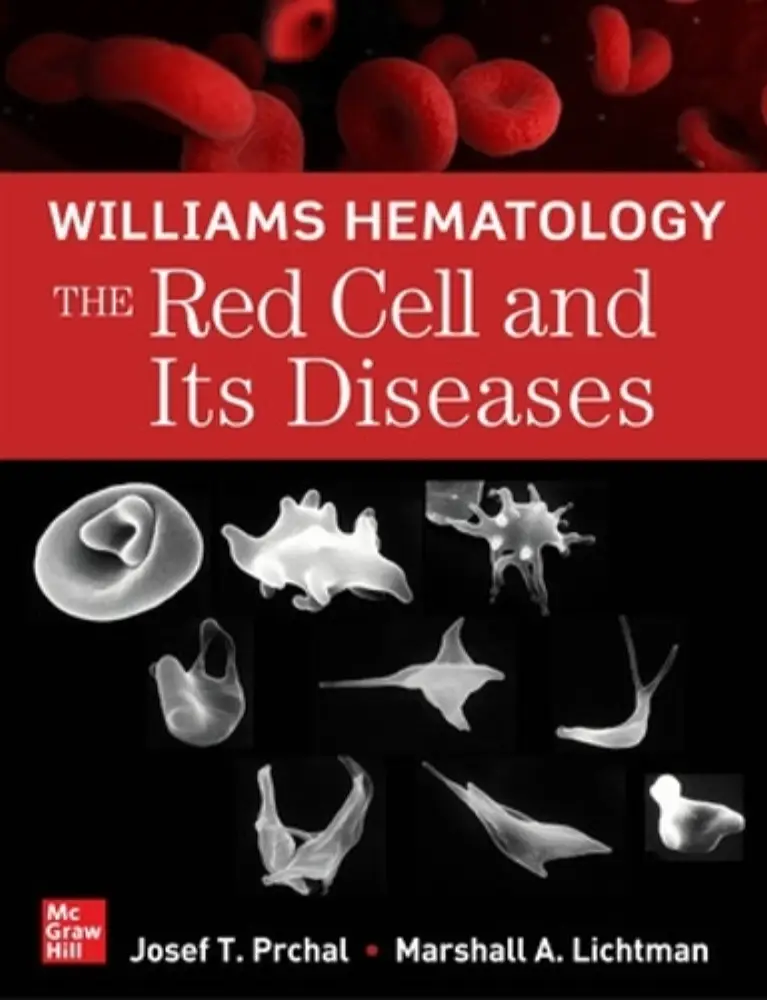
Williams Hematology: The Red Cell and Its Diseases (PB)
Williams Hematology: The Red Cell and Its Diseases is a comprehensive, authoritative text that focuses specifically on red blood cells (RBCs) and the disorders affecting them. This book, often used by hematologists, pathologists, and medical trainees, integrates foundational science with clinical applications, providing a complete understanding of red cell physiology, pathology, and therapeutic strategies.
Overview of Red Cell Biology
Red blood cells are essential for oxygen delivery throughout the body. The book begins with a detailed discussion of normal erythropoiesis, the process by which RBCs are formed in the bone marrow. Key regulatory pathways, including erythropoietin signaling, iron metabolism, and heme synthesis, are covered in depth. The molecular biology of hemoglobin synthesis, globin gene regulation, and RBC membrane structure is also presented, highlighting the complexity of red cell production and function.
Red cells have a unique biconcave shape that allows flexibility and optimal oxygen transport. Disorders of membrane integrity, enzymatic pathways, or hemoglobin structure can lead to hemolysis or ineffective erythropoiesis, forming the foundation for understanding red cell diseases.
Classification of Red Cell Disorders
The book organizes RBC disorders into major categories:
- Hemolytic Anemias:
Hemolytic anemias result from premature destruction of red cells. The text distinguishes between intrinsic defects (membrane disorders like hereditary spherocytosis, enzymopathies such as G6PD deficiency, and hemoglobinopathies) and extrinsic causes (immune-mediated hemolysis, mechanical trauma, infections). Each condition is described with emphasis on pathophysiology, laboratory findings, and clinical manifestations. - Anemias of Impaired Production:
Conditions such as iron-deficiency anemia, vitamin B12 or folate deficiency, and aplastic anemia are discussed. The text details the mechanisms of impaired erythropoiesis and differentiates between microcytic, normocytic, and macrocytic anemias, using morphological and laboratory criteria. - Hemoglobinopathies:
Structural hemoglobin disorders, including sickle cell disease, thalassemias, and rare variants, are extensively covered. Molecular basis, genetic inheritance patterns, clinical phenotypes, and current management strategies, including hydroxyurea therapy, transfusion, and gene therapy, are discussed in a clinically relevant framework. - Red Cell Membrane and Enzyme Disorders:
Disorders like hereditary elliptocytosis, hereditary spherocytosis, and enzyme deficiencies such as pyruvate kinase deficiency are highlighted. The text explains the molecular defects, diagnostic tests, and clinical implications, emphasizing the connection between cell structure and function.
Diagnostic Approaches
A strong emphasis is placed on laboratory evaluation of red cell disorders:
- Peripheral blood smear: Morphologic assessment of RBC size, shape, and inclusions.
- Reticulocyte count: Differentiates between hypoproliferative and hyperproliferative anemias.
- Hemoglobin electrophoresis and HPLC: Detection of hemoglobin variants.
- Flow cytometry, osmotic fragility, enzyme assays: Detailed methods for diagnosing membrane and enzymatic disorders.
These tools provide essential information for accurate diagnosis and treatment planning.
Management Strategies
Treatment approaches are tailored to disease mechanisms:
- Supportive care: Transfusions, iron supplementation, and folate or vitamin B12 replacement.
- Disease-specific therapy: Immunosuppressive therapy for autoimmune hemolytic anemia, splenectomy for selected membrane disorders, and disease-modifying agents for hemoglobinopathies.
- Emerging therapies: Gene therapy and novel pharmacologic interventions for inherited red cell disorders are also discussed.
The book emphasizes individualized patient care based on molecular and clinical insights.
Clinical Relevance and Educational Value
Williams Hematology: The Red Cell and Its Diseases integrates pathophysiology, laboratory diagnosis, and clinical management, making it indispensable for:
- Hematology trainees learning RBC disorders.
- Clinicians managing complex anemias.
- Researchers studying molecular and genetic aspects of red cell biology.
Rich illustrations, tables, and clinical case examples enhance understanding and retention.
Conclusion
This text provides a comprehensive, structured, and clinically oriented approach to red cell biology and pathology. It equips practitioners and students with the knowledge to diagnose, classify, and manage a wide spectrum of red cell disorders effectively, combining foundational science with practical guidance in a concise and accessible format.
Reviews
There are no reviews yet