
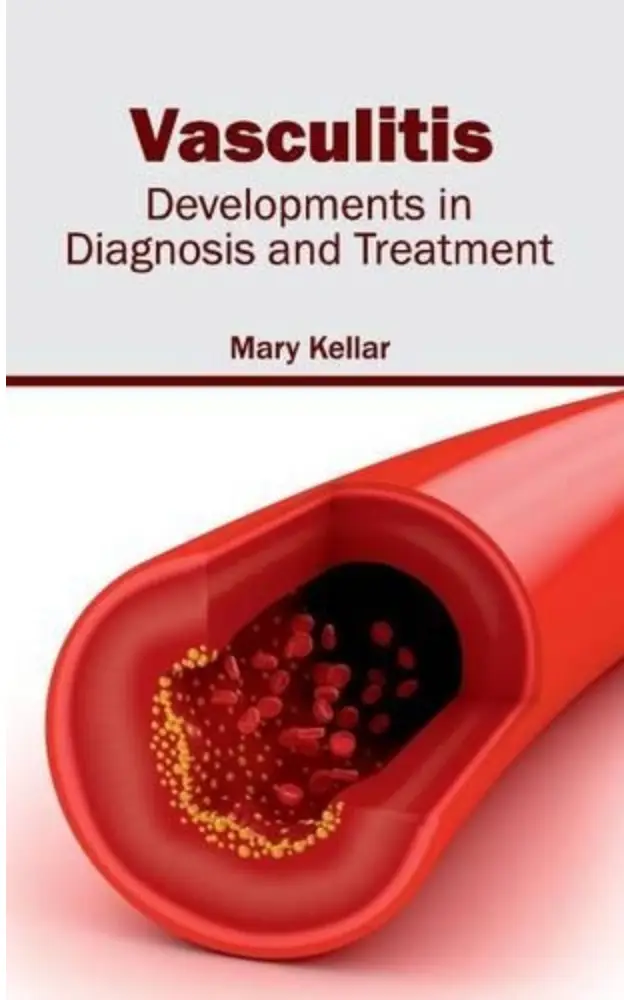

Vasculitis: Developments in Diagnosis and Treatment is a comprehensive and up-to-date resource that explores the evolving landscape of vasculitic disorders, with a strong focus on advancements in diagnostic approaches and therapeutic strategies. Designed for clinicians, rheumatologists, nephrologists, immunologists, and postgraduate medical students, this book provides a detailed understanding of the complex and heterogeneous group of diseases collectively known as vasculitis.
Vasculitis refers to inflammation of blood vessels, which can affect vessels of different sizes and lead to a wide range of clinical manifestations. The book begins with a solid foundation in the classification and pathophysiology of vasculitis. It explains the mechanisms of immune-mediated vascular injury, including the role of autoantibodies such as ANCA (anti-neutrophil cytoplasmic antibodies), immune complex deposition, and complement activation. These insights help readers understand how systemic inflammation leads to organ damage, particularly in the kidneys, lungs, skin, and nervous system.
A major strength of this volume lies in its detailed discussion of modern diagnostic techniques. The book highlights the importance of early and accurate diagnosis in preventing irreversible organ damage. It covers laboratory investigations, including serological markers like ANCA, ESR, and CRP, as well as imaging modalities such as ultrasound, CT angiography, and MRI. Advances in biopsy techniques and histopathological evaluation are also discussed, providing clinicians with practical guidance on confirming diagnoses and differentiating between various types of vasculitis.
The text places significant emphasis on classification systems, including the Chapel Hill Consensus Conference nomenclature, which categorizes vasculitis based on vessel size (large, medium, and small vessel vasculitis). Conditions such as giant cell arteritis, Takayasu arteritis, polyarteritis nodosa, granulomatosis with polyangiitis, and microscopic polyangiitis are explored in depth. Each condition is presented with its clinical features, diagnostic criteria, and management strategies, making the book a valuable reference for both learning and clinical practice.
Treatment strategies form a central component of the book, reflecting recent developments in immunosuppressive and biologic therapies. Traditional treatments such as corticosteroids and cytotoxic agents (e.g., cyclophosphamide) are discussed alongside newer targeted therapies, including rituximab and other biologics. The book evaluates the efficacy, safety, and indications of these treatments, helping clinicians tailor therapy based on disease severity, organ involvement, and patient-specific factors.
An important aspect covered is the concept of personalized medicine in vasculitis care. The book discusses how genetic, immunological, and clinical factors influence disease progression and treatment response. It also addresses the challenges of balancing disease control with the adverse effects of long-term immunosuppression, emphasizing strategies to minimize toxicity while maintaining remission.
The management of complications and long-term follow-up is another key area of focus. The book outlines approaches to monitoring disease activity, detecting relapses, and managing treatment-related complications such as infections, osteoporosis, and cardiovascular risks. Special populations, including pediatric and elderly patients, are also considered, with tailored recommendations for these groups.
In addition, the text explores emerging research and future directions in vasculitis. Topics such as biomarkers for early detection, novel therapeutic targets, and advances in molecular medicine are presented, giving readers insight into the future of vasculitis management. This forward-looking perspective makes the book particularly valuable for those involved in research or academic medicine.
Written by experts in the field, the book combines scientific rigor with clinical practicality. Case studies, illustrative figures, and evidence-based guidelines enhance understanding and application in real-world settings. The structured and accessible format ensures that complex concepts are presented clearly and effectively.
In summary, Vasculitis: Developments in Diagnosis and Treatment is an essential reference that captures the latest progress in understanding and managing vasculitic diseases. Its comprehensive coverage of pathogenesis, diagnosis, and treatment makes it a valuable tool for improving patient care and advancing clinical knowledge in this challenging field.





Reviews
There are no reviews yet