
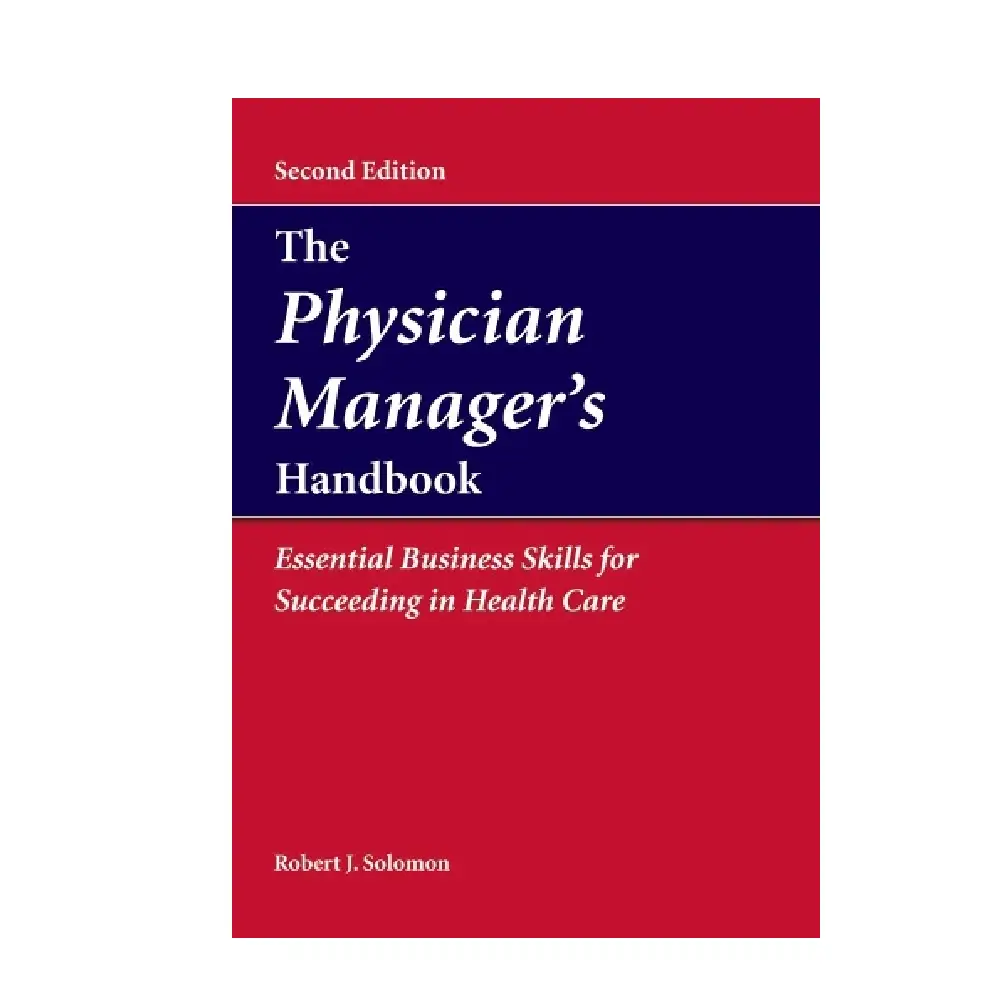


The Physician Manager’s Handbook: Essential Business Skills for Succeeding in Health Care is a comprehensive guide designed to equip physicians with the business acumen and leadership capabilities required to thrive in today’s complex healthcare environment. As clinical excellence alone is no longer sufficient for career advancement, this book bridges the gap between medical training and healthcare management, offering practical insights into finance, operations, leadership, and organizational strategy.
Published by Jones & Bartlett Learning, the handbook recognizes the growing expectation that physicians serve not only as caregivers but also as administrators, department heads, medical directors, and healthcare executives. Whether working in hospitals, private practice, academic medicine, or integrated health systems, physicians increasingly encounter financial decision-making, budgeting, regulatory compliance, and team leadership responsibilities. This text addresses those challenges in a structured and accessible manner.
One of the core strengths of the handbook is its focus on healthcare finance. Many physicians receive minimal formal education in accounting, reimbursement systems, or financial analysis during medical school or residency. The book introduces essential financial concepts such as revenue cycles, cost accounting, profit and loss statements, capital budgeting, and return on investment. It explains how reimbursement models—including fee-for-service, value-based care, and bundled payments—impact clinical practice and institutional sustainability. By demystifying financial terminology, the handbook empowers physicians to make informed decisions that align clinical priorities with fiscal responsibility.
Leadership development is another central theme. The text explores leadership styles, emotional intelligence, negotiation strategies, and conflict resolution within healthcare settings. Physicians who move into managerial roles must navigate interdisciplinary teams, resolve disputes, motivate staff, and foster a culture of accountability and patient-centered care. The book provides frameworks for effective communication and collaborative decision-making, recognizing that strong leadership directly influences quality outcomes and organizational performance.
Strategic planning and operations management are also thoroughly addressed. Healthcare systems operate in an environment characterized by rapid technological change, regulatory complexity, and competitive pressures. The handbook explains how to conduct environmental assessments, set measurable goals, analyze market trends, and implement performance improvement initiatives. It introduces tools such as SWOT analysis, benchmarking, and quality metrics to guide strategic thinking. Physicians are encouraged to adopt a systems perspective, understanding how their departments function within larger institutional structures.
Quality improvement and patient safety receive significant attention. The book emphasizes evidence-based management and the use of data to drive improvements in care delivery. Topics include clinical governance, risk management, compliance standards, and accreditation processes. By linking management principles with patient outcomes, the handbook underscores the ethical responsibility of physician leaders to balance efficiency with high-quality care.
Human resource management is another key component. Physician managers must recruit, evaluate, and retain clinical and administrative staff. The text outlines best practices in hiring, performance appraisal, team building, and professional development. It also discusses legal considerations in employment, including contracts, workplace policies, and regulatory compliance. Understanding these issues helps physician leaders maintain a productive and legally sound working environment.
The handbook further addresses marketing and public relations in healthcare. In an era of increased patient choice and transparency, reputation management and community engagement are critical. The book explains branding strategies, patient satisfaction measurement, and effective communication with stakeholders. It also examines how digital health technologies and online presence influence modern healthcare delivery.
Ethical leadership and professionalism are woven throughout the text. Physicians who assume managerial roles often face tensions between clinical priorities and business realities. The handbook encourages principled decision-making grounded in patient welfare, transparency, and accountability. By integrating ethics with business strategy, it presents management not as a departure from clinical values but as an extension of them.
Case studies and practical examples enhance the learning experience. Real-world scenarios allow readers to apply business concepts to common challenges such as budgeting constraints, service line expansion, organizational restructuring, and policy implementation. These applied exercises make the material accessible even to those without prior management training.
Overall, The Physician Manager’s Handbook serves as an essential resource for physicians transitioning into leadership roles. It acknowledges the evolving nature of healthcare systems and prepares clinicians to navigate administrative responsibilities with confidence and competence. By combining foundational business principles with healthcare-specific applications, the book supports physician leaders in achieving both organizational success and high standards of patient care.




Reviews
There are no reviews yet