
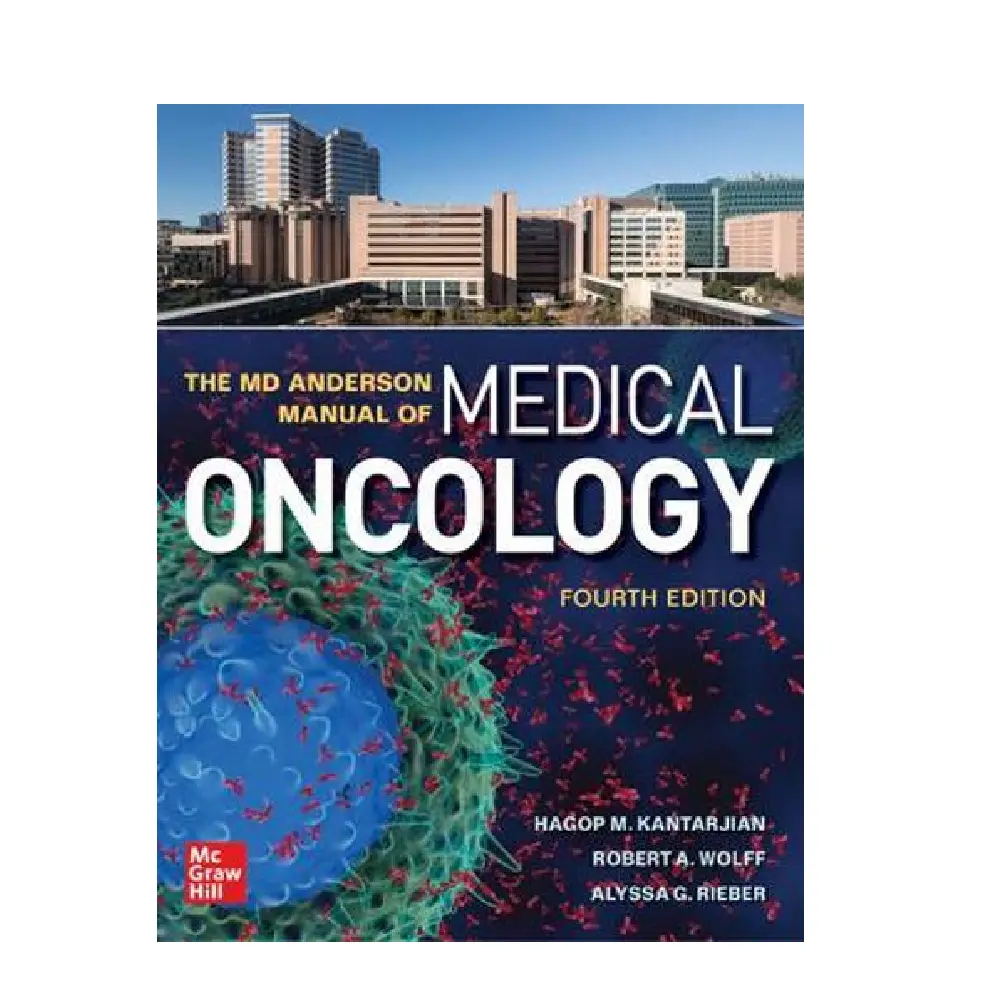
The MD Anderson Manual of Medical Oncology
The MD Anderson Manual of Medical Oncology, Fourth Edition is a comprehensive, clinically oriented reference designed to support practicing oncologists, oncology fellows, residents, advanced practice providers, and other healthcare professionals involved in the diagnosis and management of cancer. Originating from the expertise of clinicians at the renowned MD Anderson Cancer Center, this manual synthesizes current evidence, consensus guidelines, and practical insights into one authoritative resource. Its fourth edition reflects significant advances in cancer biology, targeted therapy, immunotherapy, and supportive care, offering a balanced integration of foundational principles with up‑to‑date clinical practice.
Purpose and Scope
The manual’s core aim is to provide practical, patient‑centered guidance rather than exhaustive academic theory. It focuses on real‑world clinical scenarios, diagnostic pathways, treatment algorithms, and evidence‑based recommendations that oncologists can directly apply in daily practice. While primarily targeted at medical oncologists, it is also highly useful for multidisciplinary team members including surgical oncologists, radiation oncologists, pharmacists, nurses, and trainees.
Structure and Organization
The book is organized to facilitate rapid access to essential information. It begins with general principles of oncology and progresses into site‑specific chapters, systematic treatment approaches, supportive care, and emergent complications. Each section is structured with clear headings, concise summaries, tables, algorithms, and clinical pearls that aid quick reference. Common topics include epidemiology, risk factors, staging systems, treatment modalities, toxicity management, and survivorship care.
Foundations of Oncology
Early chapters provide a strong foundation in cancer biology and principles of treatment. Concepts such as carcinogenesis, tumor genetics, molecular signaling pathways, cancer stem cells, and the tumor microenvironment are explained in clinically relevant terms. Staging systems, including TNM classification and disease‑specific prognostic models, are reviewed to standardize assessment and guide treatment planning.
The text also outlines principles of systemic therapy—chemotherapy, hormonal therapy, targeted agents, and immunotherapies. Mechanisms of action, common toxicities, drug interactions, and monitoring strategies are discussed, emphasizing safety and tolerability in diverse patient populations.
Site‑Specific Cancer Management
One of the manual’s strengths is its detailed coverage of site‑specific malignancies. Each chapter outlines epidemiology, clinical presentation, diagnostic evaluation, staging, treatment standards, and follow‑up. Examples include:
-
Breast Cancer: From hormone receptor–positive disease to HER2‑positive and triple‑negative subtypes, the manual presents evidence‑based approaches to neoadjuvant, adjuvant, and metastatic settings. Discussions include endocrine therapy sequencing, targeted agents (e.g., CDK4/6 inhibitors), and principles of supportive care.
-
Lung Cancer: Guidance covers non‑small cell and small cell lung cancer, with emphasis on molecular testing (EGFR, ALK, ROS1, PD‑L1), immunotherapy integration, and management of treatment‑related adverse events.
-
Colorectal Cancer: Topics include screening strategies, operative margins, adjuvant chemotherapy regimens, and management of metastatic disease with biologics and immunotherapy.
-
Hematologic Malignancies: Leukemias, lymphomas, and myeloma are addressed with clear algorithms for induction, consolidation, and maintenance therapy, as well as supportive care for cytopenias and infections.
Each chapter explicitly aligns treatment recommendations with the latest clinical evidence, including landmark trials and guideline consensus where available.
Emerging Therapies and Molecular Oncology
The fourth edition places special emphasis on precision oncology and immunotherapy, reflecting rapid advances in the field. Chapters discuss the role of next‑generation sequencing, actionable mutations, biomarker‑driven therapy, and the mechanisms and management of immune‑related adverse events (irAEs). Checkpoint inhibitors (e.g., PD‑1/PD‑L1 inhibitors) and CAR‑T cell therapies are explained with guidance on patient selection and toxicity monitoring.
Supportive and Survivorship Care
Outstanding oncology care extends beyond tumor control. The manual includes comprehensive supportive care sections on:
-
Management of Treatment Toxicities: Nausea and vomiting, mucositis, myelosuppression, neuropathy, and cardiotoxicity.
-
Pain and Symptom Management: Principles of analgesia, palliative radiation, and integrative care.
-
Psychosocial Support: Addressing anxiety, depression, and quality‑of‑life concerns.
-
Nutrition and Rehabilitation: Optimizing functional status during and after therapy.
Survivorship topics include long‑term monitoring for recurrence, late effects of therapy (cardiac, endocrine, secondary malignancies), and strategies for reintegrating patients into daily life.
Decision Support Tools
The manual includes tables, flowcharts, and summary boxes that aid clinical decision‑making. Treatment algorithms for common presentations, organ‑specific staging charts, dose modification guidelines, and toxicity grading matrices (e.g., CTCAE) provide quick reference in time‑sensitive clinical settings.
Educational Value and Practical Use
Designed for both novice learners and seasoned clinicians, the manual serves multiple roles:
-
A clinical handbook at the bedside or during outpatient clinics
-
A review resource for board preparation or fellowship training
-
A multidisciplinary reference for tumor boards and collaborative care planning
The text’s focus on evidence, relevance to contemporary practice, and clear presentation make it especially valuable in settings where oncology practice must balance resource availability with patient‑centered care.
Conclusion
The MD Anderson Manual of Medical Oncology, Fourth Edition is a practical, authoritative, and up‑to‑date resource that distills complex oncology knowledge into actionable clinical guidance. Its balanced emphasis on disease biology, evidence‑based therapy, emergent innovations, and compassionate supportive care makes it an indispensable tool for clinicians dedicated to excellence in cancer care. Whether managing common solid tumors or complex hematologic diseases, the manual equips practitioners with the insights and frameworks needed to optimize outcomes in a rapidly evolving therapeutic landscape.







Reviews
There are no reviews yet