
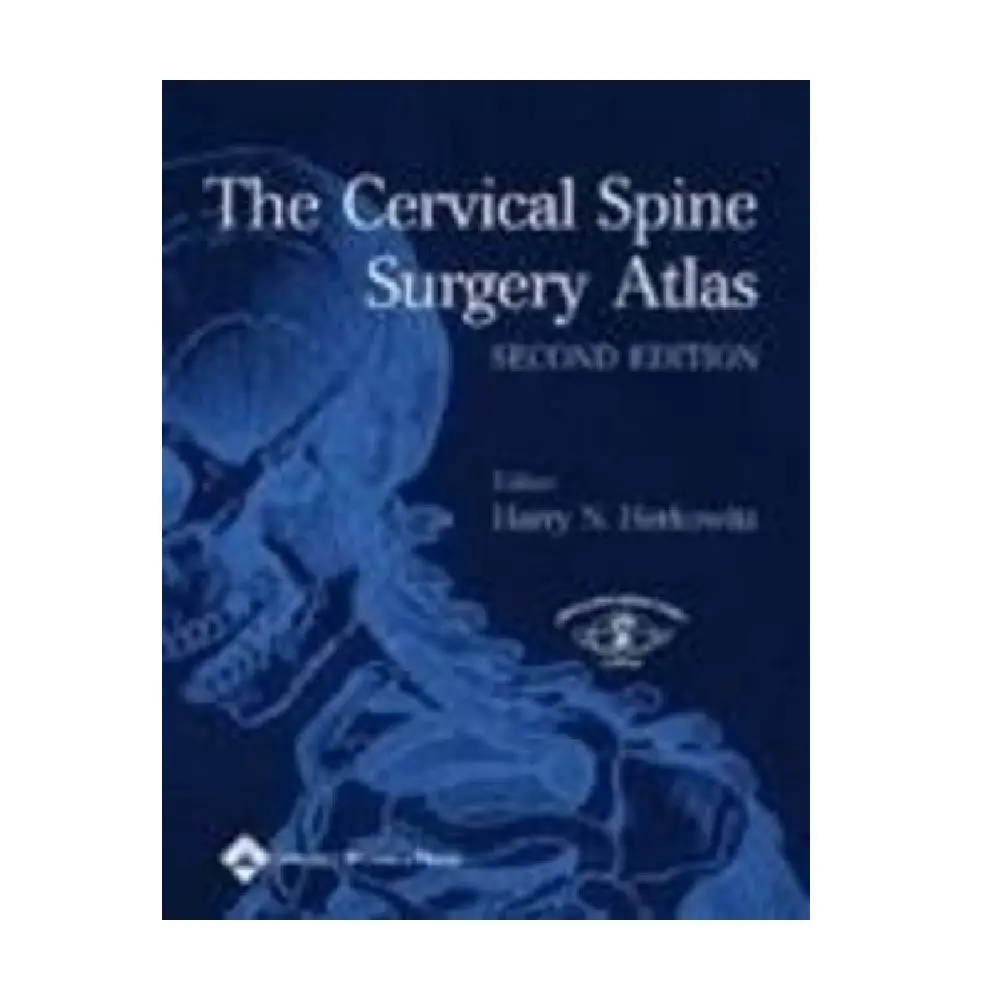


The Cervical Spine Surgery Atlas, Second Edition is a definitive, visually rich surgical reference that guides spine surgeons through the complex anatomy, pathology, decision‑making principles, and operative techniques specific to the cervical spine. Cervical spine surgery is a demanding subspecialty within orthopaedics and neurosurgery due to the critical neurologic structures, intricate biomechanics, and the need to balance stability with range of motion. This atlas provides a comprehensive, step‑by‑step depiction of approaches and procedures, combining high‑quality illustrations, intraoperative photographs, clinical pearls, and evidence‑based rationale.
Purpose and Educational Value
This atlas is designed for practicing spine surgeons, spinal fellows, orthopedic and neurosurgery residents, and allied healthcare professionals involved in spine care. Its key educational value lies in translating complex surgical procedures into a visual and practical format that can be referenced in clinical settings. Rather than being a purely academic text, it emphasizes surgical anatomy, operative technique, complications management, and postoperative care.
Organization and Structure
The book is logically organized by anatomical regions and surgical approaches, allowing the reader to navigate from fundamental principles to advanced operative strategies. Typical sections include:
-
Anatomy and Biomechanics of the Cervical Spine:
The atlas begins with a detailed review of cervical spine anatomy—bony landmarks, ligamentous supports, neurovascular structures, motion segments, kinematics, and the unique features that distinguish the cervical spine from other regions. Understanding this anatomy is vital because even small deviations in approach can have significant neurologic consequences. -
Indications for Cervical Spine Surgery:
Common indications include cervical radiculopathy, myelopathy, trauma (fractures and dislocations), degenerative disc disease, instability, infection, tumors, and congenital anomalies. Decision‑making factors such as patient age, comorbidities, neurologic status, imaging findings, and expected outcomes guide the choice of surgical approach. -
Surgical Approaches:
Each major surgical approach—anterior, posterior, and combined—is detailed with precise illustrations and operative steps. The atlas breaks down how and when to use each approach:-
Anterior Cervical Approaches:
These include anterior cervical discectomy and fusion (ACDF), corpectomy, and disc arthroplasty. The atlas explains patient positioning, incision planning, dissection planes, identification and protection of soft tissues (esophagus, trachea, recurrent laryngeal nerve), and how to handle the disc and vertebral bodies. Visual depictions reinforce critical surgical landmarks. -
Posterior Cervical Approaches:
Procedures such as laminectomy, laminoplasty, and lateral mass or pedicle screw fixation are illustrated in sequence. The atlas emphasizes safe screw trajectories with respect to vertebral artery anatomy, facet orientation, and spinal cord protection. -
Combined and Complex Procedures:
For multi‑level pathology, deformity, or revision surgeries, combined anterior‑posterior approaches may be necessary. These sections walk through planning priorities, staged surgery considerations, and strategies to minimize complications.
-
Operative Technique and Visual Guidance
One of the atlas’s strengths is its procedural clarity. For each operation, readers are provided with:
-
Step‑by‑Step Surgical Workflow:
Preoperative planning, intraoperative setup (positioning, instrumentation needed), exposure, decompression, fusion techniques, implant placement, wound closure, and postoperative imaging goals are all included. -
Intraoperative Images and Illustrations:
High‑resolution photographs, diagrams, and X‑ray/fluoroscopy examples depict key steps. Surgeons benefit from seeing exactly how tissues appear during surgery and how instruments are oriented. -
Technical Pearls:
Unique tips—such as how to avoid injuring nerves, choose the optimal screw size, manage bleeding, or handle abnormal anatomy—are scattered throughout, reflecting the expertise of seasoned surgeons.
Complications and Management
No surgical atlas is complete without an honest discussion of complications. Recognizing and managing complications is essential for patient safety and outcome optimization. The atlas addresses:
-
Neurologic Injury:
Spinal cord and nerve root injury prevention, real‑time neuromonitoring principles, and management strategies if neurologic changes occur. -
Vascular Injury:
Vertebral artery injury, how to control bleeding, and when to convert to open vascular repair. -
Infection and Wound Problems:
Prevention with sterile technique, antibiotic prophylaxis, and management if infection develops. -
Implant‑Related Complications:
Malpositioned screws, hardware failure, adjacent segment disease, and nonunion (pseudoarthrosis).
Each complication section provides practical steps for early recognition, intervention, and long‑term care planning.
Postoperative Care and Rehabilitation
The atlas also outlines postoperative protocols, which include:
-
Pain management
-
Early mobilization
-
Use of cervical braces when indicated
-
Neurologic and radiographic follow‑up
-
Rehabilitation goals (range of motion exercises, strengthening)
These recommendations help ensure optimal functional recovery and reduce the risk of delayed complications.
Clinical Evidence and Outcomes
Although surgical atlases are inherently technique‑focused, this edition integrates evidence‑based outcomes where applicable. For example, indications for arthroplasty versus fusion are supported by clinical trials showing differences in motion preservation and adjacent segment disease. Similarly, outcomes of laminoplasty versus laminectomy and fusion in multilevel compression syndromes are discussed.
Educational and Practical Applications
This atlas serves multiple roles:
-
Operating Room Reference:
Surgeons can consult key steps and visual cues when planning or performing complex cases. -
Training Tool:
Residents and fellows benefit from procedural sequences and illustrations that bridge textbook theory with surgical reality. -
Exam Preparation:
Clear, stepwise explanations help learners master approaches and rationales that are commonly examined in clinical boards.
Conclusion
The Cervical Spine Surgery Atlas, Second Edition is a vital resource for anyone involved in the surgical care of cervical spine pathology. Its combination of detailed anatomy, clear operative sequences, real‑world complications management, and evidence‑based decision making makes it both a teaching tool and a practical surgical guide. The atlas format—with its rich illustrations and intraoperative imagery—ensures that complex surgical procedures are accessible even to learners early in their training while still providing depth and nuance for experienced practitioners. Proper use of this manual can enhance surgical confidence, improve patient outcomes, and support lifelong learning in the challenging field of cervical spine surgery.






Reviews
There are no reviews yet