
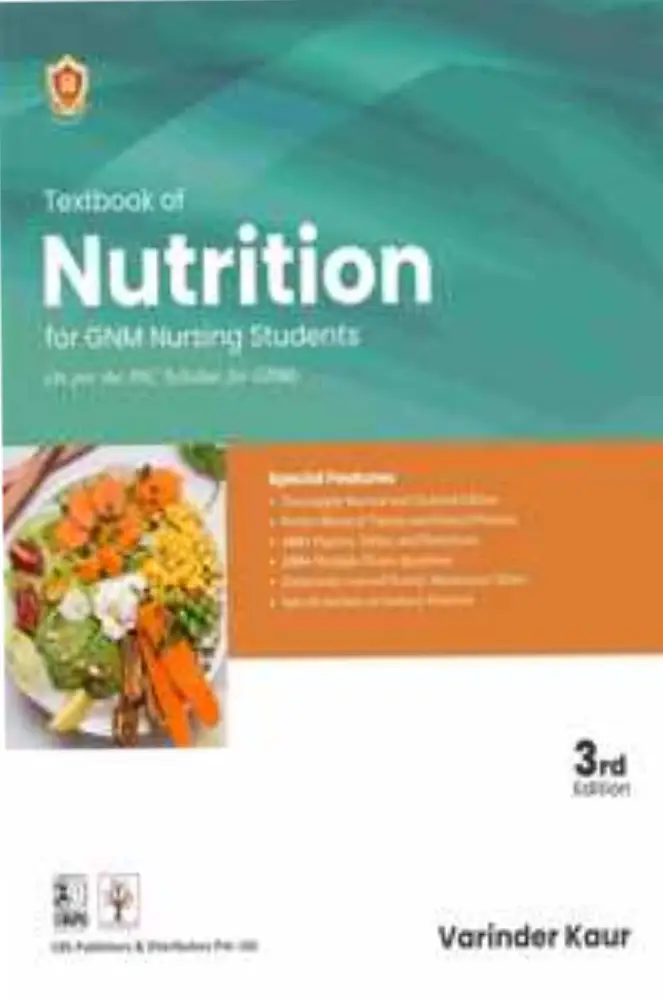
Textbook of Nutrition for GNM Nursing Students (3rd Edition, PB)
The Textbook of Nutrition for GNM Nursing Students is a comprehensive guide designed specifically for General Nursing and Midwifery (GNM) students, aligned with the curriculum set by the Indian Nursing Council (INC). This third edition provides an in-depth exploration of nutrition principles, dietary requirements, and practical applications in nursing care, making it an essential resource for both classroom learning and clinical practice. The book balances theoretical knowledge with practical guidance, helping students understand the role of nutrition in health promotion, disease prevention, and patient care.
The book begins by introducing the foundational concepts of nutrition. It covers macronutrients—carbohydrates, proteins, and fats—their chemical composition, functions, sources, and the consequences of deficiencies or excesses. Similarly, it details micronutrients such as vitamins and minerals, emphasizing their biochemical roles, recommended daily allowances, and the health implications of inadequate intake. Each chapter is structured to provide clear explanations, illustrative tables, and practical examples relevant to the nursing profession.
A unique feature of this textbook is its focus on the nutritional needs across the life span. Separate sections address maternal nutrition, infant and child nutrition, adolescent dietary requirements, adult nutrition, and geriatric nutrition. Maternal nutrition is highlighted, including dietary recommendations during pregnancy and lactation, which are essential for both maternal and neonatal health. The book also emphasizes child nutrition, growth monitoring, immunization-linked dietary strategies, and preventive measures for common nutritional deficiencies.
The text integrates the clinical aspect of nursing by discussing diet planning for patients with specific health conditions. It explains therapeutic diets, including those for diabetes, hypertension, cardiovascular diseases, renal disorders, and gastrointestinal problems. Each diet plan includes guidelines on food selection, preparation, and portion control, equipping nursing students with the skills needed for patient counseling and support. Special attention is given to hospital nutrition, enteral and parenteral feeding, and monitoring nutritional status in clinical settings, which reinforces the application of theoretical knowledge to practical care.
Public health nutrition is another significant component of the book. It addresses community-based nutrition programs, national nutrition policies, and strategies to combat malnutrition in vulnerable populations. The text highlights government initiatives such as the Integrated Child Development Services (ICDS), Mid-Day Meal Scheme, and National Nutrition Mission, explaining their relevance to nursing practice. By including these sections, the book helps students understand the broader context of nutrition in public health and community care.
In addition to its rich content, the book emphasizes teaching and learning support for students. Key points, summary tables, illustrative diagrams, and case studies are provided to aid comprehension and retention. Review questions at the end of each chapter encourage self-assessment and critical thinking, while practical exercises guide students in applying nutrition concepts in real-world nursing scenarios.
The language of the book is clear, precise, and student-friendly, making complex concepts accessible to beginners while still valuable for advanced learners. It serves as a reliable reference not only for GNM students but also for nursing educators, dietitians, and healthcare professionals seeking to reinforce their understanding of nutrition in patient care.
In conclusion, the Textbook of Nutrition for GNM Nursing Students (3rd Edition) is a well-organized, detailed, and practical guide that bridges the gap between theory and practice. By focusing on life-span nutrition, clinical applications, public health initiatives, and teaching aids, it equips nursing students with the knowledge and skills necessary for effective patient care and community health promotion. It is an indispensable resource for anyone preparing for exams or aiming to provide quality nutritional care in clinical and community settings.


Reviews
There are no reviews yet