
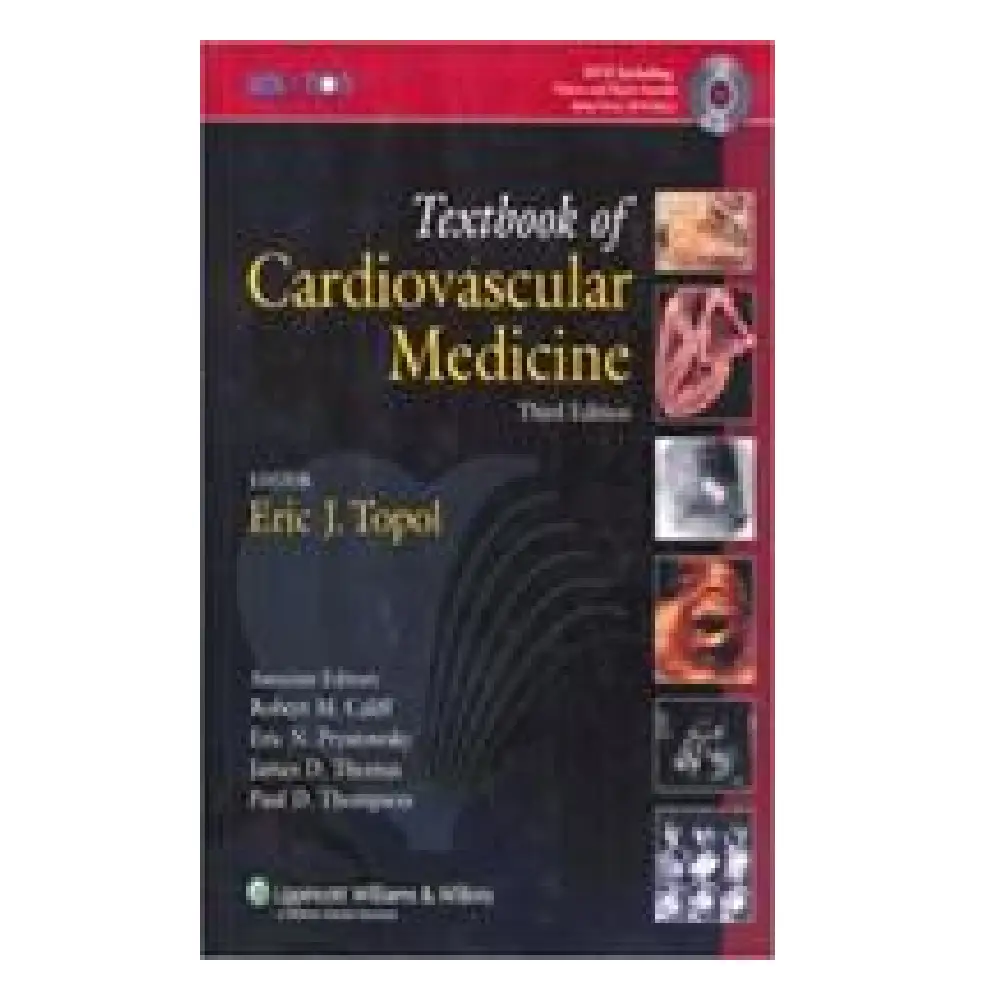

Textbook of Cardiovascular Medicine (3rd Edition)
The Textbook of Cardiovascular Medicine (3rd Edition) is a major comprehensive medical reference that integrates foundational science, clinical diagnosis, and evidence‑based clinical management of cardiovascular diseases. Edited by leading experts — including Eric J. Topol, Robert M. Califf, Eric N. Prystowsky, James D. Thomas, and Paul D. Thompson — this edition reflects the state of heart care in the early 21st century and remains a valuable resource for cardiologists, internists, trainees, and healthcare professionals involved in cardiovascular care.
Spanning more than 1,600 richly detailed pages, this textbook offers a structured exploration of cardiovascular medicine from basic principles to advanced clinical applications. Its content is designed to help clinicians understand the mechanisms of heart disease, approach diagnosis systematically, and apply effective therapeutic strategies.
Foundations of Cardiovascular Medicine
A cornerstone of the book is its comprehensive coverage of the basic sciences that underpin clinical cardiology. Early sections focus on cardiovascular physiology and anatomy, explaining how the heart functions under normal conditions and how disruptions in structure and function contribute to disease. Topics include hemodynamics, myocardial contractility, electrophysiology, and neurohormonal regulation — all of which are essential for understanding common and complex conditions such as heart failure, arrhythmias, and ischemic heart disease.
At the intersection of science and practice, chapters on molecular cardiology and genetics explore the biological basis of cardiovascular disease. These sections examine how genetic and molecular mechanisms influence disease progression, susceptibility, and response to therapy — reflecting the growing role of personalized medicine in cardiology.
Clinical Evaluation and Diagnosis
A significant portion of the textbook is dedicated to the clinical assessment of patients with suspected cardiovascular disease. This includes detailed guidance on taking a cardiovascular history, performing targeted physical exams, and interpreting key findings. Clinicians are guided through a logical diagnostic process that integrates clinical judgment with evidence‑based methodologies.
Diagnostic modalities receive extensive coverage, including techniques such as electrocardiography (ECG), echocardiography, stress testing, cardiac catheterization, computed tomography (CT), and magnetic resonance imaging (MRI). Each modality is discussed not only in terms of how it works but also in how it should be applied in clinical practice to yield actionable results.
Importantly, the book emphasizes the interpretation of diagnostic data in the context of specific disease states — such as coronary artery disease, valvular heart disease, cardiomyopathies, and pericardial disease — helping clinicians synthesize complex information and reach accurate diagnoses.
Disease‑Based Clinical Management
One of the textbook’s greatest strengths is its disease‑focused organization, which systematically addresses common and less common cardiovascular conditions. Each section on disease begins with pathophysiology, progresses through clinical presentation and diagnosis, and culminates in management recommendations. Topics include:
-
Coronary artery disease: Mechanisms of atherosclerosis, clinical manifestations (such as stable and unstable angina), acute coronary syndromes, and both medical and interventional therapies.
-
Heart failure: Classification of heart failure syndromes, modern pharmacologic treatments (including beta‑blockers, ACE inhibitors, and ARBs), device therapies, and heart transplantation.
-
Arrhythmias: Diagnosis and management of atrial fibrillation, ventricular tachycardia, and other rhythm disturbances, including pacing and implantable defibrillators.
-
Valvular heart disease: Identification and management of regurgitant and stenotic lesions, with discussion of repair and replacement strategies.
-
Peripheral vascular disease and cerebrovascular disease: Recognition and treatment of vascular disorders beyond the heart itself.
Throughout these sections, the textbook integrates the latest clinical guidelines and trial data available at the time of publication, helping clinicians apply evidence‑based strategies in practice.
Advanced Interventions and Technology
The 3rd edition expands on invasive and non‑invasive interventional techniques that have reshaped cardiovascular care. It includes discussions on cardiac catheterization procedures, percutaneous coronary interventions, pacing and electrophysiology techniques, and emerging imaging technologies that improve diagnosis and risk stratification.
By integrating information on devices such as pacemakers and defibrillators with sections on surgical and catheter‑based therapies, the text bridges the gap between traditional clinical cardiology and procedural subspecialties.
Prevention and Future Directions
In addition to disease management, the textbook emphasizes cardiovascular prevention — addressing risk factor modification, lifestyle interventions, and population health strategies to reduce the burden of cardiovascular disease. Topics such as lipid management, hypertension control, diabetes care, and smoking cessation are discussed in detail.
The final sections also look toward future developments in cardiovascular medicine, including evolving therapeutic targets, genetics, and translational research that may shape the next generation of heart care.
Educational Impact
Designed for both reference and learning, the Textbook of Cardiovascular Medicine includes richly illustrated diagrams, clinical algorithms, key practice points, and extensive references. These features make it valuable not only for practicing clinicians but also for trainees preparing for exams or clinical practice.

Reviews
There are no reviews yet