
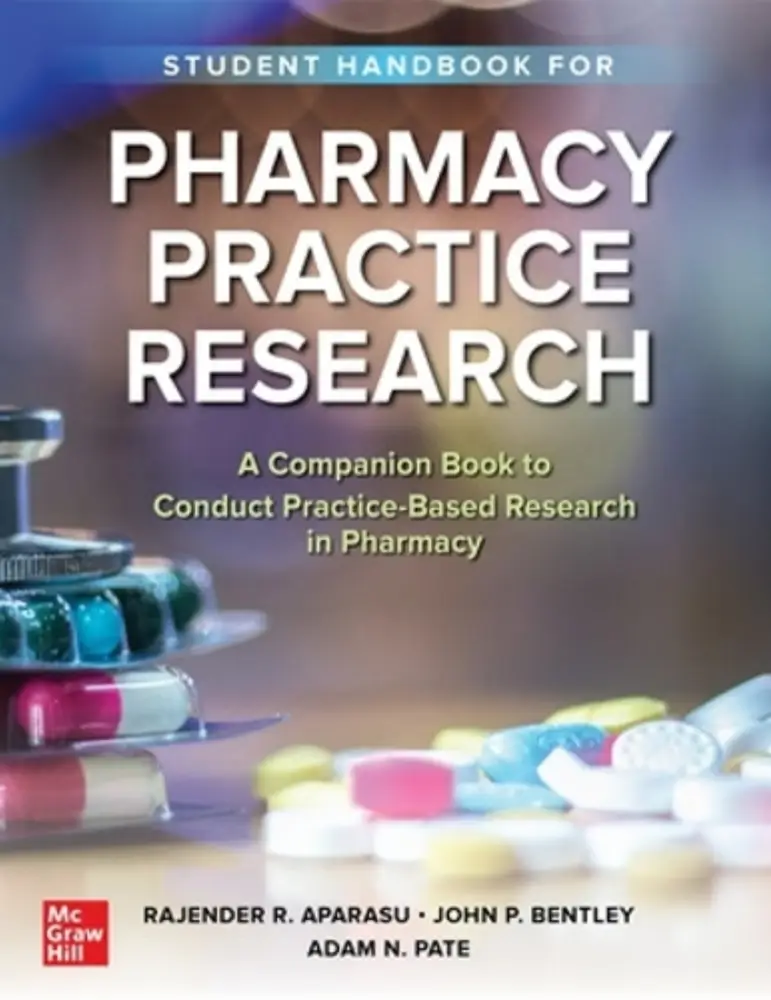

Student Handbook for Pharmacy Practice Research (PB 2022)
Student Handbook for Pharmacy Practice Research is a comprehensive and practical guide designed to support pharmacy students, residents, and early-career professionals in conducting high-quality research within real-world pharmacy settings. This book fills a critical gap in pharmacy education by focusing specifically on practice-based research, an area that directly connects academic knowledge with patient care and healthcare outcomes.
Authored by Rajender R. Aparasu, John P. Bentley, and Adam N. Pate, and published by McGraw Hill in 2022, the book provides a structured, step-by-step framework for planning, conducting, and presenting pharmacy research projects. It is especially useful for PharmD students undertaking capstone projects or research components during their training.
One of the key strengths of this handbook is its organization into three major sections: planning, conducting, and presenting research. This logical progression mirrors the real-life research process and makes it easier for learners to follow and apply concepts effectively. The first section focuses on the fundamentals, including identifying research questions, selecting appropriate study designs, understanding research ethics, and preparing protocols for institutional review board (IRB) approval. These foundational steps are crucial for ensuring that research is scientifically valid and ethically sound.
The second section delves into the practical aspects of conducting research in pharmacy practice settings. It covers a wide range of methodologies such as intervention studies, survey research, pharmacoepidemiology, qualitative research, and secondary data analysis. The book also emphasizes data management and statistical analysis, helping readers understand how to handle and interpret data accurately. Importantly, it highlights the role of mentorship, encouraging collaboration between students and experienced researchers to improve the quality and impact of research projects.
A distinctive feature of this book is its focus on practice-based research, which aims to generate evidence directly applicable to patient care. This includes studies conducted in hospitals, community pharmacies, and other healthcare settings. Practice-based research helps bridge the gap between scientific discoveries and their implementation in clinical practice, ultimately improving patient outcomes. The book explains how such research contributes to evidence-based medicine and supports innovations in pharmacy services.
Each chapter is designed to enhance learning through clear objectives, key terminology, practical tips, and review questions. This interactive approach helps reinforce understanding and encourages critical thinking. Additionally, real-world examples and case scenarios are included to demonstrate how research concepts are applied in practice, making the content more relatable and easier to grasp.
The final section focuses on disseminating research findings. It provides guidance on preparing abstracts, posters, and manuscripts, as well as navigating the peer-review and publication process. This is particularly valuable for students who may be unfamiliar with academic publishing. By learning how to effectively communicate research findings, readers can contribute to the advancement of pharmacy practice and professional knowledge.
Another important aspect highlighted in the book is the growing role of research in pharmacy education. Modern pharmacy curricula increasingly emphasize research competencies, requiring students to engage in projects that develop analytical and problem-solving skills. This handbook serves as a vital resource in meeting those educational requirements by offering practical tools and strategies for successful research execution.
In conclusion, Student Handbook for Pharmacy Practice Research (2022) is an essential resource for anyone involved in pharmacy research. Its clear structure, practical focus, and comprehensive coverage make it an invaluable guide for developing research skills and applying them in real-world settings. By bridging the gap between theory and practice, the book empowers pharmacy professionals to contribute meaningfully to evidence-based healthcare and improve patient care outcomes.





Reviews
There are no reviews yet