
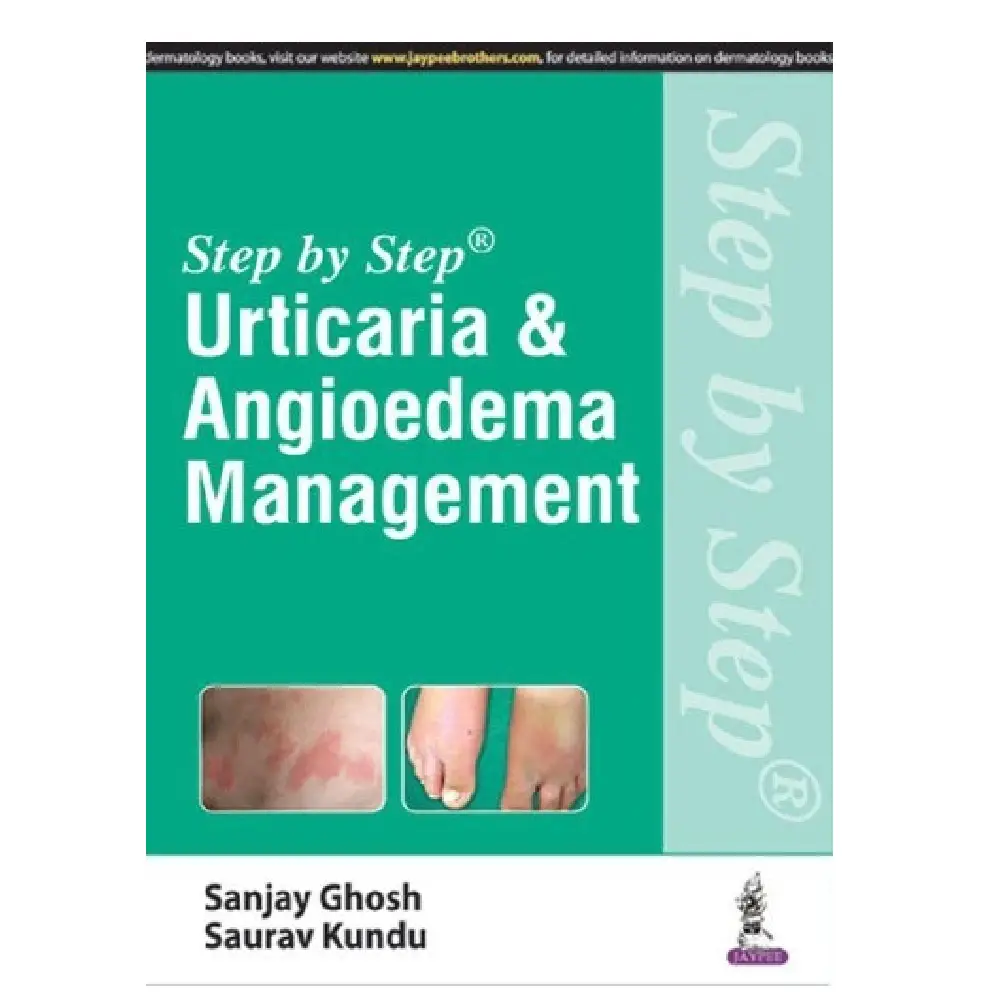

Step by Step Urticaria and Angioedema Management
Urticaria and angioedema are frequent dermatologic and immunologic conditions that can significantly impair quality of life and, in some cases, pose life-threatening risks. Urticaria is characterized by transient, pruritic wheals, whereas angioedema involves deeper swelling of the dermis and submucosal tissues, often affecting the face, lips, tongue, and airway. Although these conditions often coexist, their underlying mechanisms and management strategies may differ. A step-by-step approach ensures accurate diagnosis, appropriate therapy, and safe long-term management.
Step 1: Initial Assessment and Emergency Evaluation
The first step in management is to determine whether the patient is experiencing airway compromise or systemic involvement. Symptoms such as hoarseness, stridor, dyspnea, tongue swelling, or hypotension suggest severe angioedema or anaphylaxis and require immediate emergency treatment, including airway protection and administration of epinephrine when indicated.
A focused but thorough history should assess the onset, duration, frequency, and severity of symptoms. It is essential to determine whether episodes are acute or chronic (lasting longer than six weeks) and whether urticaria is present alongside angioedema.
Step 2: Clinical Evaluation and Classification
Clinical examination helps distinguish urticaria from angioedema. Urticarial wheals are superficial, erythematous, itchy, and transient, typically resolving within 24 hours. Angioedema is deeper, often painful or burning rather than itchy, and may persist for several days.
Classification is critical for management:
-
Acute vs. chronic urticaria
-
Spontaneous vs. inducible urticaria
-
Histamine-mediated vs. bradykinin-mediated angioedema
This classification guides both diagnostic testing and therapy.
Step 3: Diagnostic Investigations
In acute urticaria, routine laboratory testing is usually unnecessary. Chronic urticaria may warrant limited investigations such as complete blood count, inflammatory markers, and thyroid function tests to identify associated autoimmune conditions.
For patients with recurrent angioedema without urticaria, testing of C4 and C1 esterase inhibitor levels and function is essential to diagnose hereditary or acquired angioedema. Medication history is particularly important, as ACE inhibitors are a common cause of bradykinin-mediated angioedema.
Step 4: Identification and Avoidance of Triggers
Where possible, identifying triggers can significantly reduce disease burden. Common triggers include infections, medications, foods, physical stimuli, stress, and hormonal changes. However, in many cases of chronic spontaneous urticaria, no clear trigger is found. Patients should be reassured that the absence of an identifiable cause does not imply serious underlying disease.
Step 5: First-Line Pharmacologic Therapy
The cornerstone of urticaria management is second-generation, non-sedating H1 antihistamines. These medications effectively reduce wheal formation and itching with a favorable safety profile. Standard dosing is recommended initially, and treatment should be taken regularly rather than on demand.
Histamine-mediated angioedema generally responds to antihistamines, often in combination with short courses of systemic corticosteroids for acute exacerbations.
Step 6: Step-Up Therapy for Refractory Disease
If symptoms persist despite standard dosing, antihistamines may be increased up to four times the usual dose under medical supervision. Additional therapies such as leukotriene receptor antagonists may be considered in selected patients.
For chronic urticaria refractory to antihistamines, biologic therapy with omalizumab has demonstrated high efficacy and safety. In severe, treatment-resistant cases, immunosuppressive agents such as cyclosporine may be used with careful monitoring.
Step 7: Management of Angioedema
Management of angioedema depends on the underlying mechanism. Histamine-mediated angioedema is treated similarly to urticaria, with antihistamines, corticosteroids, and epinephrine in severe cases.
Bradykinin-mediated angioedema, including hereditary angioedema and ACE inhibitor–induced angioedema, does not respond to antihistamines or corticosteroids. Specific therapies such as C1 esterase inhibitor concentrates or bradykinin receptor antagonists are required, and airway protection is paramount.
Step 8: Patient Education and Long-Term Follow-Up
Patient education is essential for long-term disease control. Patients should be informed about medication adherence, trigger avoidance, and warning signs that require urgent medical attention. Chronic urticaria and recurrent angioedema often require long-term follow-up to assess disease activity, treatment response, and impact on quality of life.
Conclusion
A step-by-step approach to the management of urticaria and angioedema emphasizes early risk assessment, accurate classification, evidence-based therapy, and patient education. By following a structured management pathway, clinicians can achieve effective symptom control, reduce recurrence, prevent complications, and significantly improve patient outcomes.




Reviews
There are no reviews yet