
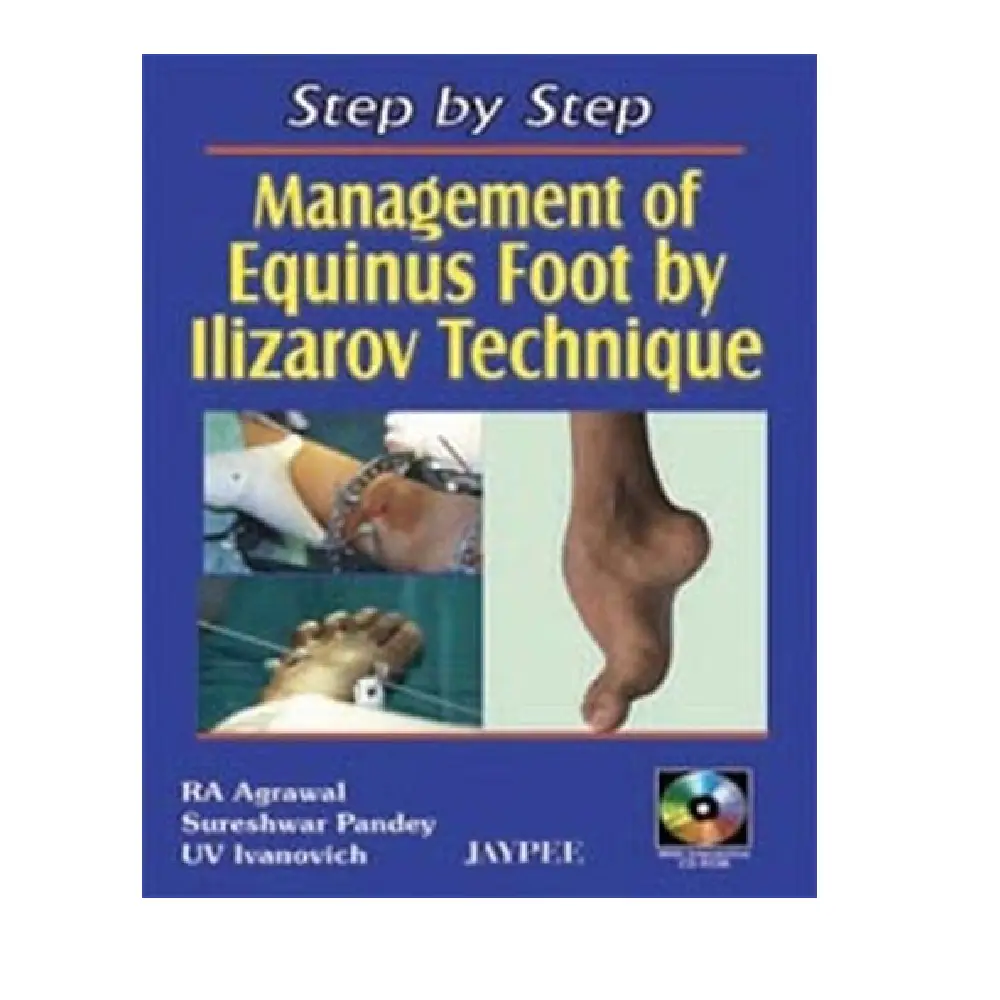
Step by Step Management of Equinus Foot by the Ilizarov Technique
Equinus foot is a deformity characterized by persistent plantar flexion of the ankle, resulting in the inability to place the heel flat on the ground during standing or walking. It may arise from congenital conditions, neuromuscular disorders such as cerebral palsy, post-traumatic sequelae, burns, infections, or prolonged immobilization. Severe or rigid equinus deformities are challenging to treat, especially when associated with soft tissue contractures, bone deformity, or limb length discrepancy. The Ilizarov technique, based on gradual distraction and biological tissue regeneration, offers an effective and versatile method for correcting equinus foot in a controlled and minimally invasive manner.
Step 1: Clinical Evaluation and Indication
Management begins with a detailed clinical assessment. The severity of equinus deformity is evaluated by examining ankle range of motion, gait pattern, heel contact, and compensatory knee or hip movements. It is essential to differentiate between dynamic equinus, which may be flexible, and fixed equinus, which often requires surgical intervention.
Associated problems such as limb length discrepancy, varus or valgus deformity, joint stiffness, skin condition, and neurovascular status must be documented. The Ilizarov technique is particularly indicated for severe, rigid, or recurrent equinus deformities, especially when conventional soft tissue release or tendon lengthening alone is insufficient.
Step 2: Radiological and Preoperative Planning
Radiological evaluation includes weight-bearing radiographs of the foot and ankle to assess bony alignment, joint congruity, and deformity apex. In some cases, computed tomography may be useful to evaluate joint surfaces or previous surgical changes.
Preoperative planning focuses on defining the correction strategy—whether correction will be achieved by soft tissue distraction alone or combined with osteotomy. The amount of correction required, frame configuration, and hinge placement are carefully planned to allow gradual, anatomically aligned correction.
Step 3: Frame Assembly and Surgical Application
The Ilizarov frame is constructed using circular rings, wires, and half-pins. Typically, rings are applied to the tibia and foot, with fixation points in the calcaneus and forefoot. Hinges are strategically placed near the ankle joint axis to allow controlled correction of equinus deformity.
Surgery is performed with minimal soft tissue dissection. If required, limited procedures such as percutaneous Achilles tendon release or posterior soft tissue release may be combined with frame application. The stability and alignment of the frame are checked intraoperatively to ensure smooth distraction.
Step 4: Latency Period and Initiation of Distraction
After surgery, a latency period of 5–7 days is observed to allow initial tissue healing. Gradual distraction is then started, typically at a rate of 0.25 mm four times a day, allowing controlled lengthening of contracted soft tissues.
Gradual correction minimizes the risk of neurovascular injury, skin necrosis, or joint subluxation. The patient is closely monitored for pain, swelling, pin tract issues, and neurological symptoms.
Step 5: Gradual Correction and Monitoring
During the distraction phase, regular clinical and radiographic follow-up is essential. The correction is adjusted based on patient tolerance, soft tissue response, and alignment. The goal is to achieve a plantigrade foot, with the heel resting on the ground and the ankle positioned in neutral or slight dorsiflexion.
Physiotherapy is initiated early to maintain joint mobility, improve muscle strength, and prevent stiffness. Weight-bearing is often encouraged, as the Ilizarov frame provides stable fixation and functional loading enhances bone and soft tissue regeneration.
Step 6: Consolidation Phase
Once the desired correction is achieved, distraction is stopped, and the frame is maintained in position for a consolidation period. This phase allows the newly lengthened tissues to adapt and stabilize. The duration of consolidation varies depending on patient age, severity of deformity, and biological response.
Careful pin site care and ongoing physiotherapy are crucial during this phase to prevent infection and maintain functional gains.
Step 7: Frame Removal and Rehabilitation
Frame removal is performed once clinical and radiological assessment confirms stable correction. After removal, the limb is often protected with a cast or orthosis for several weeks. Intensive rehabilitation focuses on gait training, muscle strengthening, and balance.
Custom orthoses may be prescribed to maintain correction and prevent recurrence, particularly in patients with underlying neuromuscular disorders.
Step 8: Long-Term Follow-Up and Outcomes
Long-term follow-up is essential to monitor functional outcomes and detect recurrence. The Ilizarov technique has shown excellent results in achieving durable correction of equinus deformity, even in complex and recurrent cases. Its advantages include gradual correction, preservation of joint function, minimal soft tissue trauma, and the ability to address associated deformities simultaneously.
Conclusion
Step-by-step management of equinus foot using the Ilizarov technique provides a powerful and versatile solution for severe and rigid deformities. Through careful assessment, meticulous planning, gradual correction, and structured rehabilitation, the Ilizarov method restores a plantigrade, functional foot while minimizing complications and recurrence.
Reviews
There are no reviews yet