
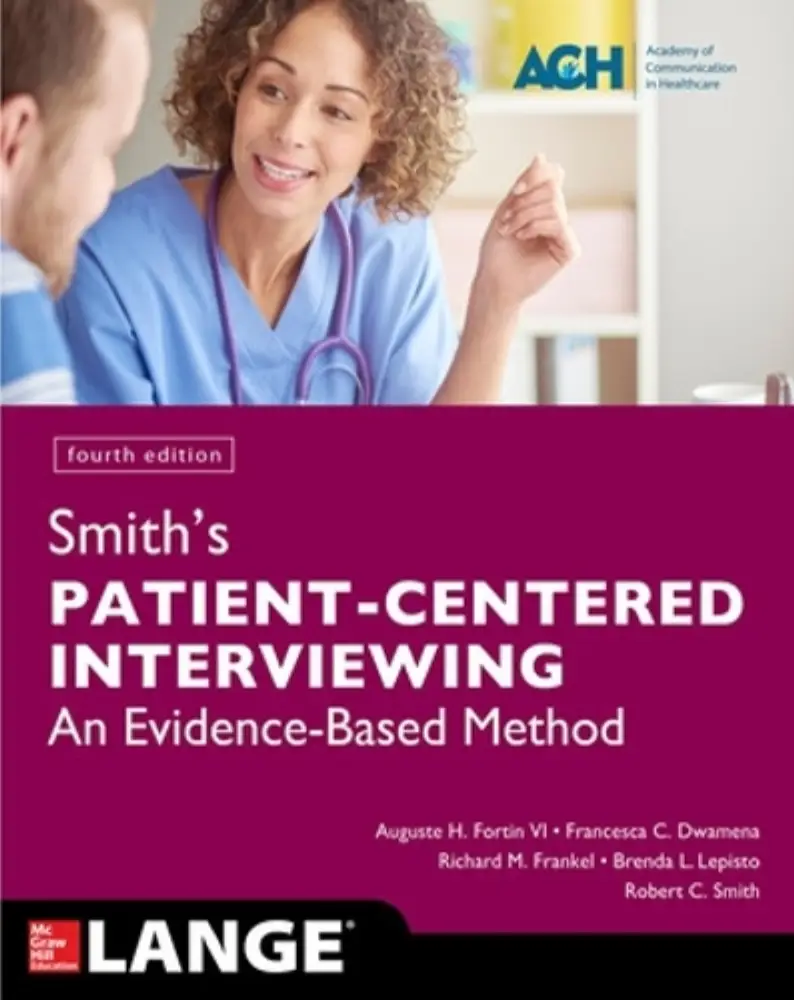

Smith’s Patient-Centered Interviewing: An Evidence-Based Method
Smith’s Patient-Centered Interviewing: An Evidence-Based Method, 4th Edition is a widely respected guide that teaches healthcare professionals how to conduct effective, empathetic, and structured patient interviews. Rooted in decades of clinical research and educational experience, the book emphasizes the importance of understanding the patient as a whole person rather than focusing solely on disease. It provides a practical framework for building strong doctor–patient relationships, improving diagnostic accuracy, and enhancing patient satisfaction and adherence to treatment.
The core principle of the book is patient-centered care, which involves actively engaging patients in conversations about their concerns, emotions, and expectations. The authors present a step-by-step interviewing method that integrates both biomedical and psychosocial aspects of care. This dual focus ensures that clinicians not only gather accurate clinical data but also understand the personal and emotional context of the patient’s illness.
The interviewing process is divided into distinct but interconnected phases. The initial phase focuses on setting the stage, which includes establishing rapport, ensuring privacy, and introducing the purpose of the encounter. The book emphasizes the importance of first impressions and nonverbal communication, such as eye contact, posture, and tone of voice, in building trust. Clinicians are encouraged to create a safe and respectful environment that invites open communication.
The next phase involves eliciting the patient’s story using open-ended questions. Patients are given the opportunity to express their concerns in their own words without interruption. This approach helps uncover the full spectrum of symptoms, beliefs, and expectations. The book highlights techniques such as active listening, reflection, and summarization to ensure that patients feel heard and understood. These skills are essential for identifying key clinical issues and avoiding premature conclusions.
A distinguishing feature of the method is its focus on emotional cues. The authors stress that patients often communicate their feelings indirectly through verbal hints or nonverbal signals. Recognizing and responding to these cues with empathy is a critical component of effective interviewing. The book provides practical strategies for exploring emotions, such as naming the feeling, expressing understanding, and offering support. This not only strengthens the therapeutic relationship but also provides valuable insights into the patient’s experience of illness.
The transition to the doctor-centered phase involves asking more specific, closed-ended questions to clarify details and complete the clinical assessment. This phase includes gathering information about the history of present illness, past medical history, medications, and other relevant data. The book emphasizes the importance of maintaining a balance between efficiency and empathy, ensuring that the interview remains patient-focused even when detailed information is being collected.
Another key component of the book is the integration of psychosocial factors into clinical care. It introduces the concept of the “biopsychosocial model,” which considers biological, psychological, and social influences on health. Clinicians are encouraged to explore issues such as stress, family dynamics, cultural beliefs, and socioeconomic factors that may affect the patient’s condition and treatment.
The book also addresses challenging clinical situations, such as dealing with angry, anxious, or uncommunicative patients. It offers practical guidance on managing time constraints, delivering bad news, and handling sensitive topics. Communication strategies are supported by evidence, making the recommendations both reliable and applicable in real-world settings.
In conclusion, Smith’s Patient-Centered Interviewing: An Evidence-Based Method is an essential resource for developing effective clinical communication skills. Its structured approach, emphasis on empathy, and strong evidence base make it a valuable guide for improving patient care. By focusing on the patient’s perspective and fostering meaningful interactions, the book helps clinicians achieve better clinical outcomes and build lasting therapeutic relationships.



Reviews
There are no reviews yet