
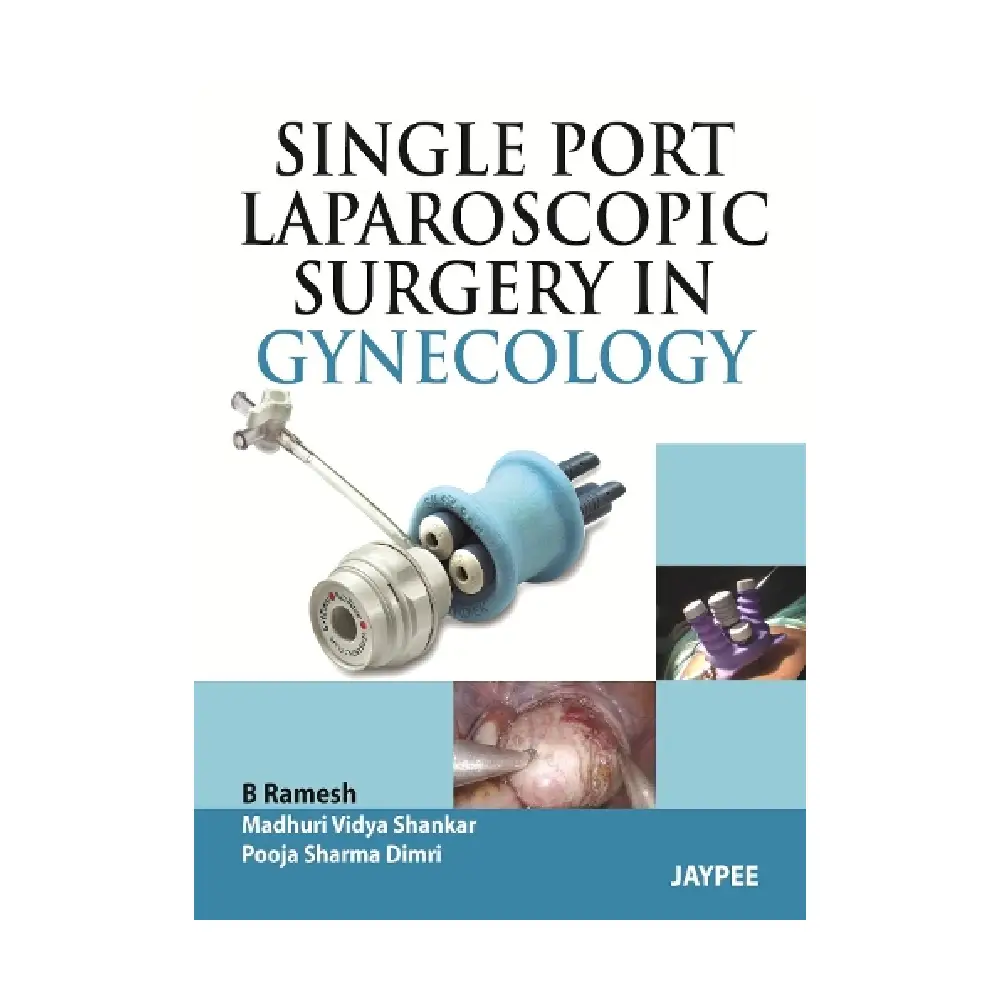


Single-Port Laparoscopic Surgery in Gynecology
Single-port laparoscopic surgery is an advanced minimally invasive surgical technique that has gained significant popularity in modern gynecology. It is performed through a single incision, usually at the umbilicus, allowing surgeons to operate using specialized ports and instruments. This technique represents an evolution of conventional laparoscopy, aiming to improve cosmetic outcomes, reduce postoperative pain, and accelerate patient recovery while maintaining surgical efficacy.
The primary advantage of single-port laparoscopic surgery is the reduction in surgical trauma. Traditional laparoscopic procedures typically require three to four small incisions to introduce the camera and surgical instruments. In contrast, single-port surgery uses only one incision, which minimizes tissue injury and lowers the risk of wound complications. Because the incision is often hidden within the natural fold of the navel, the procedure offers excellent cosmetic results, which is particularly appealing to young patients and those concerned about postoperative scarring.
Pain reduction is another major benefit associated with this surgical approach. Fewer incisions generally mean less postoperative discomfort, reduced need for analgesics, and improved patient satisfaction. Early mobilization after surgery also decreases the risk of complications such as deep vein thrombosis and pulmonary issues. Additionally, shorter hospital stays contribute to cost-effectiveness and better utilization of healthcare resources.
Single-port laparoscopic surgery is used in various gynecological conditions. It is commonly performed for ovarian cystectomy, ectopic pregnancy management, tubal ligation, hysterectomy in selected cases, and evaluation of chronic pelvic pain. The technique is also useful in diagnosing and treating early-stage gynecological diseases. However, patient selection is crucial to ensure safety and procedural success. Ideal candidates are usually those with limited pelvic adhesions, smaller uterine size, and benign pathology.
Despite its advantages, single-port laparoscopy presents several technical challenges. The primary difficulty lies in instrument crowding, as all surgical tools are introduced through one access point. This can lead to reduced range of motion and compromised triangulation, which are essential for precise surgical manipulation. Surgeons must therefore undergo specialized training to master the ergonomic demands of this technique. The use of articulating instruments and high-definition imaging systems helps overcome some of these limitations.
Another challenge is the longer learning curve associated with single-port procedures compared to conventional laparoscopy. Surgeons require experience in advanced minimally invasive surgery before attempting this technique independently. In addition, operative time may initially be longer, particularly during the early phase of adoption. However, with increasing surgical expertise, procedure duration tends to become comparable to standard laparoscopic surgery.
Patient safety remains the most important consideration in single-port gynecological surgery. Conversion to multi-port laparoscopy or open surgery should be performed if visualization is poor, bleeding control is difficult, or anatomical structures cannot be clearly identified. Maintaining strict adherence to surgical principles is essential to avoid complications such as organ injury, hemorrhage, or infection.
Technological advancements have played a key role in the development of single-port gynecological surgery. The introduction of robotic-assisted platforms has further improved precision, dexterity, and visualization during complex procedures. Robotic systems help overcome ergonomic limitations by allowing enhanced instrument articulation and better surgeon comfort.
Postoperative outcomes following single-port laparoscopic gynecological surgery are generally favorable. Patients experience faster recovery, early return to daily activities, and high cosmetic satisfaction. The risk of wound infection is relatively low when proper aseptic techniques are followed. However, long-term comparative studies are still needed to establish the superiority of this technique over conventional laparoscopy in all clinical scenarios.
In conclusion, single-port laparoscopic surgery represents a significant advancement in minimally invasive gynecology. It combines aesthetic advantages with clinical effectiveness and improved postoperative comfort. Although technical challenges and a steep learning curve exist, ongoing technological improvements and surgical training are expanding its applications. With appropriate patient selection and skilled surgical execution, single-port laparoscopy is becoming an important component of modern gynecological surgery.







Reviews
There are no reviews yet