
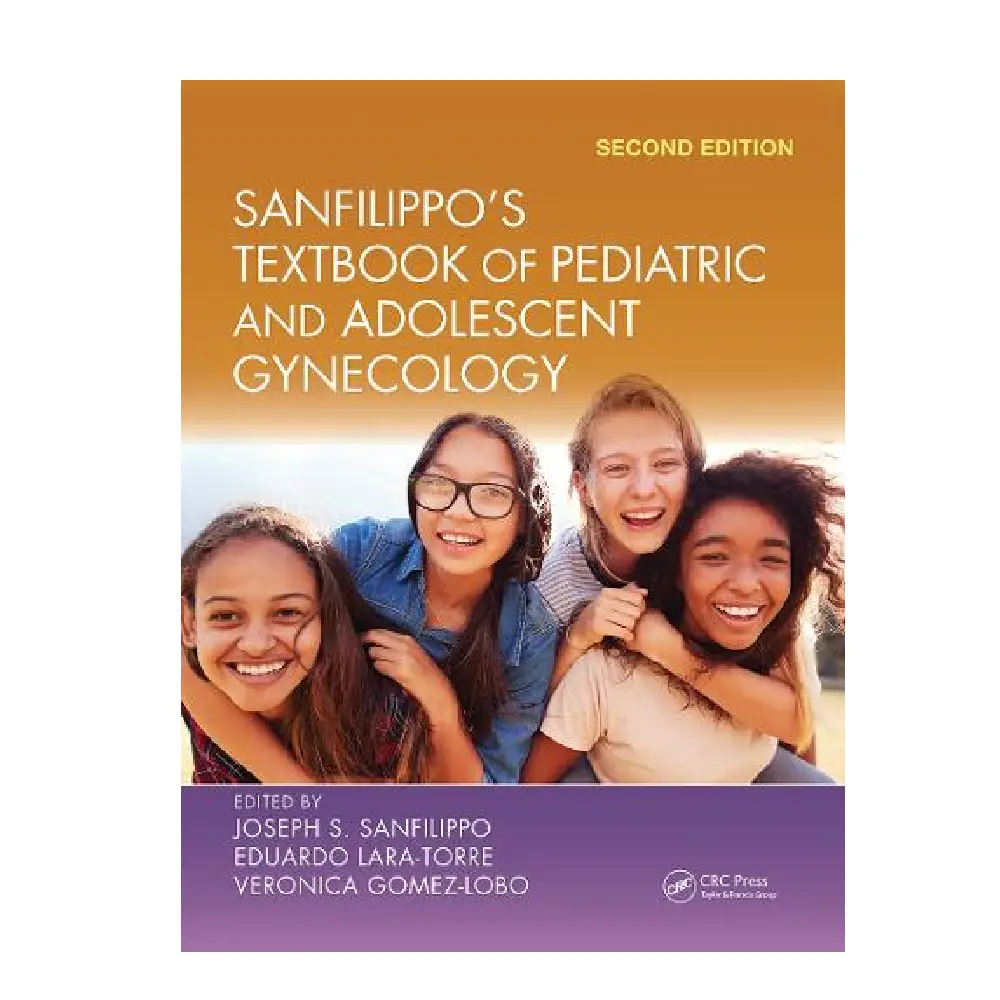
Sanfilippo’s Textbook of Pediatric and Adolescent Gynecology
Sanfilippo’s Textbook of Pediatric and Adolescent Gynecology is a comprehensive reference work focusing on the unique gynecological health needs of children and adolescents. This textbook is widely regarded as an authoritative source for clinicians, pediatricians, gynecologists, and medical students who are involved in managing reproductive health issues in younger populations. It bridges the gap between pediatrics and gynecology by providing detailed scientific, clinical, and practical guidance for diagnosing and treating disorders affecting the female reproductive system during childhood and adolescence.
The book covers a broad spectrum of topics related to developmental physiology, congenital anomalies, hormonal maturation, and gynecological disorders seen in early life stages. It begins with fundamental concepts of normal growth and sexual development, helping readers understand the physiological milestones of puberty and reproductive maturation. Emphasis is placed on normal variants of development to prevent unnecessary medical interventions and to help clinicians distinguish between physiological changes and pathological conditions.
One of the key strengths of this textbook is its focus on clinical evaluation and diagnostic approach. It provides systematic methods for history taking, physical examination, and appropriate laboratory investigations in young patients presenting with gynecological symptoms. The book stresses the importance of sensitive communication when dealing with adolescents, as psychological and social factors play a crucial role in reproductive health assessment. Guidance is provided on maintaining confidentiality, obtaining consent, and ensuring patient comfort during clinical encounters.
The textbook also addresses common menstrual disorders during adolescence, including abnormal uterine bleeding, dysmenorrhea, and amenorrhea. Detailed explanations of endocrine regulation of the menstrual cycle help clinicians understand underlying hormonal imbalances that may contribute to these conditions. Management strategies include both pharmacological therapy and lifestyle modifications tailored to the needs of growing individuals.
Congenital anomalies of the reproductive tract are another major focus. The book discusses developmental abnormalities of the uterus, vagina, and external genitalia, along with diagnostic imaging techniques used for evaluation. Surgical and non-surgical treatment options are explored depending on the severity and type of malformation. Early detection and appropriate intervention are emphasized to improve long-term reproductive outcomes.
Infections affecting the genital tract in children and adolescents are also thoroughly covered. The textbook provides information on common bacterial, viral, and sexually transmitted infections, along with preventive strategies. Vaccination recommendations, particularly for human papillomavirus-related disease prevention, are highlighted as part of comprehensive adolescent healthcare.
Hormonal disorders such as polycystic ovary syndrome, delayed puberty, and precocious puberty are discussed in detail. The book explains pathophysiological mechanisms, diagnostic criteria, and evidence-based treatment protocols. Endocrine evaluation and multidisciplinary management involving pediatric endocrinologists are recommended for complex cases.
Another important aspect is the discussion of psychosocial and sexual health issues among adolescents. Topics such as body image concerns, sexual education, contraception counseling, and risk behavior prevention are addressed. The authors emphasize the role of healthcare providers in promoting healthy lifestyle choices and responsible reproductive behavior.
The surgical management section provides guidance on minimally invasive techniques and traditional surgical approaches when indicated. Postoperative care, complication prevention, and long-term follow-up are also described. Special attention is given to preserving future fertility whenever possible.
The textbook is written in a clear and clinically oriented style, making it suitable for both learning and reference purposes. Illustrations, case discussions, and algorithm-based management approaches help readers apply theoretical knowledge to real-world clinical situations. The content reflects contemporary advances in pediatric and adolescent gynecology while maintaining practical relevance.
Overall, Sanfilippo’s Textbook of Pediatric and Adolescent Gynecology serves as an essential resource for understanding the complex interplay of biological, psychological, and social factors influencing reproductive health in young females. Its comprehensive coverage of developmental disorders, endocrine abnormalities, infections, and psychosocial aspects makes it a valuable addition to medical education and clinical practice in pediatric and adolescent gynecology.



Reviews
There are no reviews yet