
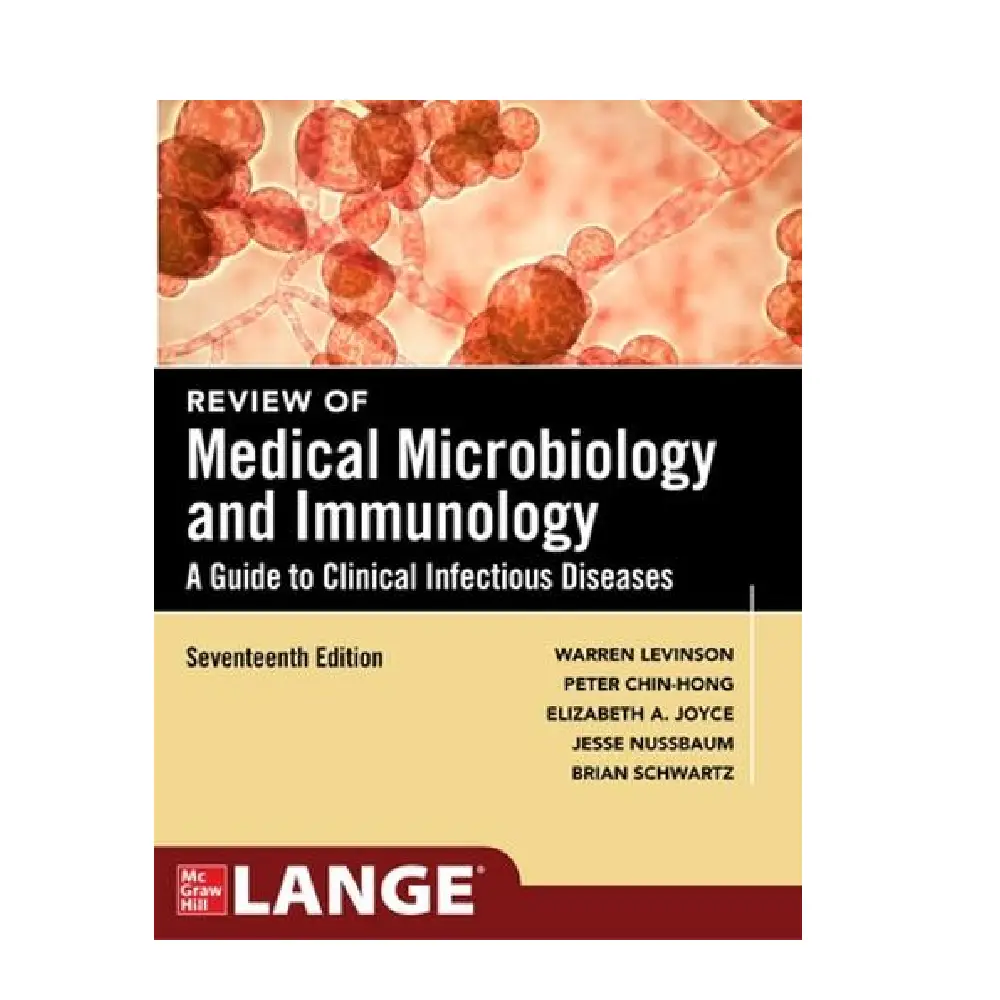
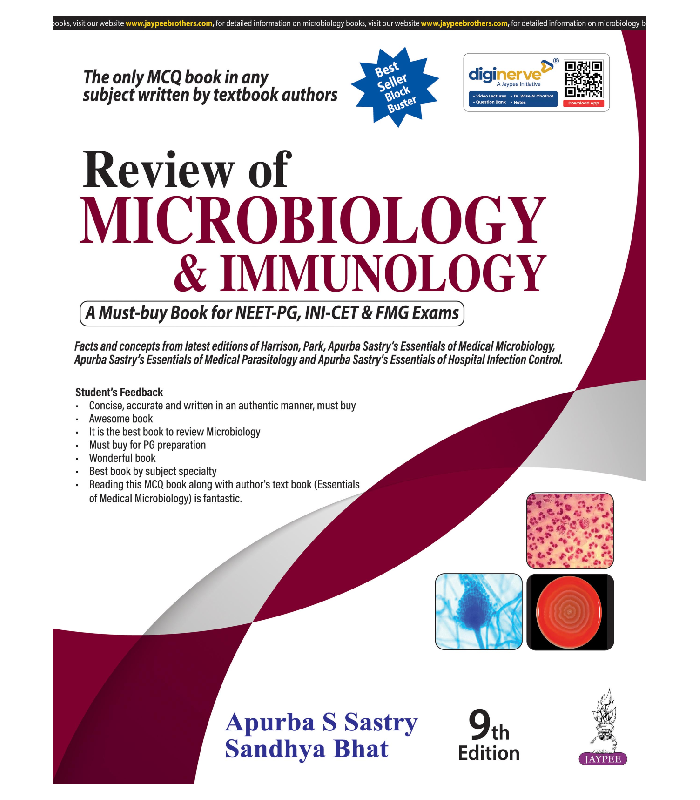
Review of Medical Microbiology and Immunology
Review of Medical Microbiology and Immunology is a concise, high‑yield resource designed for medical students, residents, and healthcare professionals preparing for board exams, USMLE, or in‑course assessments. The book distills complex topics in microbiology and immunology into a clear, focused format that emphasizes clinical relevance, key facts, and rapid recall, making it an essential companion for both study and review.
Purpose and Audience
The primary goal of this book is to provide a rapid-reference guide that synthesizes critical information on microorganisms, host responses, pathogenesis, and immunologic mechanisms. Its target audience includes:
-
Medical students preparing for USMLE Step 1 or equivalent exams.
-
Residents seeking a refresher in microbiology and immunology.
-
Healthcare professionals needing a quick reference for clinical decision-making.
By focusing on core principles, high-yield facts, and clinical correlations, it bridges the gap between detailed textbooks and practical application.
Organization and Structure
The book is systematically organized into sections covering:
-
General Microbiology:
Covers the foundational principles of microbiology, including microbial structure, genetics, metabolism, growth, and classification. Emphasis is placed on how microbial physiology relates to pathogenicity and treatment. Topics include bacterial cell walls, capsules, spores, virulence factors, and mechanisms of antibiotic action. The section also introduces microbial genetics, including horizontal gene transfer, plasmids, and mechanisms of antimicrobial resistance. -
Bacteriology:
Organized by bacterial groups, this section provides a concise overview of clinically important bacteria. Each entry typically includes morphology, staining characteristics, pathogenesis, epidemiology, clinical manifestations, laboratory diagnosis, and treatment. High-yield bacteria such as Staphylococcus aureus, Streptococcus species, Escherichia coli, Salmonella, and Mycobacterium tuberculosis are emphasized. Summary tables and charts highlight key differences between similar organisms for rapid recall. -
Virology:
Viral pathogens are categorized by type (DNA, RNA, retroviruses, etc.) and clinical syndromes. Each virus is described in terms of structure, replication, pathogenesis, associated diseases, diagnosis, and therapy. Clinically relevant viruses like influenza, HIV, hepatitis viruses, herpesviruses, and emerging pathogens are covered, with diagrams illustrating replication cycles and pathophysiologic mechanisms. -
Mycology and Parasitology:
Fungal and parasitic organisms are discussed in a concise, clinical framework. Fungi are classified as yeasts, molds, and dimorphic fungi, with focus on pathogenic species causing superficial, systemic, or opportunistic infections. Parasitology covers protozoa and helminths, highlighting life cycles, modes of transmission, clinical syndromes, and laboratory identification. Tables often compare similar organisms, facilitating differential diagnosis. -
Immunology:
This section integrates innate and adaptive immunity, focusing on mechanisms that protect the host and contribute to disease. Topics include pattern recognition receptors (PRRs), complement pathways, cytokines, T-cell and B-cell responses, antigen presentation, and immunologic memory. Clinical relevance is emphasized with examples such as hypersensitivity reactions, autoimmunity, and immunodeficiency syndromes. -
Vaccines and Immunoprophylaxis:
Covers principles of vaccination, types of vaccines (live-attenuated, inactivated, subunit, mRNA), and schedules. Emphasis is placed on mechanisms of protection, efficacy, and indications, along with side effects and contraindications. Emerging vaccines and updates in immunization practices are also summarized. -
Clinical Correlation and High-Yield Review:
Throughout the book, clinical vignettes, tables, and bullet points highlight the link between microbiology and patient care. Examples include distinguishing bacterial causes of meningitis based on age group, recognizing viral exanthems, and identifying opportunistic infections in immunocompromised patients.
Learning Aids
-
Tables and Charts: Quick comparison of organisms, staining properties, antibiotic susceptibility, and clinical syndromes.
-
Illustrations: Diagrams of microbial structure, replication cycles, immune responses, and pathogenic mechanisms simplify complex concepts.
-
Summary Boxes: High-yield points are emphasized for rapid memorization.
-
Practice Questions: Multiple-choice questions mimic board exam style, reinforcing critical concepts.
Clinical Relevance
The book stresses clinically oriented microbiology, integrating laboratory findings with patient care decisions. Pathogen identification, antibiotic selection, infection control, and vaccine implementation are consistently linked to real-world clinical scenarios. This approach reinforces why understanding microbiology is essential for safe and effective medical practice.
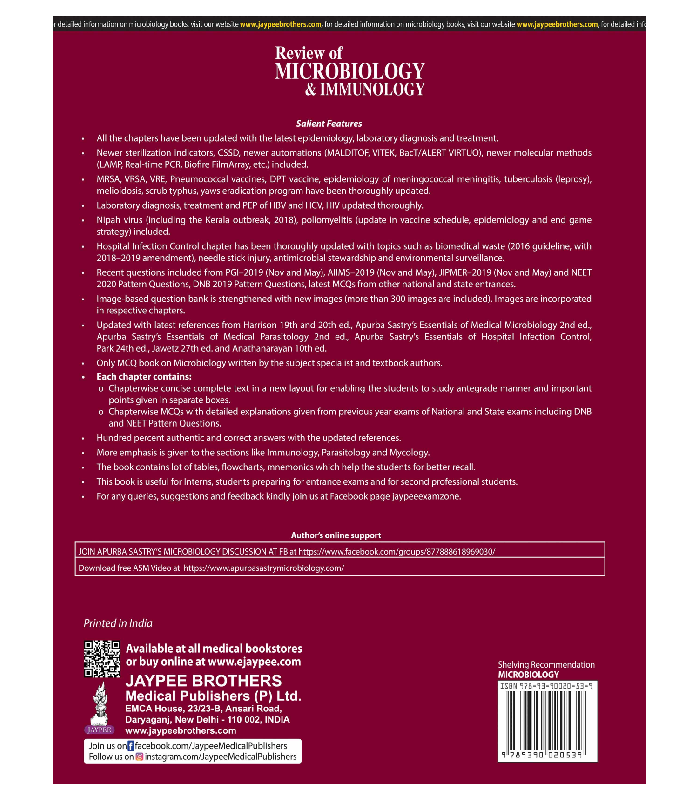
Updates and Evidence-Based Content
Recent editions incorporate the latest guidelines for:
-
Antimicrobial therapy, resistance patterns, and stewardship principles.
-
Updated vaccine recommendations, including new immunizations and booster schedules.
-
Emerging pathogens and global health threats, such as SARS-CoV-2, Ebola, and antibiotic-resistant bacteria.
Strengths
-
Concise yet comprehensive, balancing depth and accessibility.
-
Clear organization facilitates quick review and exam preparation.
-
Integration of clinical correlations reinforces practical application.
-
Visual aids, tables, and summaries enhance memory retention.
Conclusion
Review of Medical Microbiology and Immunology is an essential study guide and reference for medical students, residents, and clinicians seeking a concise, clinically relevant overview of microbiology and immunology. Its high-yield approach, visual organization, and emphasis on clinical applications make it an invaluable tool for exam preparation and everyday clinical practice.
It equips readers not only with factual knowledge but also with the ability to apply microbiologic and immunologic principles in patient care, a critical skill in modern medicine.
Reviews
There are no reviews yet