
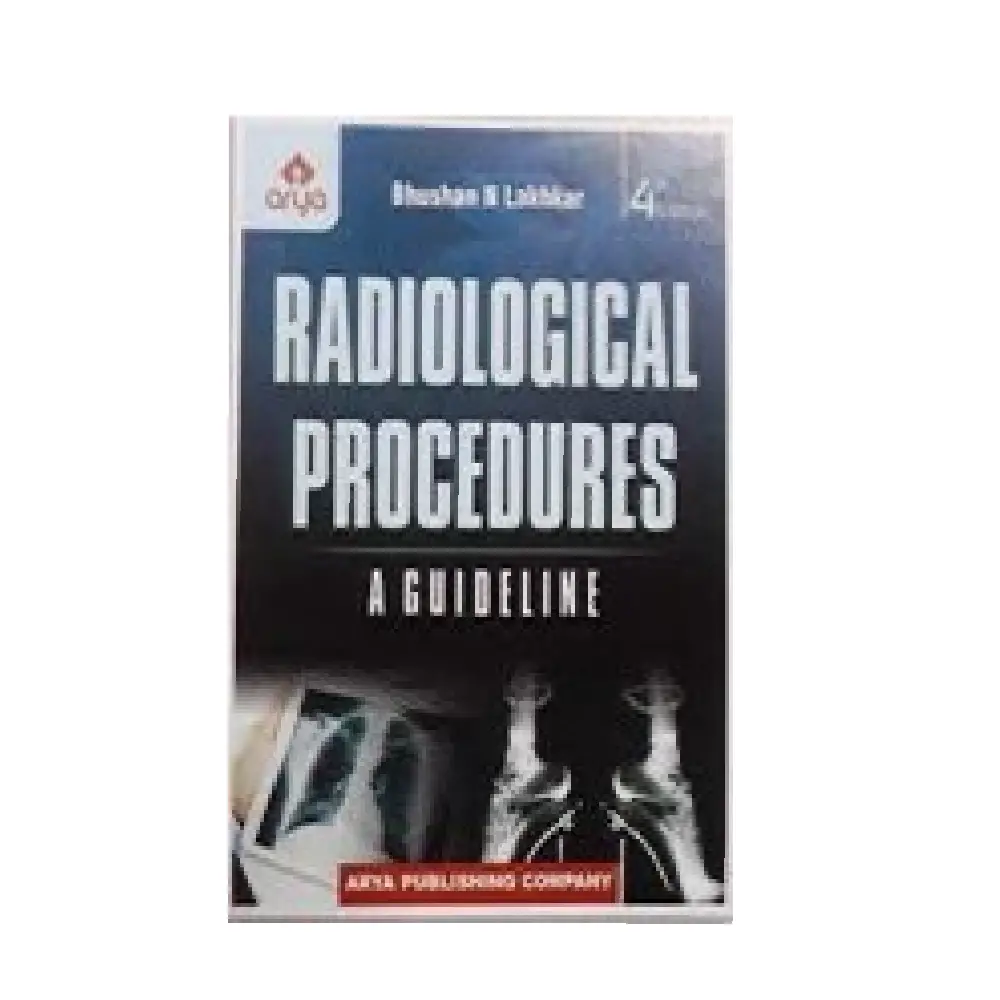
Radiological Procedures: A Guideline
Radiological Procedures: A Guideline is a well-established medical textbook authored by Dr. Bhushan N. Lakhkar and Bhushita Lakhkar, now in its 4th edition. Published by Arya Publishing Company, this English-language reference book is designed primarily for medical students, radiology trainees, radiographers, and clinical practitioners who seek a practical and comprehensive understanding of diagnostic and interventional radiological procedures. It balances fundamental concepts with procedural details, making it suitable for both undergraduate and postgraduate learning.
Basic Product Details
-
Author Name: Dr. Bhushan N. Lakhkar & Bhushita Lakhkar
-
Edition: 4th Edition
-
Publisher: Arya Publishing Company
-
Year of Publication: 2022 (often reprinted in 2024)
-
ISBN: 9789394102255
-
Product Type: Educational Medical Textbook
-
Category: Radiology / Medical Procedures
-
Language: English
-
Print Length: ~344 pages
Description & Purpose
Radiological Procedures: A Guideline is a practical procedural manual intended to guide learners through the essential imaging techniques and workflows that form the backbone of modern diagnostic radiology. The book is especially relevant for those preparing for clinical exams (like MBBS, MD, DNB, or diploma examinations) as well as radiologic technologists and allied health professionals looking for a structured step-by-step approach to imaging procedures.
The scope of the book spans the core radiological modalities used in clinical practice today: conventional radiography (X-rays), fluoroscopy, ultrasound, computed tomography (CT), magnetic resonance imaging (MRI), and more advanced image-guided interventions. Each chapter emphasizes not just how to perform procedures but why they are chosen, what the expected outcomes are, and what potential pitfalls clinicians may encounter. This format makes the text valuable for both self-study and guided instruction within medical curricula.
Core Content and Structure
The textbook is arranged in a logical progression that builds from basic imaging principles to complex interventional techniques:
1. Introduction to Radiological Practice
The book typically starts by outlining the fundamentals of radiologic science — physics underlying imaging, safety principles (including radiation protection), equipment basics, and patient positioning. Emphasis is placed on understanding how radiation interacts with tissues, image formation, and common artifacts that can affect diagnostic quality.
2. Conventional Radiography Procedures
This section focuses on standard X-ray projections for different body regions (chest, abdomen, skeletal system). It details indications, patient preparation, positioning, and the radiologist’s role in optimizing image quality while minimizing exposure. Clear procedural checklists help readers internalize correct technique and common diagnostic findings.
3. Ultrasonography Techniques
Ultrasound is discussed next, with a focus on diagnostic sonography, probe selection, scanning protocols, and normal vs. pathological appearances. Common applications such as abdominal, obstetric, vascular, and musculoskeletal ultrasound are covered. The book highlights advantages like real-time imaging, absence of ionizing radiation, and its usefulness in point-of-care settings.
4. CT and MRI Procedures
More advanced cross-sectional imaging modalities like CT and MRI are given significant attention. Here, the textbook explains protocol design, contrast usage, slice selection, and interpretation strategies for various clinical problems. Practical tips help students understand how CT excels in trauma and acute care settings, while MRI provides superior soft-tissue contrast and evaluation of neurological and musculoskeletal conditions.
5. Image-Guided Interventions
One of the book’s strengths is its coverage of minimally invasive, image-guided procedures such as biopsies, drainages, and vascular interventions. These chapters guide readers through indications, sterility protocols, needle placement techniques, and complication management — bridging diagnostics with therapeutic radiology.
Educational Features and Strengths
-
Clear, step-by-step procedural outlines make complex imaging techniques easier to understand and recall.
-
Illustrative diagrams and sample radiographs help link textbook knowledge with real clinical imaging.
-
Focus on clinical relevance ensures that students learn both how and why procedures are performed.
-
Ideal for exam preparation, skill development, and as a reference during clinical rotations.
Educational Impact
Radiological procedures form a core part of medical diagnostics. Mastering them not only improves diagnostic accuracy but also enhances patient safety and care quality. By distilling both foundational principles and advanced imaging techniques into a single, structured guide, the book supports learners at multiple stages of their medical careers — from early clinical rotations to specialized radiology training.

Reviews
There are no reviews yet