
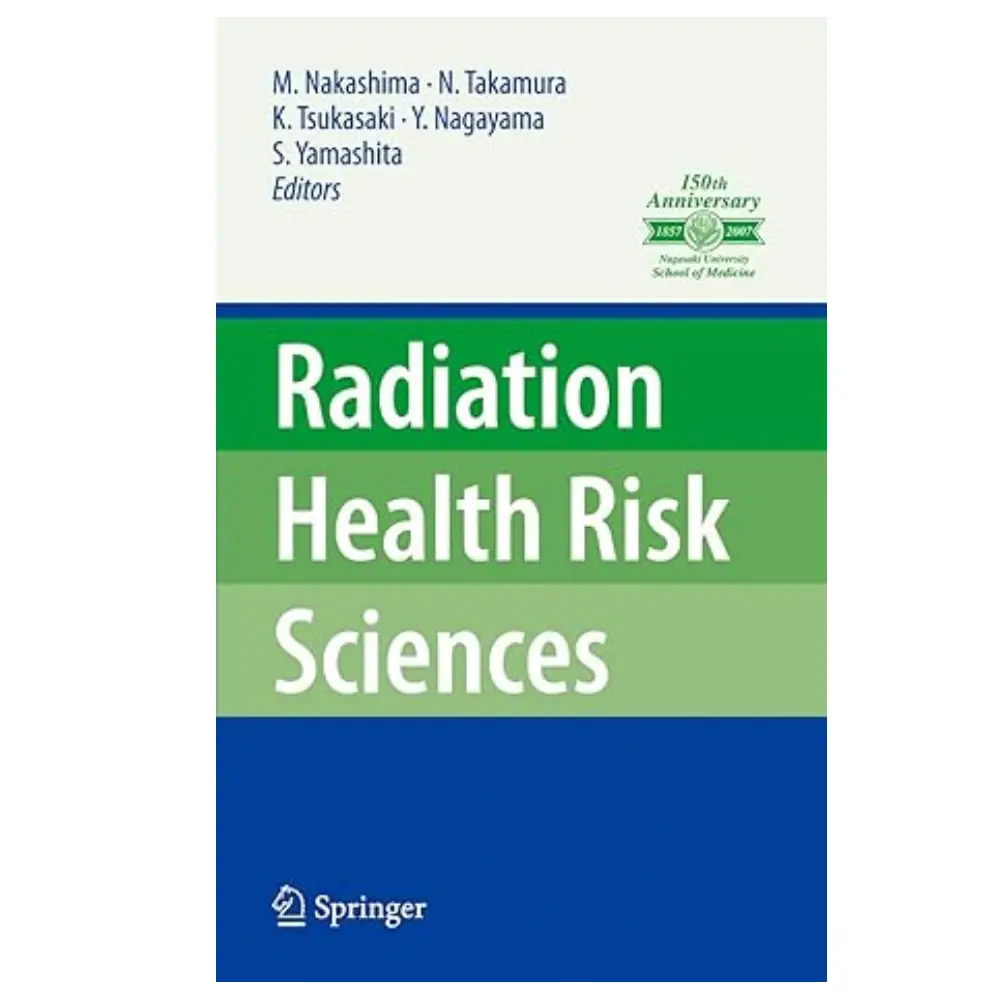
Radiation health risk science
Radiation Health Risk Sciences is an interdisciplinary field that studies the biological effects of ionizing radiation on human health and evaluates the risks associated with radiation exposure. It integrates knowledge from radiation biology, epidemiology, physics, toxicology, medicine, public health, and environmental science to understand how radiation affects living tissues and to develop strategies for protection and risk reduction.
Ionizing radiation has enough energy to remove tightly bound electrons from atoms, creating ions. Sources of ionizing radiation include natural background radiation (such as cosmic rays and radon gas), medical procedures (X-rays, CT scans, nuclear medicine), occupational exposures, nuclear power generation, and accidental releases from nuclear incidents. Understanding how these exposures translate into health risks is central to radiation health risk sciences.
At the biological level, ionizing radiation interacts with cells primarily by damaging DNA. This damage can occur directly by breaking DNA strands or indirectly through the formation of reactive oxygen species. The most critical forms of DNA damage include single-strand breaks, double-strand breaks, and base modifications. Cells possess repair mechanisms to correct such damage, but errors in repair may lead to mutations, chromosomal abnormalities, or cell death. If mutations occur in critical genes controlling cell growth and division, they may increase the risk of cancer.
One of the key concepts in radiation health risk sciences is the distinction between deterministic effects and stochastic effects. Deterministic effects, also called tissue reactions, occur above a certain threshold dose and increase in severity with higher doses. Examples include skin burns, cataracts, radiation sickness, and organ damage. These effects are typically associated with high-dose exposures over a short period.
In contrast, stochastic effects have no clearly defined threshold. The probability of occurrence increases with dose, but the severity does not depend on the dose. Cancer induction and hereditary genetic effects are considered stochastic effects. Much of radiation risk assessment focuses on estimating the probability of cancer following low to moderate doses of radiation, such as those encountered in medical imaging or environmental exposure.
Epidemiological studies play a crucial role in radiation health risk sciences. Long-term studies of populations exposed to radiation—such as atomic bomb survivors, nuclear industry workers, and patients treated with radiation therapy—have provided valuable data on dose-response relationships. These studies help establish risk models and inform safety standards. However, estimating risks at very low doses remains challenging due to statistical limitations and confounding factors.
Risk assessment models often rely on the linear no-threshold (LNT) hypothesis, which assumes that cancer risk increases linearly with dose and that there is no safe threshold. Although widely used for regulatory purposes, the LNT model remains a subject of scientific debate. Some researchers propose alternative models that suggest possible thresholds or even beneficial effects at very low doses, a concept known as hormesis. Nevertheless, radiation protection policies typically adopt conservative assumptions to ensure public safety.
Radiation health risk sciences also guide the development of radiation protection principles. These include justification (ensuring that the benefits of radiation use outweigh the risks), optimization (keeping exposures as low as reasonably achievable, or ALARA), and dose limitation (establishing exposure limits for workers and the public). International organizations such as the International Commission on Radiological Protection (ICRP) and national regulatory bodies use scientific evidence to set these standards.
Medical applications of radiation represent a major focus area. While diagnostic imaging and radiation therapy provide substantial clinical benefits, they also involve exposure to ionizing radiation. Balancing medical benefits with potential long-term risks is a critical consideration. Advances in technology, dose-reduction techniques, and improved imaging protocols aim to minimize unnecessary exposure while maintaining diagnostic accuracy.
Environmental and occupational health aspects are equally important. Radon exposure in homes, cosmic radiation for airline crews, and potential releases from nuclear facilities require monitoring and risk evaluation. Emergency preparedness and response planning are integral components of the field, particularly in the context of nuclear accidents or radiological terrorism.
In summary, radiation health risk sciences is a vital discipline that seeks to understand and quantify the health effects of radiation exposure. By combining biological research, epidemiological evidence, and risk modeling, it supports evidence-based guidelines for radiation protection in medicine, industry, and the environment. Its ultimate goal is to safeguard human health while enabling the beneficial uses of radiation in science and healthcare.



Reviews
There are no reviews yet