
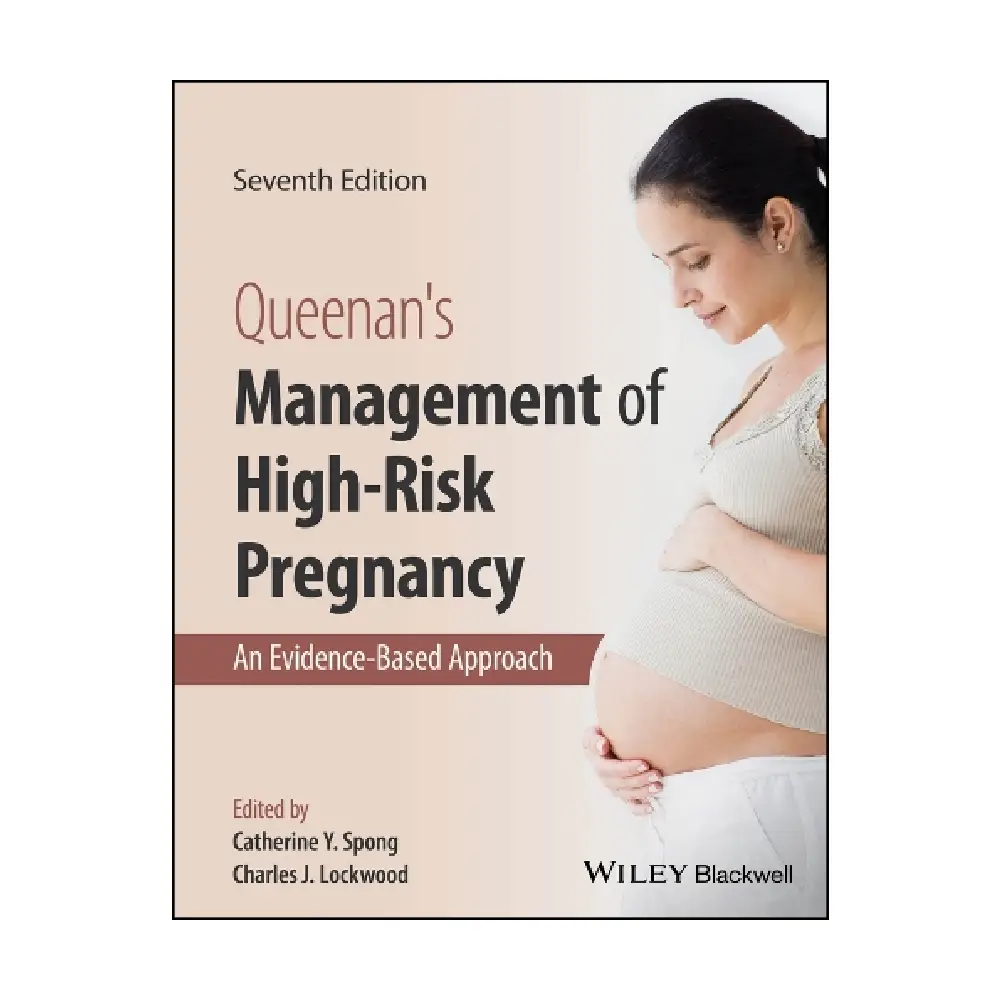
Queenan’s Management of High-Risk Pregnancy
Queenan’s Management of High-Risk Pregnancy: An Evidence-Based Approach is a comprehensive and authoritative textbook designed to guide obstetricians, maternal–fetal medicine specialists, postgraduate trainees, and residents in the management of complicated pregnancies. The book is widely regarded as a practical clinical reference that bridges evidence-based medicine with real-world obstetric care, focusing on improving maternal and perinatal outcomes.
Named after Dr. John T. Queenan, a pioneer in maternal–fetal medicine, this text emphasizes systematic evaluation, risk stratification, early diagnosis, and multidisciplinary management of high-risk obstetric conditions. It is structured to provide both foundational knowledge and advanced clinical guidance, making it valuable for board examination preparation as well as daily clinical practice.
Scope and Structure
The book is typically organized into thematic sections that cover maternal medical disorders, obstetric complications, fetal conditions, and special clinical scenarios. Each chapter follows a consistent format that includes epidemiology, pathophysiology, diagnostic criteria, clinical features, management strategies, and evidence-based recommendations. References to current guidelines and landmark trials strengthen the scientific credibility of the text.
Maternal Medical Disorders
A significant portion of the book focuses on preexisting and pregnancy-associated maternal diseases. Topics include:
-
Hypertensive disorders of pregnancy (chronic hypertension, preeclampsia, eclampsia, HELLP syndrome)
-
Diabetes mellitus (pre-gestational and gestational)
-
Thyroid disorders
-
Cardiac disease in pregnancy
-
Renal disease
-
Autoimmune conditions such as systemic lupus erythematosus and antiphospholipid syndrome
-
Hematological disorders including anemia and thrombophilias
Each condition is discussed in terms of maternal risks, fetal implications, recommended surveillance, pharmacologic management, and timing of delivery. The text highlights the importance of preconception counseling and individualized care plans.
Obstetric Complications
The book provides detailed coverage of common and complex obstetric complications, such as:
-
Preterm labor and preterm premature rupture of membranes (PPROM)
-
Multiple gestation
-
Placenta previa and placenta accreta spectrum
-
Fetal growth restriction
-
Isoimmunization
-
Recurrent pregnancy loss
-
Infections in pregnancy
-
Amniotic fluid disorders
Clear algorithms and flowcharts help clinicians make timely decisions regarding hospitalization, antenatal corticosteroids, magnesium sulfate for neuroprotection, and indications for delivery.
Fetal Assessment and Surveillance
A strong emphasis is placed on fetal monitoring and diagnostic modalities. The book explains the appropriate use of:
-
Ultrasound and Doppler studies
-
Biophysical profile
-
Non-stress test (NST)
-
Contraction stress testing
-
Invasive diagnostic procedures such as amniocentesis and chorionic villus sampling
It also discusses fetal therapy in selected cases and outlines principles of perinatal decision-making when balancing maternal and fetal risks.
Critical Care and Emergencies
High-risk obstetrics often overlaps with critical care. The textbook addresses obstetric emergencies including:
-
Severe preeclampsia and eclampsia
-
Obstetric hemorrhage
-
Sepsis
-
Acute fatty liver of pregnancy
-
Thromboembolism
Management protocols emphasize rapid stabilization, multidisciplinary collaboration, and ICU-level care when required.
Evidence-Based Approach
One of the distinguishing features of this text is its commitment to evidence-based practice. Clinical recommendations are supported by current research, professional society guidelines, and systematic reviews. This ensures that management strategies reflect modern standards of care and evolving best practices.
Educational Value
The book is particularly useful for:
-
Residents preparing for obstetrics and gynecology examinations
-
Fellows in maternal–fetal medicine
-
Practicing obstetricians managing tertiary referral cases
-
Clinicians working in high-dependency obstetric units
Tables summarizing drug dosages, risk factors, and management pathways enhance quick reference during clinical duties.
Conclusion
Queenan’s Management of High-Risk Pregnancy stands as a cornerstone text in maternal–fetal medicine. By combining pathophysiological insight with practical clinical guidance, it equips healthcare providers to manage complex pregnancies with confidence and precision. Its structured format, evidence-based recommendations, and focus on multidisciplinary care make it an indispensable resource in modern obstetric practice.





Reviews
There are no reviews yet