
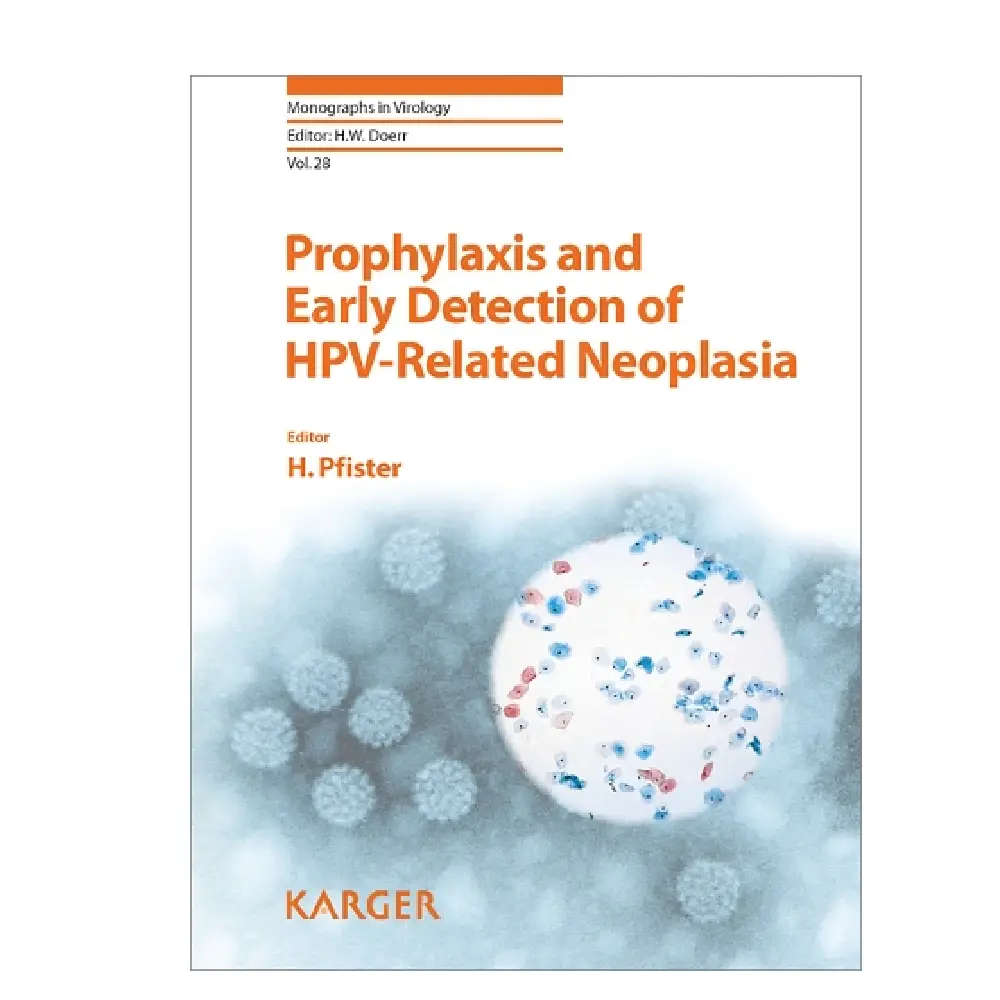


Prophylaxis and Early Detection of HPV-Related Neoplasia (Volume 28) is a comprehensive, scholarly volume that explores prevention strategies and early diagnosis of neoplasias caused by human papillomavirus (HPV)—a virus responsible for a significant global burden of cancer, particularly cervical cancer. This book offers an integrative perspective on virology, immunology, screening modalities, vaccines, population health strategies, and diagnostic technologies, making it essential reading for clinicians, researchers, public health professionals, and medical students interested in oncologic prevention.
Understanding HPV and Its Oncogenic Potential
Human papillomaviruses are a diverse group of DNA viruses, with more than 200 identified genotypes. Among these, high-risk HPV types (especially HPV-16 and HPV-18) are strongly linked to neoplastic transformations of epithelial cells. The virus’s oncogenicity stems from viral oncoproteins E6 and E7, which interfere with tumor suppressor proteins p53 and Rb, respectively. This disruption leads to dysregulated cellular proliferation, genomic instability, and, ultimately, malignant transformation—most prominently in the cervix, anus, vulva, vagina, penis, and oropharynx.
HPV infection is usually sexually transmitted and is one of the most common sexually transmitted infections worldwide. Although many infections are transient and cleared by the immune system, persistent infection with high-risk HPV types is the critical factor in neoplasia development. This volume explains the molecular pathways of viral persistence and transformation and highlights the interplay between viral factors, host immunity, and environmental cofactors such as smoking, immunosuppression, and co-infections.
Principles of Prophylaxis: Vaccination Strategies
One of the most significant advances in cancer prevention has been the development of HPV vaccines. The book details the evolution of prophylactic vaccines, beginning with the first bivalent (HPV-16/18) and quadrivalent (HPV-6/11/16/18) vaccines, and progressing to nonavalent vaccines that protect against nine HPV types responsible for up to 90% of HPV-related cancers and genital warts.
The immunological basis of HPV vaccination is also explored: vaccines use virus-like particles (VLPs) that mimic the virus’s outer shell, triggering strong humoral immunity with high titers of neutralizing antibodies without introducing infectious genetic material. Clinical trials and real-world effectiveness data show dramatic reductions in HPV infection rates, precancerous cervical lesions (CIN 2/3), and even invasive cervical cancer in vaccinated populations.
The volume discusses age-based recommendations, typically targeting pre-adolescents (ages 9–14) before the onset of sexual activity. It also addresses challenges to vaccine uptake, including socioeconomic barriers, vaccine hesitancy, misinformation, and healthcare infrastructure limitations. Strategies for improving coverage—such as school-based vaccination campaigns, community outreach, and policy interventions—are examined in various regional contexts.
Early Detection: Screening Modalities and Biomarkers
Early detection of HPV-related neoplasia markedly improves treatment outcomes and survival. The book reviews traditional and advanced screening tools:
1. Cytology (Pap Smear):
Traditionally the cornerstone of cervical cancer screening, the Pap smear detects cellular abnormalities associated with HPV infection and precancerous changes. While cost-effective and widely used, its sensitivity varies based on sampling quality and interpretation.
2. HPV DNA Testing:
Molecular assays that detect high-risk HPV DNA directly have higher sensitivity than cytology and can identify women at risk before cytological abnormalities develop. The book outlines platforms like PCR-based assays and hybrid capture tests, their performance metrics, and their role in primary screening or co-testing with cytology.
3. Biomarkers and Adjunctive Tools:
Emerging biomarkers such as p16INK4a, Ki-67 dual staining, and DNA methylation profiles show promise for enhancing specificity and risk stratification. These biomarkers can help distinguish transient infections from those more likely to progress toward neoplasia.
4. Visual Inspection with Acetic Acid (VIA):
In low-resource settings, VIA remains a viable screening method. It is inexpensive, provides immediate results, and facilitates “screen-and-treat” approaches, albeit with lower specificity compared to molecular tests.
Clinical Algorithms and Management Pathways
The volume outlines evidence-based algorithms for managing abnormal screening results. It describes risk thresholds that guide decisions for colposcopy, biopsy, ablative therapies, excisional procedures (LEEP), and surveillance. Patient counseling, follow-up intervals, and age-specific considerations are detailed to help clinicians balance the risks of overtreatment and underdiagnosis.
Public Health Perspectives and Global Initiatives
HPV-related neoplasia is a global health priority, especially in low- and middle-income countries where cervical cancer remains a leading cause of female cancer deaths. The book highlights global strategies such as the World Health Organization’s (WHO) Global Strategy to Accelerate the Elimination of Cervical Cancer, which calls for 90% of girls fully vaccinated by age 15, 70% of women screened by age 35 and again by age 45, and 90% of women with precancer or cancer receiving appropriate treatment.
Case studies from various regions illustrate how differences in healthcare systems, cultural norms, and resource availability influence screening and vaccination outcomes. Practical solutions—including task shifting to trained nurses, mobile health clinics, and community education campaigns—are examined.
Challenges, Future Directions, and Research Frontiers
The final sections address ongoing challenges and future research areas, such as:
-
Improving vaccine formulations to extend protection and durability
-
Therapeutic vaccines and immunotherapies targeting established HPV-related lesions
-
Integration of artificial intelligence in screening (e.g., automated cytology interpretation)
-
Health economics modeling for cost-effective interventions
Conclusion
Prophylaxis and Early Detection of HPV-Related Neoplasia (Volume 28) serves as an authoritative reference that blends basic science with clinical and public health strategies. It underscores the transformative power of prevention and early detection in reducing HPV-associated disease burden globally. Through a multidimensional lens—molecular biology, immunology, diagnostics, and population health—the book equips clinicians, students, and policymakers with the knowledge necessary to drive impactful change in cancer prevention.






Reviews
There are no reviews yet