
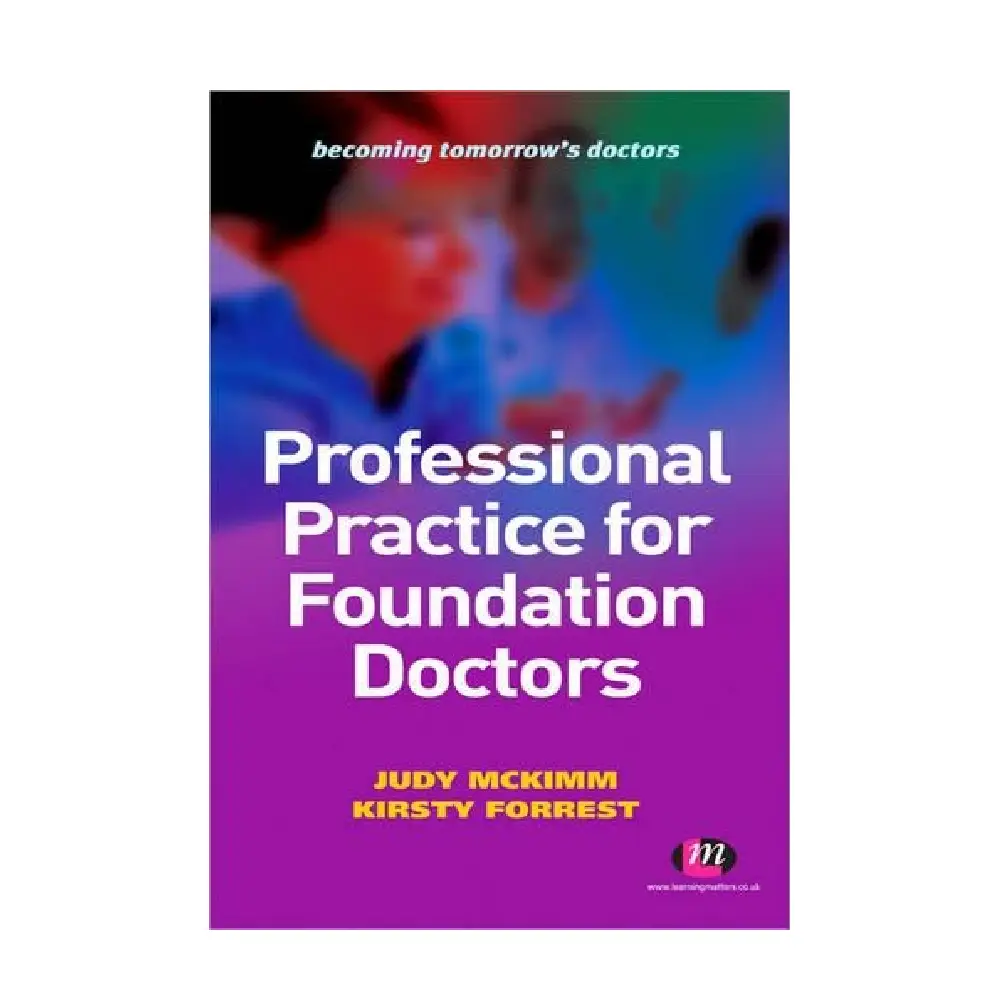
Professional Practice for Foundation Doctors: (Becoming Tomorrow’s Doctors Series) is a practical and insightful guide designed to support newly qualified doctors as they transition from medical school into clinical practice. Published by Radcliffe Publishing, this book forms part of the Becoming Tomorrow’s Doctors Series, which aims to bridge the gap between theoretical learning and real-world medical responsibility. It is particularly tailored for doctors entering the UK Foundation Programme, though its lessons are broadly applicable to early-career clinicians worldwide.
The transition from student to practicing doctor can be both exciting and daunting. Foundation doctors are suddenly entrusted with patient care, clinical decision-making, and professional accountability. This book addresses these challenges directly, offering structured guidance on the core competencies required during the Foundation Years (FY1 and FY2). Rather than focusing solely on clinical knowledge, it emphasizes professionalism, communication, teamwork, ethics, and self-development—key areas essential for safe and effective practice.
One of the book’s major strengths lies in its focus on real-life scenarios. Through case-based discussions, readers are introduced to common situations faced by junior doctors: managing acutely unwell patients, responding to deteriorating clinical signs, handling consent and confidentiality issues, and communicating with patients and families during emotionally charged moments. These scenarios encourage reflective thinking and reinforce the importance of clinical reasoning alongside professional conduct.
The text also provides detailed guidance on documentation and record-keeping. Accurate and clear medical documentation is a fundamental skill for foundation doctors, impacting patient safety, medico-legal protection, and continuity of care. The book outlines best practices in writing clinical notes, discharge summaries, and referral letters, helping new doctors develop confidence in these routine yet critical tasks.
Communication skills receive significant attention throughout the volume. Foundation doctors often serve as the first point of contact for patients and relatives. The book explores structured communication models, breaking bad news sensitively, handling complaints, and working effectively within multidisciplinary teams. Emphasis is placed on respect, empathy, and clarity—qualities that underpin professional trust and patient-centered care.
Ethics and governance are other key themes. The book introduces principles of medical ethics, including autonomy, beneficence, non-maleficence, and justice. It discusses consent, capacity, safeguarding, confidentiality, and duty of candour, equipping foundation doctors with the knowledge required to navigate ethically complex situations. Risk management and incident reporting are also covered, encouraging a culture of safety and continuous improvement.
Another valuable aspect of the text is its focus on personal development and resilience. Early medical practice can be stressful, with long hours and emotional demands. The book highlights strategies for maintaining well-being, managing workload, and seeking support when necessary. It encourages reflection through portfolio development and appraisal preparation, aligning with competency frameworks used in postgraduate training.
Time management and prioritization skills are addressed in practical terms. Foundation doctors frequently juggle ward rounds, emergency calls, administrative tasks, and teaching commitments. The book provides tools for organizing daily responsibilities, recognizing urgent versus routine tasks, and working efficiently without compromising patient care.
In addition, the text covers leadership and teamwork fundamentals. Even at the foundation level, doctors are expected to contribute to team coordination and patient flow. The book introduces leadership principles, conflict resolution strategies, and effective collaboration within healthcare systems. Understanding how hospitals function—from ward structure to clinical governance—helps foundation doctors integrate smoothly into clinical environments.
Educational development is also discussed. The authors encourage active learning through bedside teaching, audit participation, quality improvement projects, and research involvement. These activities not only enhance clinical skills but also strengthen career progression and specialty applications.
Overall, Professional Practice for Foundation Doctors serves as a comprehensive roadmap for new medical graduates entering professional practice. Its balanced approach—combining practical advice, ethical guidance, communication strategies, and reflective practice—makes it an essential companion during the formative early years of a medical career. By focusing on both competence and character, the book supports foundation doctors in becoming safe, confident, and compassionate practitioners prepared to meet the evolving demands of modern healthcare.





Reviews
There are no reviews yet