
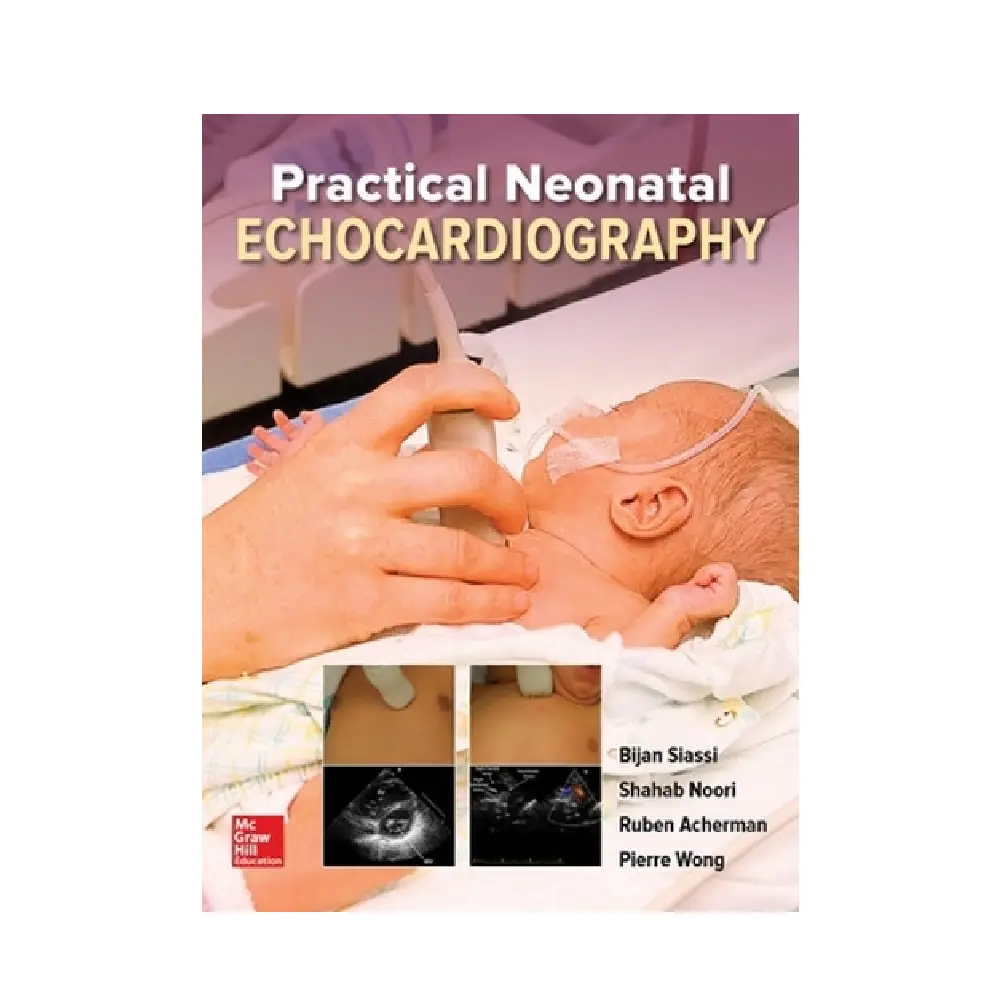
Practical Neonatal Echocardiography
Practical Neonatal Echocardiography is a specialized clinical reference focused on the use of echocardiography in the diagnosis and management of cardiovascular conditions in newborn infants. Neonatal echocardiography has become an essential bedside tool in neonatal intensive care units (NICUs), enabling rapid, non-invasive assessment of cardiac structure, function, and hemodynamics. This book is designed for neonatologists, pediatric cardiologists, fellows, and neonatal nurse practitioners who require practical, clinically oriented guidance in performing and interpreting cardiac ultrasound in fragile newborns.
Importance of Neonatal Echocardiography
The neonatal cardiovascular system differs significantly from that of older children and adults. Transitional circulation, patent fetal shunts (ductus arteriosus and foramen ovale), and dynamic changes in pulmonary and systemic vascular resistance create complex hemodynamic patterns. Echocardiography provides real-time visualization of these changes, allowing clinicians to distinguish normal transitional physiology from pathological conditions. The book emphasizes understanding the physiology of the newborn heart as the foundation for accurate interpretation.
Neonatal echocardiography is particularly valuable because clinical signs of cardiac disease in newborns are often subtle. Respiratory distress, cyanosis, poor feeding, or hypotension may indicate underlying structural heart disease or functional myocardial impairment. Bedside echocardiography enables early detection and immediate clinical decision-making.
Technical Foundations
The book provides detailed instruction on imaging techniques, probe selection, and standard echocardiographic views tailored for neonates. Because neonates are small and often critically ill, image acquisition requires precision and gentle handling. Standard views—including parasternal long-axis, short-axis, apical, subcostal, and suprasternal notch views—are described with modifications appropriate for neonatal anatomy.
Doppler techniques are extensively covered. Pulsed-wave, continuous-wave, and color Doppler imaging help quantify blood flow velocities and detect shunts, valve regurgitation, and pressure gradients. The text emphasizes optimizing machine settings to improve resolution in small cardiac structures. Tissue Doppler and strain imaging are also discussed as emerging techniques for assessing myocardial function.
Assessment of Transitional Circulation
A major focus of the book is evaluating transitional physiology in the first days of life. Assessment of the patent ductus arteriosus (PDA) is particularly important in preterm infants. The text outlines how to measure ductal size, direction of shunting, and hemodynamic significance. Accurate evaluation guides decisions regarding medical management or closure.
Similarly, echocardiography is used to assess persistent pulmonary hypertension of the newborn (PPHN). By estimating pulmonary pressures through tricuspid regurgitation velocity and analyzing septal motion, clinicians can determine the severity of pulmonary hypertension and monitor response to therapy.
Congenital Heart Disease
The book provides systematic approaches to diagnosing congenital heart defects in neonates. Structural abnormalities such as ventricular septal defects, atrial septal defects, transposition of the great arteries, tetralogy of Fallot, and coarctation of the aorta are described with step-by-step imaging strategies. Emphasis is placed on recognizing duct-dependent lesions, which require urgent intervention to maintain systemic or pulmonary circulation.
Sequential segmental analysis is introduced as a methodical way to evaluate cardiac anatomy, ensuring no structural abnormality is overlooked. Clear diagrams and imaging examples help readers correlate echocardiographic findings with anatomical structures.
Functional Hemodynamic Monitoring
In modern NICUs, echocardiography extends beyond structural diagnosis to functional hemodynamic monitoring. The book highlights its use in assessing ventricular function, cardiac output, preload status, and systemic perfusion. These measurements guide fluid management, inotropic support, and ventilator adjustments.
Assessment of myocardial performance is crucial in neonates with sepsis, hypoxic-ischemic encephalopathy, or congenital diaphragmatic hernia. Echocardiography helps determine whether hypotension is cardiac or vascular in origin, leading to targeted therapy.
Procedural Guidance and Safety
Neonatal echocardiography is also used to guide procedures such as central line placement and pericardiocentesis. The book discusses safety considerations, infection control, and strategies to minimize stress for vulnerable infants. Maintaining high image quality while ensuring patient comfort is emphasized throughout.
Interpretation and Clinical Integration
A key strength of the book is its practical orientation. Rather than focusing solely on imaging theory, it integrates findings into clinical management. Case-based discussions illustrate how echocardiographic data influence treatment decisions. The authors stress collaboration between neonatologists and pediatric cardiologists to ensure comprehensive care.
Emerging Trends
Recent advances, including portable ultrasound devices and tele-echocardiography, are transforming neonatal care. The book explores how these technologies expand access to specialized imaging in resource-limited settings. Future directions include advanced deformation imaging and automated quantification tools.
Conclusion
Practical Neonatal Echocardiography serves as an essential guide for clinicians caring for newborns with cardiovascular concerns. By combining foundational physiology, detailed imaging techniques, and real-world clinical applications, the book equips healthcare professionals with the skills needed to perform and interpret neonatal echocardiograms effectively. Its focus on bedside utility and hemodynamic assessment makes it a vital resource in modern neonatal intensive care practice, ultimately contributing to improved diagnosis, timely intervention, and better outcomes for vulnerable newborn patients.





Reviews
There are no reviews yet