
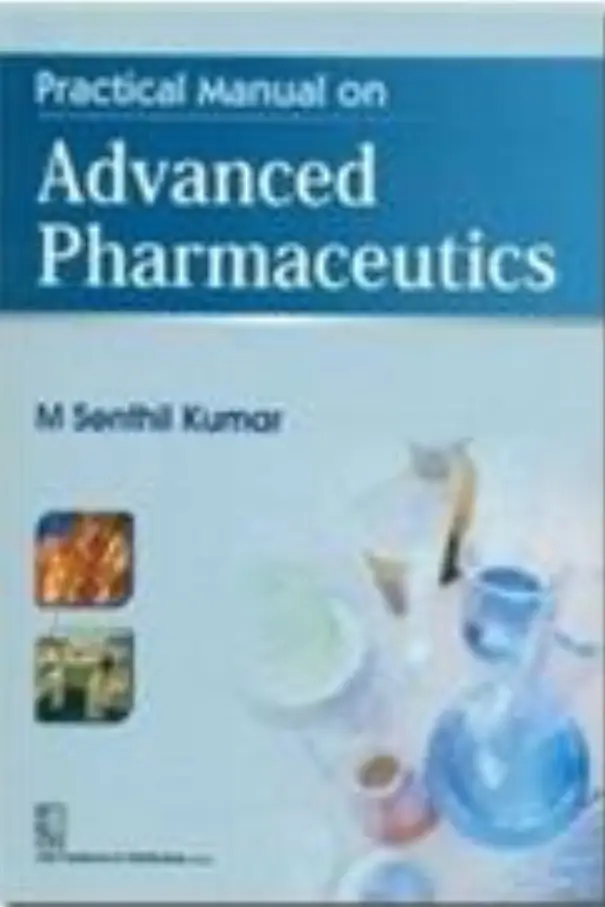
Practical Manual of Advanced Pharmaceutics
Practical Manual of Advanced Pharmaceutics is a comprehensive laboratory-oriented guide designed to support pharmacy students, particularly those at the undergraduate and postgraduate levels, in mastering the practical aspects of pharmaceutics. The book complements theoretical knowledge by providing detailed experimental procedures, formulations, and evaluation techniques essential for understanding advanced drug delivery systems and pharmaceutical product development.
The manual begins with an introduction to the objectives and scope of advanced pharmaceutics practicals. It emphasizes the importance of laboratory work in developing technical skills, critical thinking, and problem-solving abilities. The text highlights how practical training bridges the gap between classroom learning and industrial applications, preparing students for careers in pharmaceutical research, manufacturing, and quality control.
A major focus of the book is on the formulation and evaluation of various dosage forms. It provides step-by-step procedures for preparing conventional dosage forms such as tablets, capsules, suspensions, and emulsions, as well as advanced systems like controlled-release formulations, transdermal patches, and novel drug delivery systems. Each experiment includes objectives, materials required, method of preparation, and evaluation parameters, ensuring clarity and ease of execution.
The manual also covers preformulation studies, which are crucial for the development of stable and effective pharmaceutical products. Students are guided through the assessment of physicochemical properties of drug substances, including solubility, melting point, particle size, and compatibility with excipients. These studies help in selecting appropriate formulation strategies and optimizing product performance.
Another key area addressed in the book is the evaluation of pharmaceutical formulations. It provides detailed methods for testing parameters such as hardness, friability, disintegration time, dissolution rate, and stability. These evaluation techniques are essential for ensuring the quality, safety, and efficacy of pharmaceutical products. The manual emphasizes adherence to standard protocols and regulatory guidelines, reflecting real-world industrial practices.
The book also introduces advanced drug delivery systems, including sustained-release, controlled-release, and targeted delivery systems. It explains the principles behind these technologies and provides practical exercises to help students understand their design and performance. Topics such as microencapsulation, liposomes, and nanoparticles are included, offering insight into modern approaches in pharmaceutics.
Instrumentation and analytical techniques form another important component of the manual. The text provides an overview of commonly used laboratory instruments, such as UV-visible spectrophotometers, dissolution apparatus, and particle size analyzers. It explains their working principles, applications, and methods of operation, enabling students to perform experiments accurately and interpret results effectively.
In addition to experimental procedures, the manual includes guidelines for record-keeping, report writing, and data analysis. These sections help students develop good laboratory practices and scientific documentation skills, which are essential for academic and professional success. Safety precautions and waste disposal methods are also discussed, emphasizing the importance of maintaining a safe laboratory environment.
The book is designed to align with pharmacy curricula and regulatory requirements, making it a useful resource for exam preparation as well. It includes diagrams, tables, and flowcharts that simplify complex procedures and enhance understanding. The structured format allows students to quickly grasp key concepts and perform experiments with confidence.
In conclusion, Practical Manual of Advanced Pharmaceutics is an essential resource for pharmacy students seeking to develop practical skills in pharmaceutical formulation and evaluation. Its comprehensive coverage, clear instructions, and emphasis on real-world applications make it a valuable tool for both academic learning and professional training. By integrating theory with hands-on practice, the manual prepares students to meet the challenges of the pharmaceutical industry and contribute effectively to drug development and quality assurance.


Reviews
There are no reviews yet