
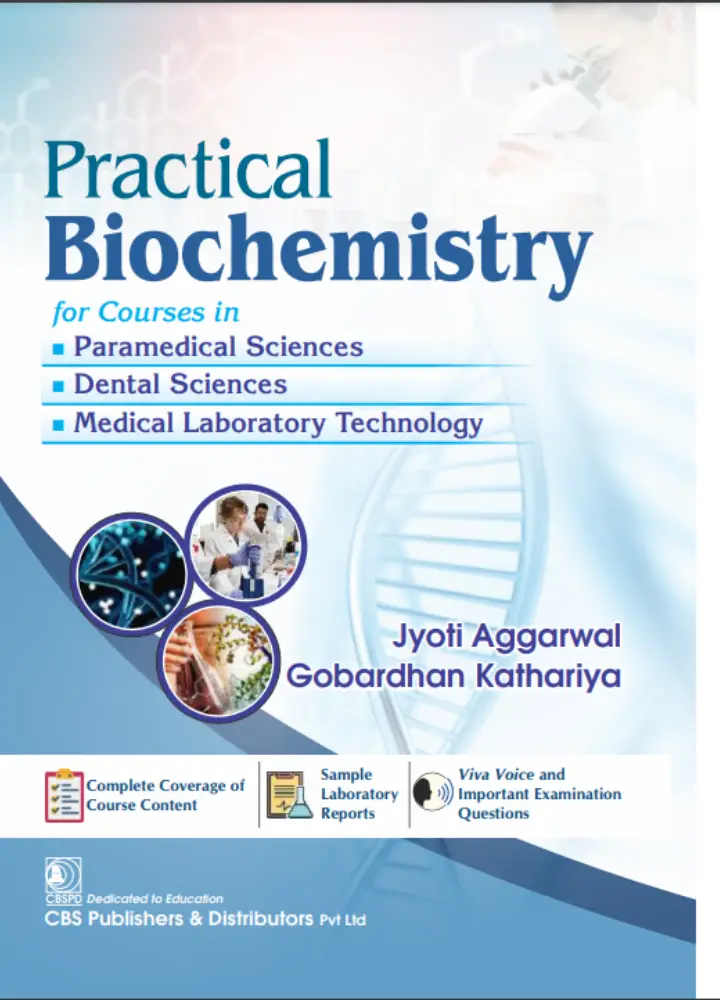
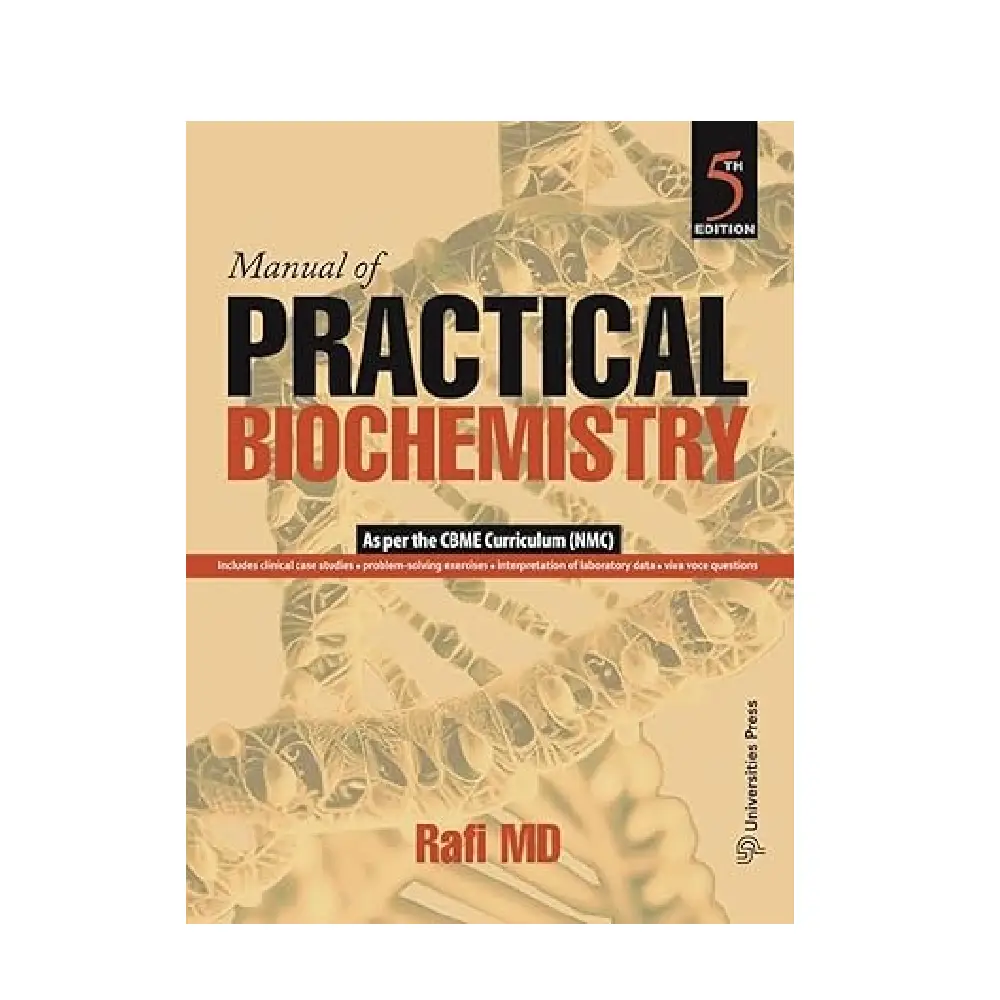
Practical Biochemistry for Courses in Paramedical Dental Medical Laboratory Technology
Practical Biochemistry for Courses in Paramedical, Dental, and Medical Laboratory Technology is a comprehensive laboratory manual designed to provide students with hands-on experience in biochemical techniques essential for clinical and diagnostic practice. Tailored for paramedical, dental, and medical laboratory technology (MLT) students, the book bridges the gap between theoretical biochemistry and its practical application in laboratory settings.
The manual begins with an introduction to basic laboratory principles, including safety precautions, proper handling of chemicals, and the use of laboratory equipment. It emphasizes the importance of maintaining accuracy, precision, and hygiene in biochemical experiments. Students are guided on the correct use of instruments such as pipettes, centrifuges, colorimeters, and spectrophotometers, which are fundamental tools in clinical laboratories.
A significant portion of the book is dedicated to qualitative and quantitative analysis of biomolecules. It includes experiments for the identification and estimation of carbohydrates, proteins, lipids, and nucleic acids. These experiments help students understand the chemical properties of biomolecules and their relevance in physiological and pathological conditions. The manual provides step-by-step procedures, expected results, and interpretations, making it easy for learners to follow and understand.
The book also covers clinical biochemistry tests that are routinely performed in diagnostic laboratories. These include the estimation of blood glucose, urea, creatinine, cholesterol, bilirubin, and enzymes such as transaminases. Each test is explained in terms of its principle, procedure, clinical significance, and normal reference values. This approach helps students correlate laboratory findings with disease conditions, enhancing their diagnostic skills.
Urine analysis is another important section of the manual. It includes both physical and chemical examination of urine, as well as microscopic analysis of urinary sediments. The book explains how these tests are used to detect conditions such as diabetes, kidney disorders, and urinary tract infections. Similarly, the manual covers analysis of other body fluids, including cerebrospinal fluid and gastric juice, providing a broad understanding of clinical biochemistry.
The manual also introduces enzymology and its applications in diagnosis. Students learn about enzyme kinetics, factors affecting enzyme activity, and methods for measuring enzyme levels in biological samples. This knowledge is crucial for understanding diseases related to enzyme dysfunction and for interpreting laboratory results accurately.
Another key feature of the book is its focus on quality control and standardization in laboratory practice. It highlights the importance of calibration, use of controls, and adherence to standard operating procedures to ensure reliable and reproducible results. The manual also discusses common sources of error and how to minimize them, preparing students for real-world laboratory challenges.
The book includes sections on advanced techniques such as electrophoresis, chromatography, and immunoassays. These methods are widely used in research and diagnostic laboratories for the separation, identification, and quantification of biomolecules. By introducing these techniques, the manual provides students with exposure to modern laboratory practices.
In addition to experimental procedures, the manual offers guidance on record-keeping, report writing, and data interpretation. These skills are essential for documenting laboratory work and communicating results effectively. The inclusion of viva questions and review exercises helps students prepare for practical examinations and reinforces their understanding of key concepts.
Designed with clarity and simplicity, the book uses diagrams, tables, and flowcharts to enhance learning. It aligns with the curricula of various paramedical and laboratory technology courses, making it a valuable academic resource.
In conclusion, Practical Biochemistry for Courses in Paramedical, Dental, and Medical Laboratory Technology is an essential laboratory manual that equips students with the practical skills and knowledge required for clinical biochemistry. Its comprehensive coverage, user-friendly approach, and emphasis on real-world applications make it an indispensable tool for students and professionals in the field of laboratory medicine.

Reviews
There are no reviews yet