
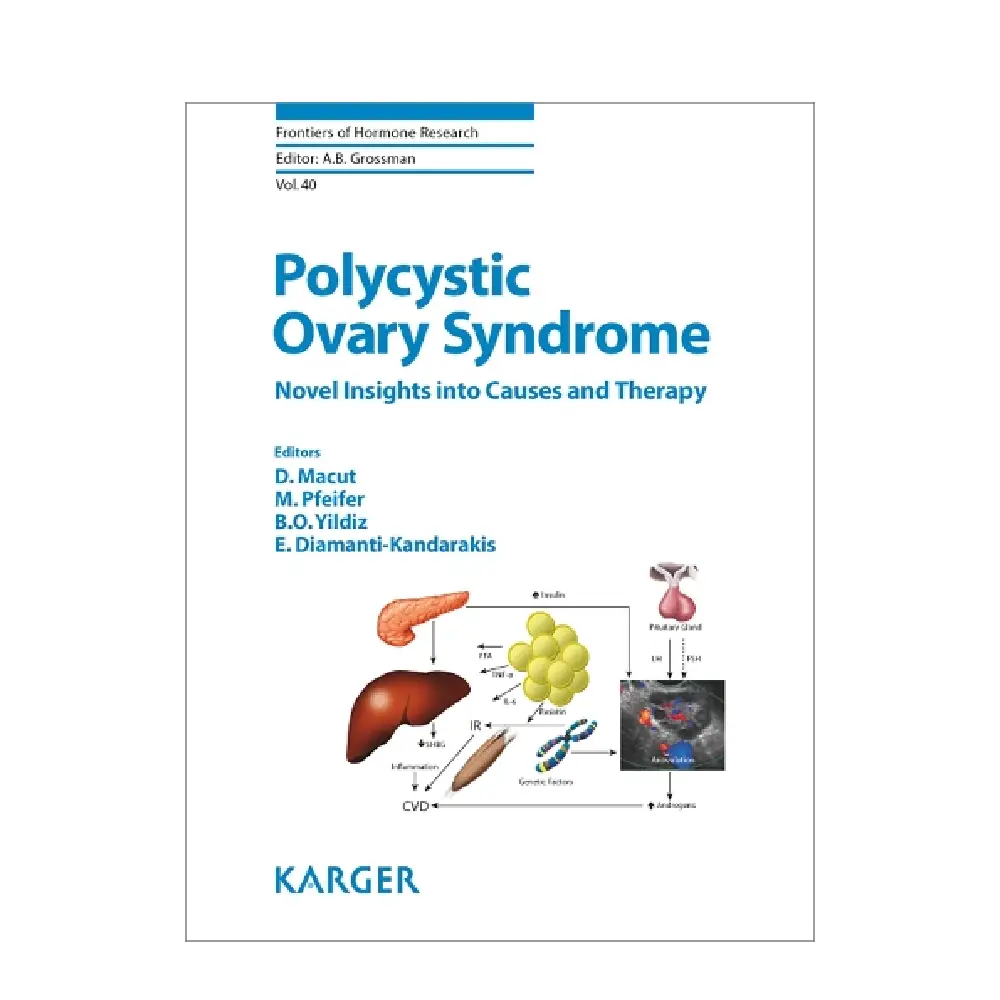


Polycystic Ovary Syndrome: Novel Insights into Causes and Therapy (Frontiers of Hormone Research, Volume 40)
Polycystic Ovary Syndrome: Novel Insights into Causes and Therapy is a comprehensive scientific volume in the Frontiers of Hormone Research series that focuses on the pathophysiology, diagnosis, and modern therapeutic approaches to polycystic ovary syndrome (PCOS). PCOS is one of the most common endocrine and metabolic disorders affecting women of reproductive age, characterized by hormonal imbalance, ovarian dysfunction, and metabolic abnormalities. This book synthesizes advances in molecular endocrinology, reproductive biology, and clinical medicine to provide updated insights into this complex syndrome.
Understanding Polycystic Ovary Syndrome
Polycystic ovary syndrome is a multifactorial disorder involving genetic, hormonal, metabolic, and environmental factors. The syndrome is typically associated with irregular menstrual cycles, chronic anovulation, hyperandrogenism, and polycystic ovarian morphology. In addition to reproductive abnormalities, PCOS is strongly linked to insulin resistance, obesity, and increased risk of type 2 diabetes and cardiovascular disease.
The volume emphasizes that PCOS is not merely a gynecological disorder but a systemic endocrine-metabolic condition. Researchers have increasingly recognized the heterogeneity of PCOS phenotypes, suggesting that the disorder represents a spectrum of related pathological states rather than a single disease entity.
Pathophysiology and Genetic Factors
One of the central themes of the book is the exploration of the molecular mechanisms underlying PCOS. Genetic predisposition plays an important role, although no single causative gene has been identified. Instead, multiple susceptibility genes are believed to interact with hormonal and environmental factors.
Abnormal regulation of the hypothalamic-pituitary-ovarian axis contributes to increased secretion of luteinizing hormone (LH) relative to follicle-stimulating hormone (FSH). This hormonal imbalance promotes excessive androgen production in ovarian theca cells, leading to clinical manifestations such as hirsutism and acne.
Insulin resistance is another major component discussed in the book. Hyperinsulinemia enhances ovarian androgen synthesis while reducing hepatic production of sex hormone–binding globulin, thereby increasing circulating free testosterone levels. The interaction between insulin signaling pathways and steroidogenesis is considered a key pathogenic mechanism.
Role of Inflammation and Oxidative Stress
The text highlights emerging evidence linking PCOS with chronic low-grade inflammation. Elevated inflammatory cytokines and oxidative stress markers have been observed in many patients with PCOS. These inflammatory processes may contribute to follicular arrest, endothelial dysfunction, and metabolic complications.
Adipose tissue dysfunction is also examined. Excess visceral fat promotes secretion of adipokines that worsen insulin resistance and disrupt reproductive hormone balance. This metabolic-inflammatory interface is considered a major driver of disease progression.
Ovarian Follicular Dysfunction
PCOS is characterized by arrested follicular development. Normally, ovarian follicles progress from primordial stages to dominant follicle selection and ovulation. In PCOS, excessive androgen exposure and altered intraovarian signaling pathways inhibit follicular maturation.
The book discusses molecular regulators such as anti-Müllerian hormone (AMH), growth differentiation factors, and transforming growth factor-beta family proteins that influence ovarian folliculogenesis.
Diagnostic Approaches
Diagnosis of PCOS is based on clinical, biochemical, and imaging findings. The volume reviews international diagnostic criteria that incorporate menstrual irregularity, clinical or biochemical hyperandrogenism, and polycystic ovarian morphology on ultrasound.
Hormonal assays measuring LH, FSH, testosterone, AMH, and metabolic parameters are important for accurate evaluation. The book stresses the importance of excluding other disorders such as thyroid dysfunction, adrenal hyperplasia, and pituitary disease.
Therapeutic Strategies
Treatment of PCOS is individualized depending on patient symptoms, reproductive goals, and metabolic risk factors.
Lifestyle modification remains the first-line intervention. Weight reduction through diet and exercise improves insulin sensitivity, restores ovulatory cycles, and reduces androgen levels.
Pharmacological therapy includes:
-
Insulin sensitizers such as metformin to improve metabolic function.
-
Hormonal contraceptives to regulate menstrual cycles and suppress androgen excess.
-
Anti-androgen medications for cosmetic and dermatological symptoms.
For infertility associated with PCOS, ovulation induction therapies are discussed, including selective estrogen receptor modulators and gonadotropin-based protocols.
The book also explores emerging therapeutic targets such as modulation of insulin signaling pathways, inflammatory mediators, and ovarian steroidogenic enzymes.
Long-Term Health Risks
Women with PCOS are at increased risk of developing metabolic syndrome, cardiovascular disease, and endometrial hyperplasia due to chronic anovulation and unopposed estrogen exposure. The volume emphasizes the importance of long-term monitoring and preventive healthcare strategies.
Future Directions
Research directions highlighted in the book include personalized medicine approaches, genetic profiling, and novel pharmacological agents targeting endocrine and metabolic pathways. Advances in understanding ovarian microenvironment signaling and epigenetic regulation may open new therapeutic possibilities.
Conclusion
This volume provides a detailed and multidisciplinary overview of PCOS, integrating molecular science, reproductive endocrinology, and clinical management. By presenting novel insights into disease mechanisms and treatment strategies, Polycystic Ovary Syndrome: Novel Insights into Causes and Therapy (Frontiers of Hormone Research, Volume 40) serves as an important reference for endocrinologists, gynecologists, and researchers working in reproductive medicine.
Reviews
There are no reviews yet