
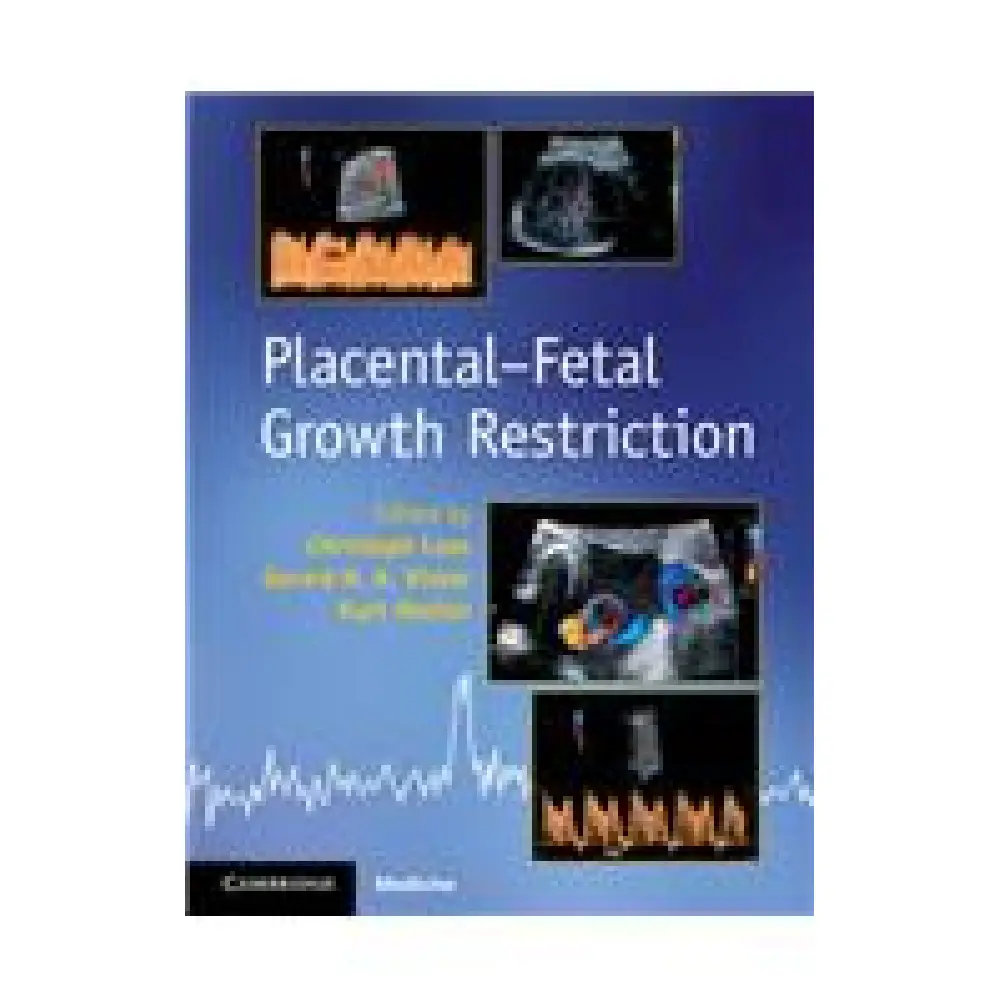

Placental–Fetal Growth Restriction
Placental–fetal growth restriction, commonly referred to as fetal growth restriction (FGR) secondary to placental insufficiency, is a pathological condition in which a fetus fails to achieve its genetically predetermined growth potential due to impaired placental function. It is distinct from constitutionally small fetuses and is associated with increased perinatal morbidity and mortality. Early identification and appropriate monitoring are critical to optimizing maternal and neonatal outcomes.
Definition and Classification
Fetal growth restriction is typically defined as an estimated fetal weight (EFW) below the 10th percentile for gestational age. However, not all fetuses below this threshold are pathologically growth restricted. True placental–fetal growth restriction implies compromised placental function leading to inadequate oxygen and nutrient delivery.
FGR is classified into:
-
Early-onset FGR (before 32 weeks): Often severe and associated with abnormal Doppler findings and hypertensive disorders such as preeclampsia.
-
Late-onset FGR (after 32 weeks): More common but generally milder; Doppler changes may be subtle.
Pathophysiology
The placenta plays a central role in fetal growth by facilitating nutrient, oxygen, and waste exchange between mother and fetus. In placental insufficiency, abnormal trophoblastic invasion of spiral arteries leads to high-resistance uteroplacental circulation. This results in reduced uteroplacental blood flow, chronic fetal hypoxia, and impaired nutrient transfer.
The fetus adapts through a “brain-sparing effect,” redistributing blood flow preferentially to vital organs such as the brain, heart, and adrenal glands. While initially protective, prolonged hypoxia may lead to metabolic acidosis, organ dysfunction, and stillbirth.
Common underlying causes include:
-
Maternal hypertension and preeclampsia
-
Chronic kidney disease
-
Autoimmune disorders
-
Thrombophilias
-
Smoking and substance abuse
-
Multiple gestation
Clinical Features
Placental–fetal growth restriction may be suspected when symphysis–fundal height measures smaller than expected for gestational age. Decreased maternal perception of fetal movements may also be reported.
Ultrasound assessment confirms the diagnosis. Key parameters include:
-
Estimated fetal weight (EFW)
-
Abdominal circumference (AC)
-
Amniotic fluid index (AFI)
-
Doppler studies of umbilical artery and middle cerebral artery
Abnormal Doppler findings are central to diagnosis. Increased resistance or absent/reversed end-diastolic flow in the umbilical artery indicates significant placental compromise.
Diagnosis
Diagnosis relies on a combination of:
-
Serial Ultrasound Biometry: Monitoring growth trends rather than a single measurement.
-
Doppler Velocimetry: Evaluating blood flow in the umbilical artery, middle cerebral artery, and ductus venosus.
-
Cardiotocography (CTG): Assessing fetal heart rate patterns in advanced cases.
Distinguishing between small-for-gestational-age (SGA) fetus and true FGR is essential. SGA fetuses are small but otherwise healthy, while FGR fetuses show evidence of placental dysfunction.
Complications
Placental–fetal growth restriction is associated with significant short- and long-term consequences.
Perinatal complications:
-
Preterm birth
-
Intrapartum fetal distress
-
Meconium aspiration
-
Neonatal hypoglycemia
-
Hypothermia
-
Polycythemia
-
Stillbirth
Long-term consequences:
The Barker hypothesis suggests that FGR predisposes individuals to adult-onset diseases such as hypertension, type 2 diabetes, and cardiovascular disease due to fetal programming.
Management
Management depends on gestational age, severity of Doppler abnormalities, and maternal condition.
-
Maternal Monitoring: Blood pressure control and management of underlying conditions.
-
Fetal Surveillance:
-
Serial growth scans every 2–4 weeks
-
Weekly or biweekly Doppler studies
-
Non-stress tests or biophysical profiles
-
-
Timing of Delivery:
Delivery is the only definitive treatment. The decision balances the risks of prematurity against intrauterine compromise.-
Early-onset severe FGR may require delivery before 34 weeks.
-
Late-onset FGR is often delivered around 37 weeks.
-
Corticosteroids are administered if preterm delivery is anticipated to enhance fetal lung maturity.
Prevention
Preventive strategies focus on optimizing maternal health before and during pregnancy:
-
Smoking cessation
-
Control of chronic hypertension and diabetes
-
Low-dose aspirin in high-risk women (e.g., previous preeclampsia)
-
Adequate antenatal care and nutritional support
Conclusion
Placental–fetal growth restriction is a serious obstetric condition resulting from impaired placental function and inadequate fetal nutrient supply. Early recognition through ultrasound and Doppler surveillance is essential to prevent adverse outcomes. While delivery remains the definitive treatment, careful monitoring and timely intervention significantly improve neonatal survival and long-term health. Multidisciplinary management involving obstetricians, maternal-fetal medicine specialists, and neonatologists ensures optimal care for affected pregnancies.








Reviews
There are no reviews yet