
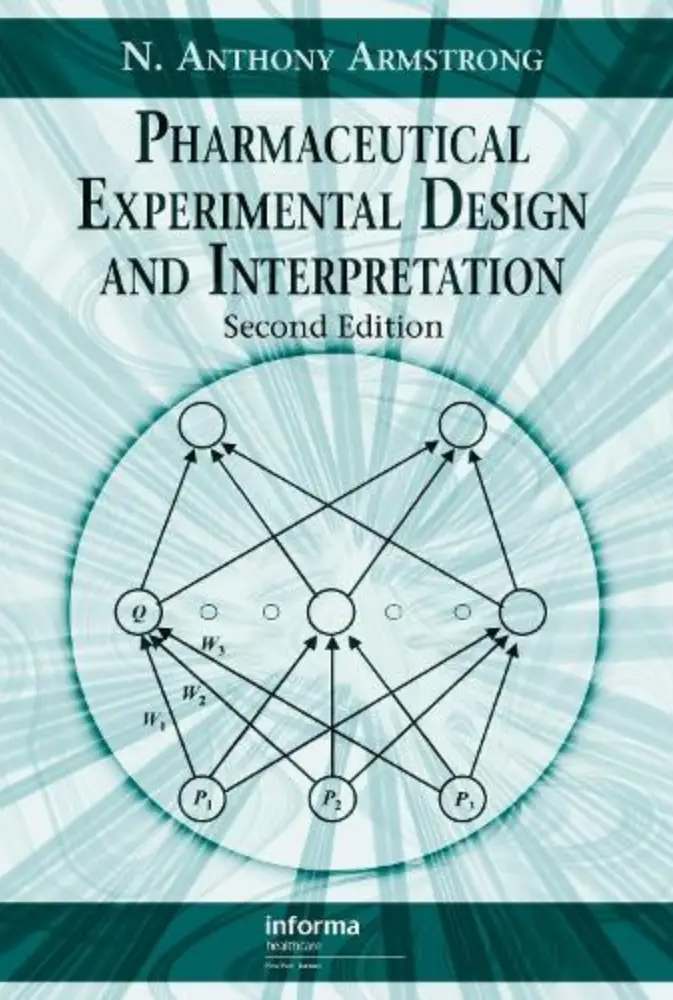
Pharmaceutical Experimental Design and Interpretation (2nd Edition) is an essential resource that focuses on the principles and practices required to design, conduct, and interpret experiments in pharmaceutical research. This field plays a critical role in drug discovery, formulation development, quality control, and regulatory compliance. The second edition builds upon foundational concepts while incorporating modern statistical tools and real-world applications relevant to the pharmaceutical industry.
Experimental design in pharmaceuticals involves planning studies in a structured and efficient manner to obtain reliable and reproducible results. A well-designed experiment minimizes variability, reduces bias, and ensures that conclusions drawn are valid. The book emphasizes the importance of defining clear objectives before initiating any study. Whether the goal is to optimize a drug formulation, assess stability, or evaluate bioavailability, a precise objective guides the entire experimental process.
One of the central themes of the book is the application of statistical design methods. Techniques such as factorial design, response surface methodology, and randomized block design are explained in a practical and accessible way. These methods allow researchers to study the effects of multiple variables simultaneously, rather than testing one factor at a time. This approach not only saves time and resources but also provides deeper insights into interactions between variables, which is crucial in complex pharmaceutical systems.
The text also highlights the importance of data analysis and interpretation. Collecting data is only part of the process; understanding what the data means is equally important. The book explains statistical concepts such as hypothesis testing, confidence intervals, regression analysis, and analysis of variance (ANOVA). These tools help researchers determine whether observed differences are statistically significant or simply due to random variation. Proper interpretation ensures that decisions made during drug development are based on sound scientific evidence.
Another important aspect covered is the role of experimental design in formulation development. Pharmaceutical formulations often involve multiple ingredients and processing conditions. The book demonstrates how design of experiments (DoE) can be used to optimize formulations by identifying critical factors that influence product quality. For example, variables such as temperature, mixing speed, and excipient concentration can all affect the stability and efficacy of a drug. By systematically studying these factors, researchers can develop robust formulations that meet regulatory standards.
The second edition also addresses regulatory expectations and quality by design (QbD), which has become a key concept in the pharmaceutical industry. QbD emphasizes understanding processes and controlling variability to ensure consistent product quality. Experimental design plays a central role in this approach, as it provides the scientific basis for process optimization and validation. The book explains how to align experimental strategies with regulatory guidelines, making it highly relevant for professionals working in industry.
In addition to theory, the book includes practical examples and case studies that illustrate how experimental design principles are applied in real-world scenarios. These examples help bridge the gap between academic knowledge and industrial practice. Readers can see how statistical tools are used to solve problems such as improving drug dissolution rates, enhancing stability, or scaling up manufacturing processes.
Overall, Pharmaceutical Experimental Design and Interpretation (2nd Edition) serves as a comprehensive guide for students, researchers, and professionals in the pharmaceutical sciences. It combines theoretical knowledge with practical applications, making complex statistical concepts easier to understand and apply. By emphasizing the importance of careful planning, robust methodology, and accurate interpretation, the book helps readers develop the skills needed to conduct high-quality pharmaceutical research and contribute to the development of safe and effective medicines.

Reviews
There are no reviews yet