
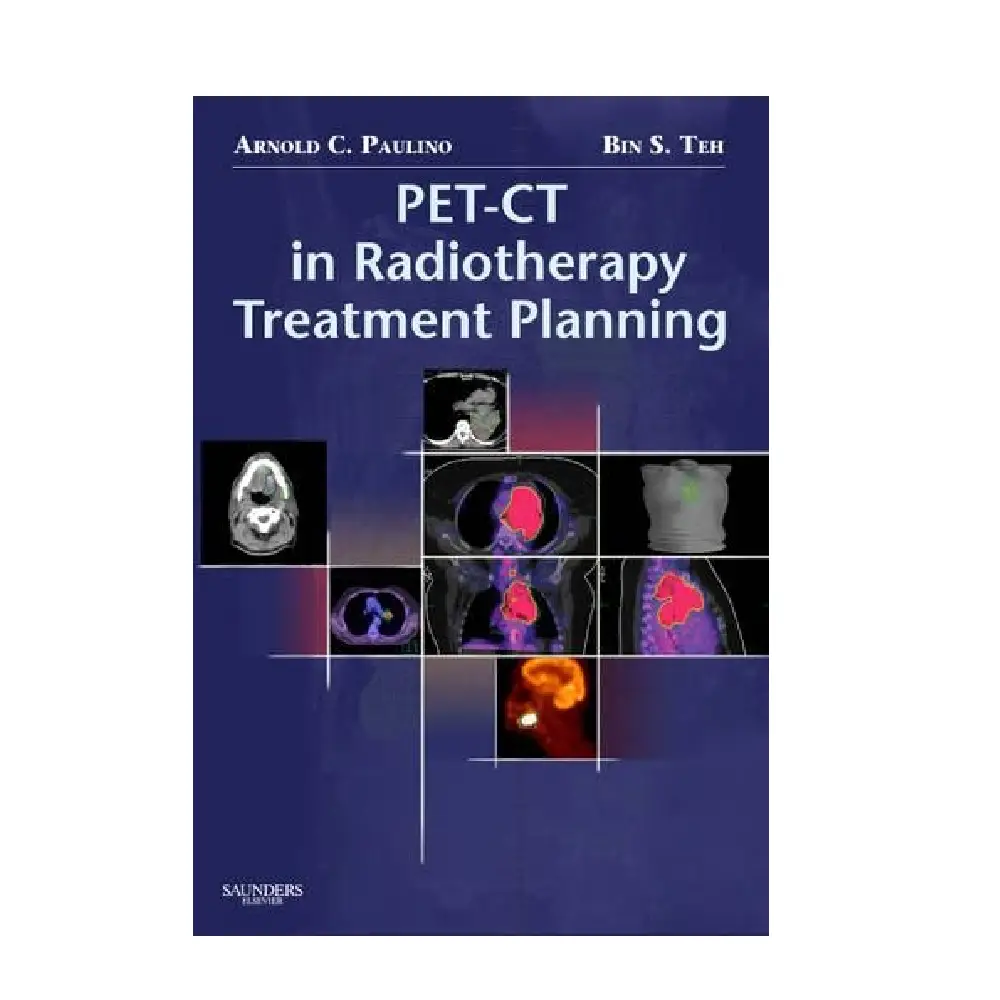

PET-CT in Radiotherapy Treatment Planning
PET-CT in Radiotherapy Treatment Planning is a specialized oncology text that explores the integration of positron emission tomography–computed tomography (PET-CT) into modern radiation therapy planning. As radiotherapy has evolved toward increasingly conformal and image-guided techniques, accurate tumor delineation has become critical. PET-CT provides both metabolic and anatomical information, enabling radiation oncologists to define target volumes with greater precision than CT or MRI alone. This book examines the scientific basis, technical workflow, clinical applications, and future directions of PET-CT–guided radiotherapy.
Rationale for PET-CT in Treatment Planning
Traditional radiotherapy planning relies heavily on CT imaging for anatomical localization and dose calculation. While CT provides excellent spatial resolution, it often struggles to differentiate viable tumor from surrounding atelectasis, fibrosis, post-surgical changes, or treatment-related inflammation. PET imaging, particularly with fluorodeoxyglucose (FDG), detects areas of increased glucose metabolism—a hallmark of many malignancies. When PET data are fused with CT images, clinicians gain functional insight into tumor biology while maintaining precise anatomical mapping.
The book emphasizes that accurate target volume delineation is central to successful radiotherapy. Underdosing tumor regions may lead to local recurrence, while overdosing healthy tissues increases toxicity. By identifying metabolically active tumor tissue, PET-CT can refine the gross tumor volume (GTV), influence clinical target volume (CTV) decisions, and optimize planning target volume (PTV) margins.
Technical Considerations and Workflow
A significant portion of the text is devoted to technical methodology. It discusses patient preparation protocols, immobilization techniques, respiratory motion management, and standardized uptake value (SUV) interpretation. Proper acquisition is essential to ensure reproducibility and minimize artifacts.
Image fusion accuracy is another key topic. Since radiotherapy requires millimeter precision, PET and CT datasets must be carefully co-registered. The book reviews rigid and deformable image registration techniques, contouring strategies, and automated segmentation tools. It also highlights challenges such as motion artifacts, partial volume effects, and the influence of blood glucose levels on FDG uptake.
Advanced sections explore adaptive radiotherapy, in which PET-CT scans obtained during treatment may guide dose modification based on metabolic response. This approach represents a step toward biologically guided radiation therapy.
Clinical Applications Across Tumor Sites
The book systematically examines PET-CT integration across major cancer types:
Head and Neck Cancers
In complex anatomical regions, PET-CT assists in distinguishing tumor from post-biopsy inflammation or normal lymphoid tissue. It improves nodal staging and can modify radiation fields, reducing unnecessary exposure to critical structures like salivary glands and spinal cord.
Lung Cancer
PET-CT has become standard in staging non–small cell lung cancer. It helps differentiate tumor from atelectasis and identifies involved lymph nodes more accurately than CT alone. The book details how PET-based planning can alter radiation volumes and potentially improve local control.
Lymphomas
Metabolic imaging plays a major role in both staging and response assessment. PET-guided planning may allow reduced radiation fields in selected cases, minimizing long-term toxicity while maintaining disease control.
Gastrointestinal and Gynecologic Malignancies
In esophageal, cervical, and rectal cancers, PET-CT can identify involved nodes and define areas of active disease, influencing boost volumes and dose escalation strategies.
Brain Tumors
Although FDG has limitations in the brain due to high background uptake, alternative tracers may assist in distinguishing recurrent tumor from radiation necrosis, thereby guiding retreatment decisions.
Dose Escalation and Biological Targeting
An innovative concept discussed is dose painting, in which radiation doses are modulated within the tumor based on PET-defined metabolic heterogeneity. Highly active subregions may receive higher doses, while less active areas receive standard dosing. This biologically adaptive strategy seeks to improve tumor control without increasing overall toxicity.
The book evaluates current evidence supporting PET-guided dose escalation and addresses ongoing clinical trials investigating its effectiveness.
Limitations and Challenges
Despite its advantages, PET-CT is not without limitations. False positives may arise from inflammatory processes, and small lesions may be missed due to resolution constraints. Standardization across institutions remains an ongoing challenge, particularly in SUV thresholds and segmentation techniques.
The text underscores the importance of multidisciplinary collaboration among radiation oncologists, nuclear medicine physicians, radiologists, physicists, and dosimetrists to ensure accurate interpretation and integration into treatment planning.
Future Directions
Emerging developments include novel PET tracers targeting hypoxia, proliferation, and receptor expression. These agents may enable more personalized radiation strategies. Integration with MRI (PET/MRI) and incorporation of artificial intelligence for automated contouring are also discussed as promising frontiers.
Conclusion
PET-CT in Radiotherapy Treatment Planning highlights how molecular imaging has transformed radiation oncology. By combining anatomical precision with functional insight, PET-CT enhances staging accuracy, refines target delineation, and supports biologically guided treatment approaches. The book serves as an essential reference for clinicians and trainees seeking to optimize radiotherapy outcomes through advanced imaging integration.







Reviews
There are no reviews yet