
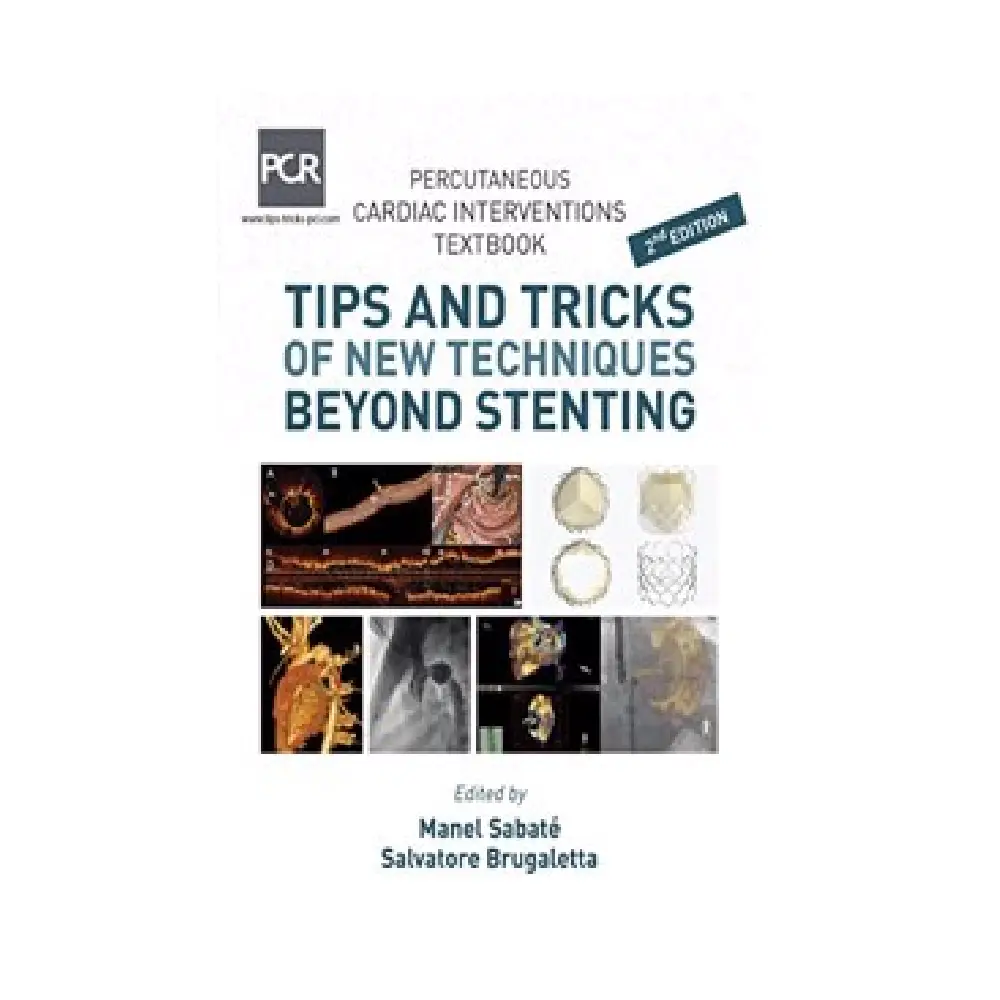
Percutaneous Cardiac Interventions — Tips and Tricks of New Techniques Beyond Stenting
Percutaneous Cardiac Interventions — Tips and Tricks of New Techniques Beyond Stenting is a specialized clinical textbook in interventional cardiology that focuses on procedural innovation and practical guidance for techniques that extend beyond conventional coronary stenting. Edited by leading interventional cardiologists Manel Sabaté and Salvatore Brugaletta, this work serves as an advanced reference for practicing interventional cardiologists, fellows, and advanced trainees.
Stenting has been the backbone of percutaneous coronary intervention (PCI) for decades, providing effective treatment for obstructive coronary disease. However, the rapid evolution of cardiovascular medicine over the past 10–15 years has introduced a wider array of percutaneous techniques addressing structural heart disease, complex anatomies, and advanced pathophysiology that are not adequately treated by stenting alone. This textbook fills that gap by offering practical, clinically oriented insight into cutting‑edge interventions that are increasingly used in routine practice.
Purpose and Audience
The main aim of this textbook is to shorten the learning curve for newer interventional procedures beyond coronary stents by providing step‑by‑step explanations, troubleshooting advice, and procedural “tips and tricks” that reflect real‑world cath lab experience. Unlike traditional academic texts that emphasize theory and study data, this book emphasizes practical know‑how — the kind of procedural guidance that typically comes from years of experience.
It is designed for:
-
Interventional cardiologists
-
Cardiology trainees and fellows
-
Cath lab staff
-
Physicians pursuing advanced PCI skills
The content is clinically focused and drawn from expert operators with extensive procedural experience, making it highly relevant for busy practitioners seeking actionable insights.
Structure and Key Content Areas
The book is usually divided into multiple sections that take the reader from basic principles to advanced techniques:
1. Diagnostic Procedures
Beyond angiography and standard imaging, contemporary diagnostics include:
-
Advanced imaging methods such as intracoronary imaging
-
Physiologic assessment tools
-
Techniques for improving lesion assessment and guidance
These approaches help operators make better decisions about which interventions are appropriate and how to plan them safely.
2. Therapeutic Procedures Beyond Standard Stenting
This is the core of the book — new interventional methods that address disease processes not managed by simple stent placement:
Percutaneous Structural Heart Interventions
-
Techniques for valvular disease such as transcatheter aortic valve implantation (TAVI), mitral and tricuspid valve repair/replacement
-
Closure of congenital heart defects
-
Percutaneous mitral commissurotomy
Complex Coronary Interventions
-
Handling chronic total occlusions (CTO)
-
Strategies for bifurcation lesions, left main disease, and diffuse coronary disease
-
Use of support devices such as atherectomy, laser, or guide extension catheters
Each chapter provides step‑by‑step procedural insight with illustrated case examples, highlighting procedural pitfalls, how to avoid them, and ways to optimize outcomes.
3. New Developments and Technology Integration
The book also includes sections on emerging devices, imaging and physiologic tools, and new technologies that are transforming interventional practice, including:
-
Device‑specific considerations such as next‑generation transcatheter valves
-
Haemodynamic support devices
-
Innovative embolic protection systems
-
Integration of invasive imaging and physiology for precision guidance
This section emphasizes not just what the new technologies do, but how to use them effectively in complex cases — including advice on patient selection, procedural strategy, and management of potential complications.
Clinical Relevance and Practical Value
What sets this textbook apart from more theoretical references is its practical orientation:
-
Step‑by‑step procedural descriptions: Clear sequences that guide operators through complex interventions.
-
Troubleshooting advice and tips: Experienced operators share common pitfalls and how to avoid them.
-
Illustrative clinical cases: These help connect technical steps with real procedural scenarios.
-
Focus on evolving technologies: Addressing how physicians adopt and integrate new devices and techniques in everyday practice.
This emphasis on actionable guidance makes the book an indispensable resource for clinicians who want to integrate advanced interventional techniques into their practice confidently.
Conclusion
In summary, Percutaneous Cardiac Interventions — Tips and Tricks of New Techniques Beyond Stenting is a practical, clinically relevant textbook that goes beyond conventional PCI. It equips cardiologists and cath‑lab practitioners with procedural insights, step‑by‑step guidance, and real‑world tips for advanced techniques — from structural interventions to complex coronary procedures — bridging the gap between academic knowledge and practical execution in the modern cath lab.



Reviews
There are no reviews yet