
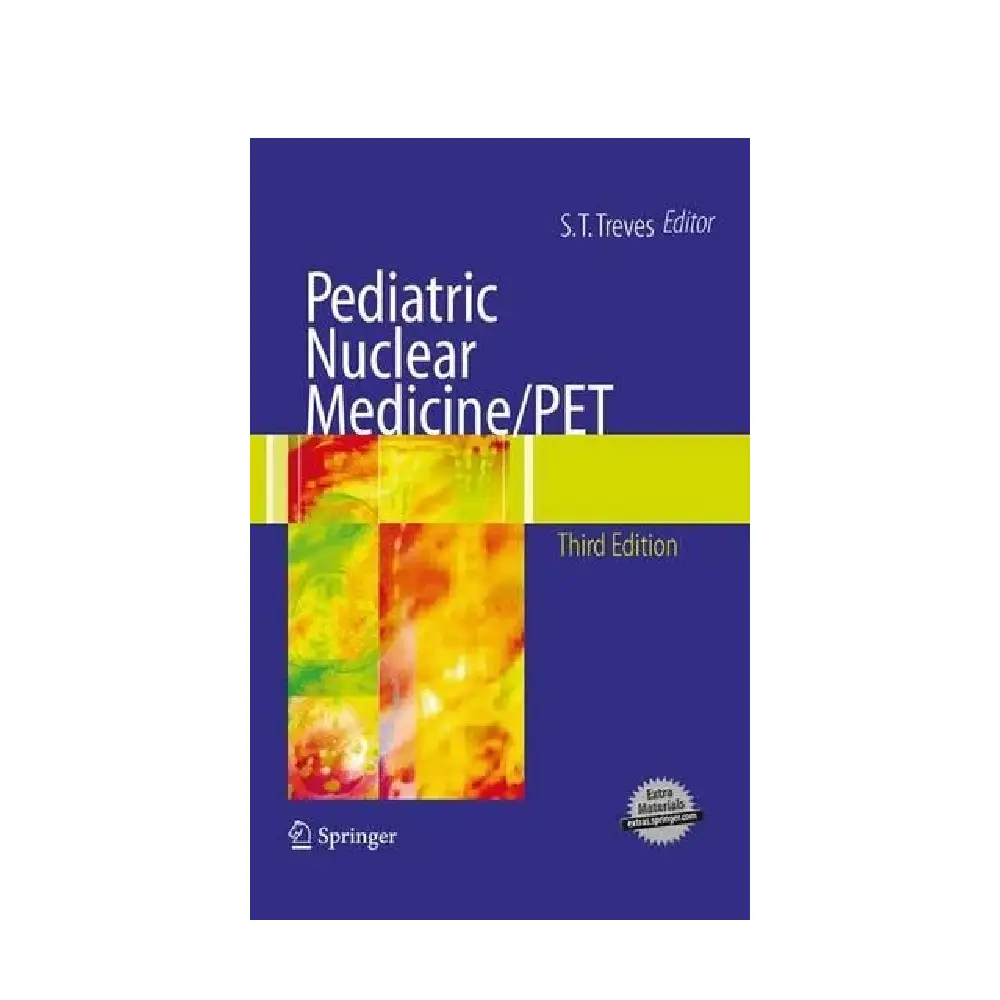


Pediatric Nuclear Medicine/PET
Pediatric Nuclear Medicine/PET (Third Edition) edited by S. T. Treves is a definitive, authoritative textbook in pediatric nuclear medicine, published by Springer in 2007. This edition builds on the solid foundation of earlier editions and reflects significant advancements in imaging technologies, especially positron emission tomography (PET) and single-photon emission computed tomography (SPECT). It serves as an essential resource for pediatricians, radiologists, nuclear medicine physicians, and residents in training who focus on diagnostic imaging in infants, children, and adolescents.
The third edition is prized for its comprehensive content that integrates basic science, clinical applications, interpretation techniques, and safety considerations unique to pediatric nuclear imaging. With more than 500 densely illustrated pages, the text balances academic depth with clinical practicality.
Foundations of Pediatric Nuclear Medicine
One of the strengths of this book is its emphasis on the fundamental principles of nuclear medicine as applied specifically to children. Pediatric nuclear medicine differs from adult practice due to variations in anatomy, physiology, and disease prevalence—as well as specialized concerns like radiation exposure, sedation, and dosing protocols tailored for smaller bodies.
The opening chapters introduce the reader to:
-
Basic principles of nuclear imaging
-
Radiotracers and their pharmacokinetics in children
-
PET and SPECT technologies and how they differ from conventional imaging
These foundational sections help readers grasp how nuclear medicine studies reveal physiological and metabolic information rather than just static anatomy. This is crucial in pediatrics where functional changes often precede structural abnormalities.
Clinical Organization: Organ-based and System-based Chapters
The main body of the text is arranged systematically, with chapters dedicated to major organ systems and clinical scenarios. Each clinical chapter includes indications, imaging protocols, normal findings, pathology, and image interpretation tips.
Central Nervous System and Neurology
This section reviews nuclear imaging in conditions such as seizures, developmental anomalies, and metabolic disorders. PET imaging plays a significant role in evaluating functional abnormalities that other modalities may miss.
Endocrine and Metabolic Disorders
Thyroid imaging in children, including the use of iodine-131 for informed therapeutic decisions, is addressed with clear practical guidelines.
Cardiopulmonary Imaging
Chapters on lung ventilation/perfusion studies, cardiac function, and congenital heart disease highlight how nuclear medicine assists in evaluating physiological parameters like blood flow, perfusion defects, and functional capacity.
Gastrointestinal and Hepatobiliary Imaging
Techniques for diagnosing reflux, GI bleeding, and hepatic function uncover conditions that often present ambiguously in children. Nuclear imaging offers definitive insights into motility and perfusion.
Renal Function and Urinary Tract Disorders
Nuclear studies play a pivotal role in measuring glomerular filtration rate (GFR), detecting vesicoureteral reflux, and identifying obstructive uropathy. This section describes how these functional assessments complement ultrasound and other anatomical imaging.
Oncology: PET in Pediatric Cancers
The inclusion of a dedicated chapter on pediatric oncology reflects the growing importance of nuclear medicine in cancer staging, treatment planning, and surveillance. PET imaging—especially FDG PET—is invaluable for detecting metabolically active tumors, evaluating response to therapy, and identifying residual disease or recurrence. This chapter synthesizes current evidence and provides real-world examples of how PET is integrated into pediatric oncologic care.
Advanced Techniques: SPECT and PET
The book features updated chapters on both SPECT and PET, including:
-
Technical principles of PET and PET/CT
-
Latest clinical applications of SPECT
-
Comparative discussions on PET vs. SPECT
-
Hybrid imaging techniques and image fusion (e.g., PET/CT, SPECT/CT, PET/MRI)
This content helps professionals understand not only how these techniques work but also how and when to choose one modality over another in clinical practice.
Safety, Dosimetry, and Radiation Risk
A significant concern in pediatric imaging is minimizing exposure to ionizing radiation. The book provides comprehensive insights into radiation risk, administered dose calculations, and safety protocols tailored for children. These chapters are essential references for clinicians committed to reducing risk without compromising diagnostic quality.
Educational and Practical Value
What distinguishes this textbook is its balance between theory and practice. It functions both as:
-
A reference manual for experienced clinicians
-
A textbook for trainees seeking structured education in pediatric nuclear medicine
Detailed illustrations, clinical cases, and comparative imaging examples make the content accessible and practical.
Conclusion
Pediatric Nuclear Medicine/PET, Third Edition remains a cornerstone text for anyone engaged in diagnostic imaging of children. Whether addressing routine organ studies, advanced PET applications in oncology, or the latest hybrid imaging techniques, the book provides comprehensive, clinically relevant content grounded in both science and practice.
It is an excellent educational resource for residents and a trusted reference for clinicians aiming to optimize pediatric nuclear imaging in everyday practice.
Reviews
There are no reviews yet