
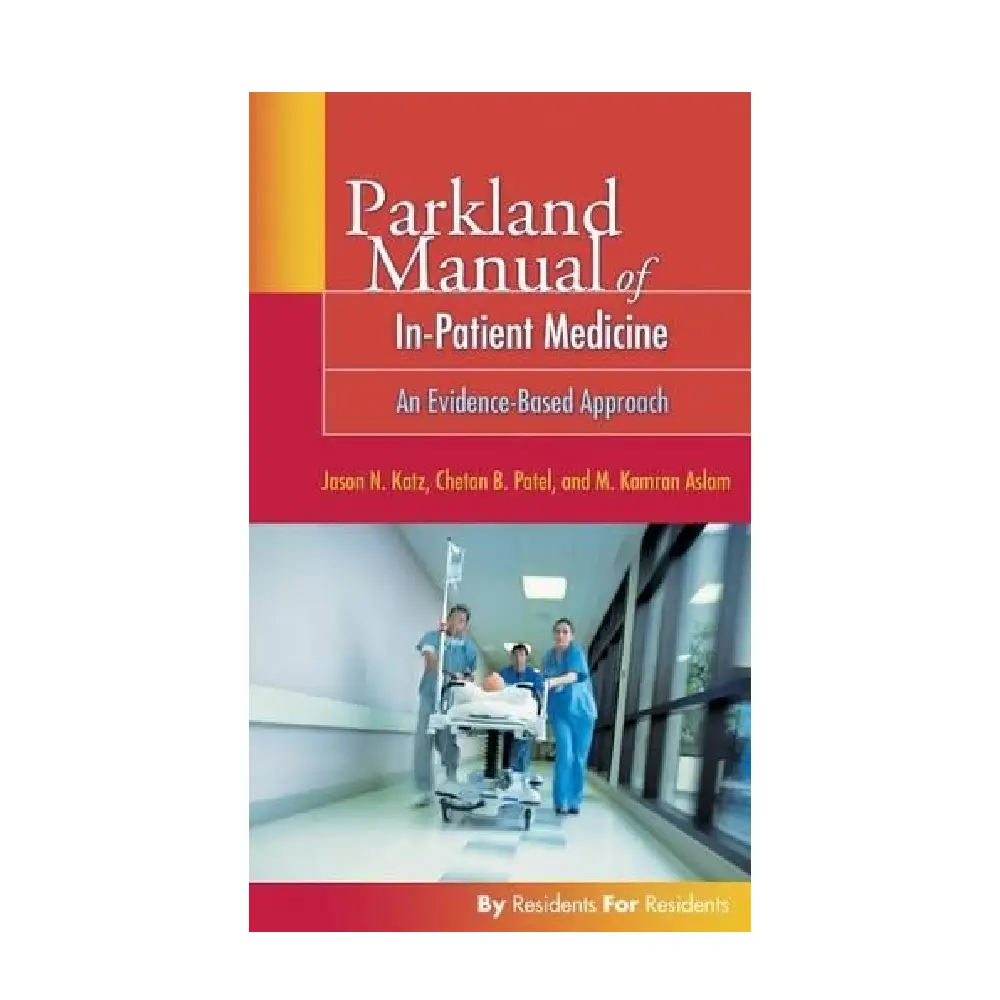
Parkland Manual of In-Patient Medicine: An Evidence-Based Guide — Overview
The Parkland Manual of In-Patient Medicine is a practical, evidence-based clinical reference designed to assist health care providers managing hospitalized patients. Originating from the experience and clinical practices at Parkland Health & Hospital System, a large public hospital in Dallas, Texas, the manual distills real-world inpatient care knowledge into a concise and utilitarian format. Its focus on evidence-based recommendations, practical approaches, and problem-oriented strategies makes it especially valuable for residents, hospitalists, medical students, and other clinicians involved in inpatient care.
Unlike traditional textbooks that often emphasize basic science or exhaustive disease reviews, the Parkland Manual prioritizes clinical utility, answering the questions that arise on ward rounds, during admissions, and in emergency inpatient decisions. Its content mirrors the rapid pace of modern hospital medicine, supporting decision-making under time pressure with clarity and efficiency.
Authorship and Authority
The Parkland Manual of In-Patient Medicine is typically authored and curated by faculty and clinicians at Parkland Health & Hospital System and associated academic institutions. Contributors include practicing hospitalists, subspecialists, and educators who draw upon daily clinical experience along with evidence from current guidelines. This collaborative authorship ensures the manual reflects both real-world practice and contemporary evidence.
The manual aligns with the philosophy that clinical actions should be guided by the best available evidence, while remaining pragmatic and adaptable to diverse patient populations — especially in resource-limited or high-pressure environments typical of busy inpatient settings.
Purpose and Audience
The manual’s core purpose is to serve as a point-of-care reference that supports safe, effective, and efficient inpatient management. It is designed for:
-
Internal medicine residents and trainees, especially during ward rotations and on-call responsibilities.
-
Hospitalists and attending physicians seeking quick, evidence-based recommendations.
-
Advanced practice providers (nurse practitioners, physician assistants) involved in inpatient care.
-
Medical students needing a practical supplement to larger textbooks.
-
Clinicians preparing for examinations that test clinical reasoning and management.
By focusing on actionable guidance rather than exhaustive pathophysiology, the manual bridges the gap between large reference texts and quick clinical judgment needs.
Structure and Content
The Parkland Manual of In-Patient Medicine is typically organized by clinical problems and organ systems rather than by traditional disease chapters. This structure mirrors how hospitalized patients present and how clinicians think when making decisions.
1. Problem-Based Approach
Rather than listing diseases alphabetically, the manual groups content by presenting issues — such as:
-
Fever and infection
-
Shock and hypotension
-
Acute respiratory distress
-
Altered mental status
-
Electrolyte abnormalities
-
Bradycardia or tachyarrhythmias
-
Sepsis
-
Acute kidney injury
For each problem, the manual provides:
-
Differential diagnoses
-
Initial assessment strategies
-
Diagnostic workup plans
-
Evidence-based treatment recommendations
-
Monitoring and expected response
This approach helps the clinician go from symptom or sign → evidence-based actions → reassessment.
2. Evidence-Based Recommendations
A distinguishing feature of the manual is its focus on evidence:
-
Treatment recommendations are grounded in clinical guidelines and best available data, such as from randomized trials, systematic reviews, or well-conducted cohort studies.
-
Levels of evidence may be referenced when applicable, though the emphasis is on clinical relevance and applicability.
-
Practical dosing, medication contraindications, and pitfalls are highlighted with clarity.
For example, when approaching sepsis, the manual outlines early sepsis bundles, fluid resuscitation strategies, and appropriate antimicrobial selection based on evidence and current benchmarks.
3. Diagnostic and Management Algorithms
Many sections include flowcharts and algorithms to guide decision-making at the bedside. These visual aids help clinicians rapidly:
-
Narrow down differentials
-
Choose initial tests
-
Start empiric therapy
-
Evaluate response
-
Plan next steps if initial therapy fails
These tools are especially helpful during high-pressure situations when quick, evidence-based decisions are necessary.
4. Practical Tools and Tables
The manual contains a variety of clinical tools, such as:
-
Quick reference tables for fluid management
-
Electrolyte correction protocols
-
Anticoagulation algorithms
-
Pain assessment scales
-
Renal dosing adjustments
-
Key drug interactions
-
Common laboratory interpretation guides
These summaries reduce cognitive load and help prevent common inpatient errors.
Why the Parkland Manual is Useful
1. Real-World Focus
The manual’s guidance reflects realities of inpatient practice — where clinicians must integrate patient presentation, evidence, and resource considerations with efficiency.
2. Evidence Balanced with Practicality
While rooted in current best evidence, the manual avoids unnecessary complexity. For example:
-
When guidelines conflict, the manual offers context and rationale.
-
When evidence is limited, expert consensus and clinical judgment are provided with explanation.
3. Educational Aid
Trainees often find the manual invaluable for:
-
Preparing for clinical rotations
-
Rapid review during on-calls
-
Building structured approaches for OSCEs or viva exams
4. Reduces Cognitive Overload
By presenting concise, problem-oriented guidance with checklists and algorithms, the manual reduces the need to sift through larger texts during time-sensitive clinical care.
Limitations
-
Not exhaustive: It is not intended as a sole reference for rare conditions or deep pathophysiology.
-
Dependent on Updates: Given its evidence-based nature, periodic updates are necessary to reflect guideline changes; older editions may be outdated in certain areas.
Conclusion
The Parkland Manual of In-Patient Medicine: An Evidence-Based Guide remains a practical and respected resource for clinicians navigating daily inpatient challenges. By combining evidence-based recommendations, structured problem-oriented content, and real-world applicability, it empowers medical trainees and practitioners to make informed, efficient, and patient-centered decisions. Whether used on ward rounds, for exam preparation, or during emergency evaluations, the manual’s focus on clarity, pragmatism, and evidence makes it a valuable tool in the armamentarium of inpatient care.



Reviews
There are no reviews yet