
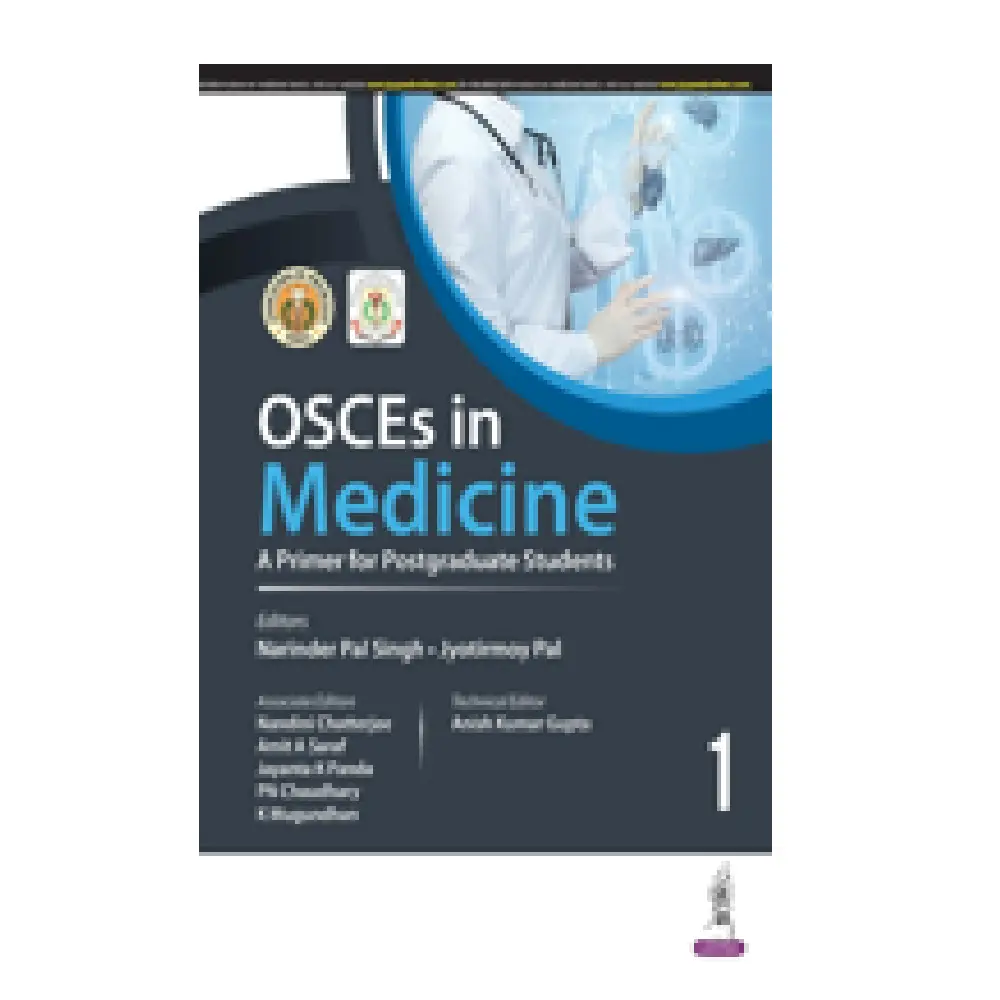
OSCEs in Medicine 1: A Primer for Postgraduate Students is a highly practical clinical skills guide designed to help postgraduate medical students prepare for Objective Structured Clinical Examinations (OSCEs). OSCEs are widely used in medical education to assess clinical competence, communication skills, diagnostic reasoning, and procedural knowledge in a standardized and structured format. This book serves as a concise yet comprehensive resource for candidates preparing for postgraduate examinations in internal medicine and related specialties.
The primary focus of the book is to provide step-by-step guidance on approaching OSCE stations effectively. Unlike traditional theoretical textbooks, this primer emphasizes practical examination techniques, structured clinical responses, and time-efficient problem solving. It is particularly useful for postgraduate students who must demonstrate clinical proficiency under examination pressure. The content is organized in a way that mirrors real OSCE stations, helping candidates simulate the examination environment during preparation.
One of the key strengths of the book is its emphasis on history-taking skills. It provides structured templates for eliciting symptoms, exploring risk factors, and identifying red-flag clinical features. The book teaches candidates how to present clinical findings in a logical and examiner-friendly format. Attention is given to commonly examined medical conditions, ensuring that students are familiar with high-yield topics frequently tested in postgraduate assessments.
Physical examination skills are described in a systematic and reproducible manner. The book highlights correct examination sequences, clinical sign recognition, and interpretation of abnormal findings. Special emphasis is placed on correlating clinical signs with underlying pathophysiology. This approach helps students not only perform examinations but also explain the clinical relevance of their findings when questioned by examiners.
Communication skills form an essential component of OSCE assessment, and the book provides practical guidance on patient interaction. Topics such as explaining diagnoses, obtaining informed consent, breaking bad news, and addressing patient concerns are discussed. The importance of empathy, professionalism, and ethical communication is repeatedly emphasized. These skills are crucial because OSCE scoring often includes evaluation of interpersonal behavior along with clinical competence.
The book also covers clinical reasoning and viva-style questioning techniques. Students are guided on how to construct differential diagnoses, interpret investigation results, and justify clinical decisions. Common examiner questions are included to help candidates practice rapid thinking and structured verbal responses. This feature helps bridge the gap between theoretical knowledge and practical clinical application.
Another important aspect is the inclusion of commonly tested OSCE scenarios such as cardiovascular examination, respiratory system assessment, neurological examination, abdominal examination, and endocrine disorders. Each station is presented with expected checklist points, key clinical findings, and model answers. This format allows students to practice with a checklist-based strategy that maximizes scoring potential.
Time management strategies are also discussed extensively. OSCE stations are usually time-restricted, and the book teaches candidates how to prioritize clinical information, avoid unnecessary details, and deliver concise yet comprehensive answers. The use of mnemonic aids and memory-enhancing techniques further supports rapid recall during examinations.
The book is written in a student-friendly style, using simple language, bullet-point summaries, and clinical pearls. These features make revision easier during the final stages of examination preparation. Diagrams, tables, and algorithmic approaches are used to reinforce understanding and improve retention of important concepts.
In addition to clinical skills, professionalism and ethical practice are highlighted. Topics such as patient confidentiality, doctor-patient relationship, and medical ethics are integrated into the OSCE framework. This reflects modern postgraduate examination standards, which assess both technical knowledge and professional behavior.
Overall, OSCEs in Medicine 1: A Primer for Postgraduate Students is an essential revision and practice guide for postgraduate medical candidates. By combining structured clinical methods, communication skills training, and high-yield examination content, the book helps students develop confidence and competence for OSCE assessments. Its practical orientation makes it particularly valuable for final-year postgraduate students and candidates preparing for membership or fellowship examinations in internal medicine.




Reviews
There are no reviews yet