
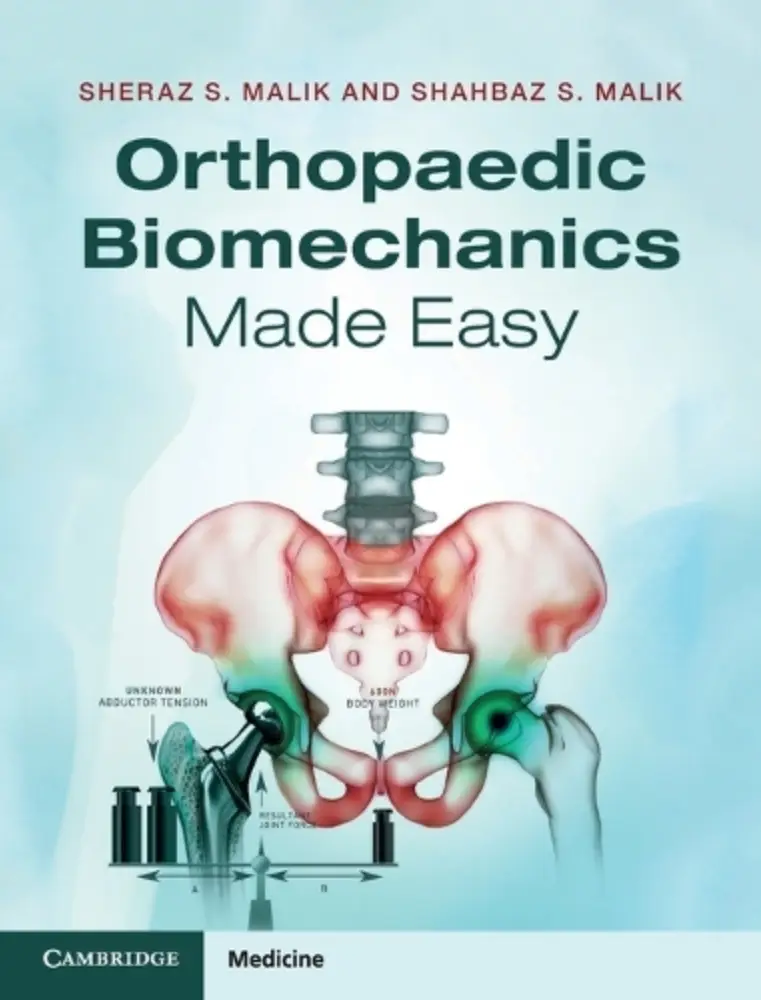


Orthopaedic Biomechanics Made Easy is a practical and concise guide that introduces the principles of biomechanics as they relate to the musculoskeletal system, making a traditionally complex subject more accessible to orthopaedic students, residents, and practicing surgeons. The book emphasizes the application of biomechanical concepts to clinical practice, surgical decision-making, and rehabilitation.
Introduction to Biomechanics
The book begins with the fundamental concepts of biomechanics, explaining the mechanics of forces, moments, and lever systems in the human body. It clarifies how bones, joints, and muscles interact to produce movement, maintain stability, and withstand external loads. The introduction demystifies technical terminology and mathematical equations, focusing instead on intuitive understanding through clinical examples and illustrations.
Skeletal Mechanics
A core section of the book deals with the mechanical properties of bones, including their composition, density, elasticity, and response to stress. It describes cortical and cancellous bone differences, fracture mechanics, and the biological principles underlying bone healing. Concepts like load-bearing capacity, stress-strain relationships, and fatigue failure are explained in the context of common orthopaedic injuries, such as fractures of the femur, tibia, and humerus.
Joint Biomechanics
The text covers the mechanics of synovial and cartilaginous joints, including hip, knee, shoulder, and spine. It discusses joint kinematics, ranges of motion, and the distribution of forces during activities like walking, running, and lifting. The book highlights how altered biomechanics due to trauma, deformity, or degenerative disease can lead to abnormal stress distribution and osteoarthritis. Special emphasis is placed on ligament function, joint stability, and the role of soft tissue structures in maintaining normal joint mechanics.
Special emphasis is placed on ligament function, joint stability, and the role of soft tissue structures in maintaining normal joint mechanics.
Muscle and Tendon Mechanics
Muscle function and tendon mechanics are described in detail, linking anatomy to mechanical performance. Topics include muscle force generation, length-tension relationships, lever systems, and the effects of muscle fatigue. The book explains how tendon elasticity contributes to energy efficiency in movement and how injuries such as tendon tears or ruptures affect overall biomechanics. It also addresses surgical repair and reconstruction considerations, highlighting how biomechanical principles guide implant choice and fixation strategies.
Implants and Fixation Devices
A significant portion of the book is devoted to the biomechanics of orthopaedic implants and fixation devices, including plates, screws, intramedullary nails, and joint prostheses. The text explains how implant design, material properties, and placement influence stability, load transmission, and long-term outcomes. It also addresses complications such as stress shielding, implant loosening, and fatigue failure, linking these to clinical decision-making.
Gait and Functional Biomechanics
The book introduces gait analysis and functional biomechanics, illustrating how movement patterns reveal underlying musculoskeletal problems. It emphasizes the application of biomechanical principles in rehabilitation, physiotherapy, and pre- and post-operative assessment. Practical examples show how correcting biomechanical deficiencies can improve mobility and reduce the risk of re-injury.Practical examples show how correcting biomechanical deficiencies can improve mobility and reduce the risk of re-injury.
Clinical Application
Throughout, Orthopaedic Biomechanics Made Easy focuses on practical application. Illustrations, tables, and case scenarios help readers understand complex concepts quickly. The book bridges the gap between theory and practice, making it an ideal reference for students preparing for exams, clinicians planning surgeries, and allied health professionals involved in rehabilitation.
Conclusion
By simplifying complex concepts and providing clear, clinically relevant explanations, the book serves as a comprehensive guide to orthopaedic biomechanics. Its approach allows readers to understand the forces and motions that affect the human musculoskeletal system, make informed decisions in patient care, and apply biomechanical reasoning to improve surgical outcomes and rehabilitation strategies.



Reviews
There are no reviews yet