
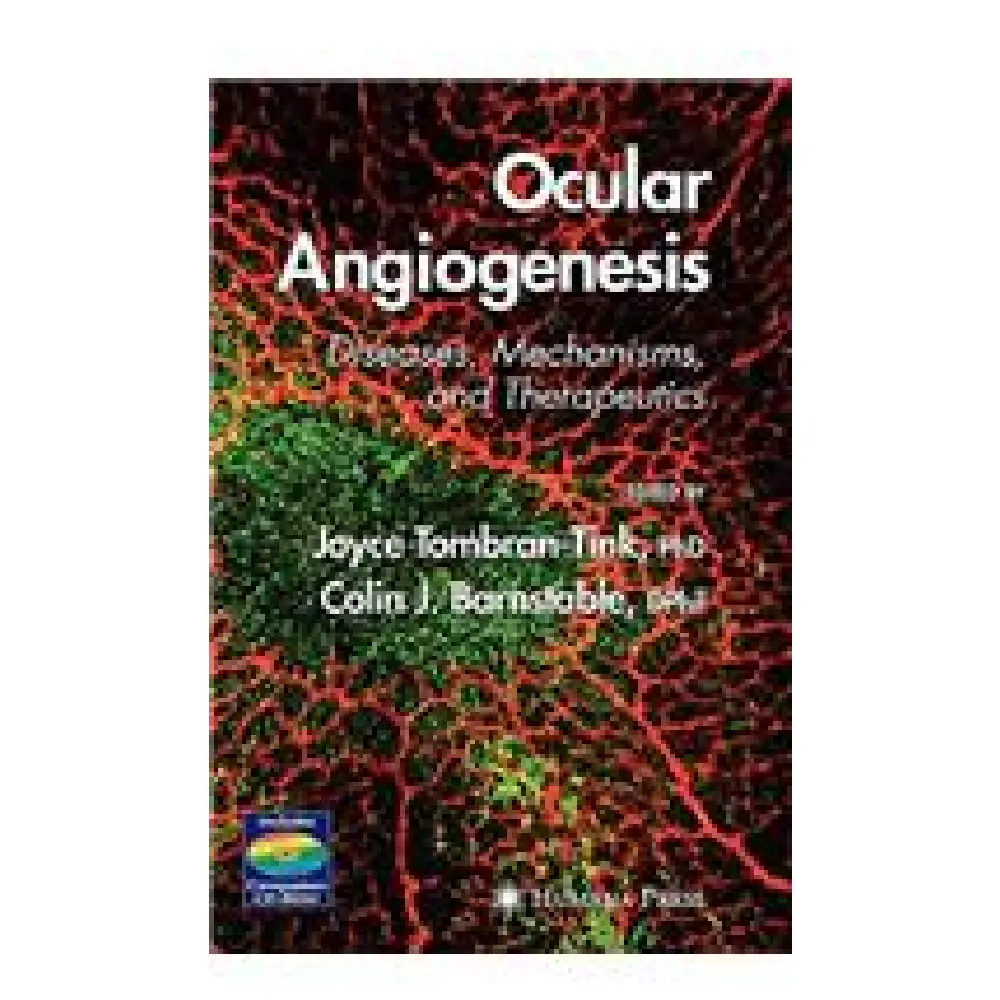
Ocular Angiogenesis: Diseases, Mechanisms, and Therapeutics is a comprehensive academic text that brings together clinical, molecular, and therapeutic perspectives on pathological angiogenesis in the eye. Angiogenesis — the growth of new blood vessels from existing vasculature — is a vital process in development and repair, but when dysregulated in ocular tissues it is a central driver of many prevalent, vision-threatening diseases. This book serves as an essential reference for researchers, clinicians, ophthalmologists, and biomedical scientists interested in understanding disease mechanisms and modern treatment strategies related to ocular neovascular disorders.
Pathological Angiogenesis in the Eye
The introductory sections of the book set the stage by explaining why angiogenesis is critically important in ocular health and disease. Whereas normal angiogenesis supports development and tissue maintenance, pathological angiogenesis involves excessive, disorganized vessel growth that disrupts retinal architecture, causes hemorrhage and leakage, and ultimately can lead to irreversible vision loss. The book clearly illustrates how angiogenic processes differ between normal physiology and disease states, laying the groundwork for subsequent molecular and clinical discussions.
The eye — especially the retina and choroid — is uniquely sensitive to vascular dysregulation. Because the retina has high metabolic demand, vascular supply and integrity are paramount. Dysregulation of angiogenic signaling results in fluid accumulation, scarring, and neuronal damage that directly affect visual function.
Molecular and Cellular Mechanisms
A major emphasis of the book is a detailed exploration of the molecular pathways governing angiogenesis. Among the central players is Vascular Endothelial Growth Factor (VEGF), which acts as a key pro-angiogenic signal in response to hypoxia or metabolic stress. The text explains how hypoxia-inducible factors (HIFs) upregulate VEGF and other cytokines, leading to endothelial cell proliferation, migration, and new vessel formation.
The book also discusses other regulators, such as angiopoietins, platelet-derived growth factor (PDGF), matrix metalloproteinases (MMPs), and inflammatory mediators. Each of these contributes to different aspects of angiogenesis, including vessel stabilization, extracellular matrix remodeling, and recruitment of supporting cells. Importantly, the book highlights how imbalances between pro- and anti-angiogenic signals — rather than any single factor — drive pathological vessel growth.
Cells involved in angiogenesis are described in both health and disease. Endothelial cells, pericytes, microglia, and immune cells interact dynamically to support or inhibit neovascularization. The text integrates these molecular and cellular insights into a unified framework, enabling readers to understand how complex signaling networks contribute to disease progression.
Clinically Significant Ocular Diseases
The book provides in-depth coverage of diseases in which angiogenesis is central:
1. Age-Related Macular Degeneration (AMD)
In the neovascular (“wet”) form of AMD, choroidal neovascularization (CNV) leads to leakage beneath the retina, hemorrhage, and rapid vision loss. The book explains how VEGF and other pro-angiogenic factors contribute to CNV formation and how imaging (such as optical coherence tomography and fluorescein angiography) assists in diagnosis and monitoring.
2. Diabetic Retinopathy (DR)
Chronic hyperglycemia leads to microvascular damage, ischemia, and subsequent upregulation of pro-angiogenic factors. This results in retinal neovascularization and increased risk of vitreous hemorrhage and tractional retinal detachment. The text describes disease staging, molecular drivers, and how angiogenesis underlies progressive tissue damage.
3. Retinopathy of Prematurity (ROP)
Premature infants with incomplete retinal vascularization can develop pathological neovascularization due to fluctuations in oxygen exposure. The book offers a comprehensive overview of ROP pathogenesis, screening strategies, and therapeutic options.
Other conditions such as neovascular glaucoma, ocular tumors, and traumatic neovascular responses are also discussed, emphasizing how aberrant angiogenesis plays roles across a spectrum of eye diseases.
Experimental Models and Research Tools
For researchers, the book offers valuable descriptions of experimental models used to study ocular angiogenesis:
-
Laser-induced choroidal neovascularization models in rodents simulate AMD-like pathology.
-
Oxygen-induced retinopathy (OIR) replicates ROP-like changes and enables mechanistic studies of hypoxia-driven angiogenesis.
-
Endothelial cell culture systems allow investigation of molecular signaling and drug testing.
These models are essential for testing therapeutic agents and understanding fundamental mechanisms of vascular growth and regression.
Therapeutic Strategies and Clinical Approaches
A major focus of the book is on therapeutic modalities that target angiogenesis:
Anti-VEGF Therapies
The book reviews the development and clinical application of anti-VEGF agents such as ranibizumab, bevacizumab, and aflibercept. These agents have revolutionized treatment paradigms in AMD and diabetic eye disease by inhibiting pathological vessel growth and reducing leakage. Evidence from clinical trials is discussed, including outcomes on visual acuity, anatomical improvement, and treatment protocols.
Adjuvant and Emerging Therapies
Recognizing that not all patients respond fully to anti-VEGF treatment, the text explores adjunctive approaches including:
-
Steroid implants to modulate inflammation and angiogenic signaling.
-
Angiopoietin inhibitors to stabilize vasculature and reduce neovascular drive.
-
Gene therapy strategies designed to provide sustained modulation of angiogenic pathways.
-
Novel delivery systems, such as sustained-release implants or nanoparticle carriers, to improve drug bioavailability and reduce treatment burden.
Comparative discussions of efficacy, safety, dosing frequency, and cost help clinicians make informed treatment decisions.
Clinical Implementation and Challenges
The book also addresses practical clinical challenges:
-
Resistance to therapy: Some eyes show limited response to anti-VEGF agents due to alternative angiogenic pathways or tachyphylaxis.
-
Adverse events: These may include intraocular inflammation, increased intraocular pressure, and rare systemic effects.
-
Patient compliance and access issues: Frequent intravitreal injections and follow-up visits can be barriers, especially in resource-limited settings.
Strategies to optimize outcomes — such as combination therapies and personalized treatment regimens — are discussed in depth.
Future Directions
Emerging frontiers highlighted include:
-
Biomarkers for therapy response to guide individualized treatment.
-
Precision medicine approaches based on genetic and molecular profiling.
-
Regenerative strategies that aim to restore normal vascular architecture rather than just inhibit aberrant growth.
These perspectives point toward an era of more targeted, durable, and patient-specific therapies.
Conclusion
Ocular Angiogenesis: Diseases, Mechanisms, and Therapeutics offers a deep, multidisciplinary exploration of the mechanisms driving ocular neovascular diseases and the evolving therapeutic landscape designed to counter them. By weaving molecular biology with clinical insights and treatment strategies, it equips both researchers and clinicians with the knowledge needed to understand, investigate, and address one of the most important pathological processes in vision loss today.





Reviews
There are no reviews yet