
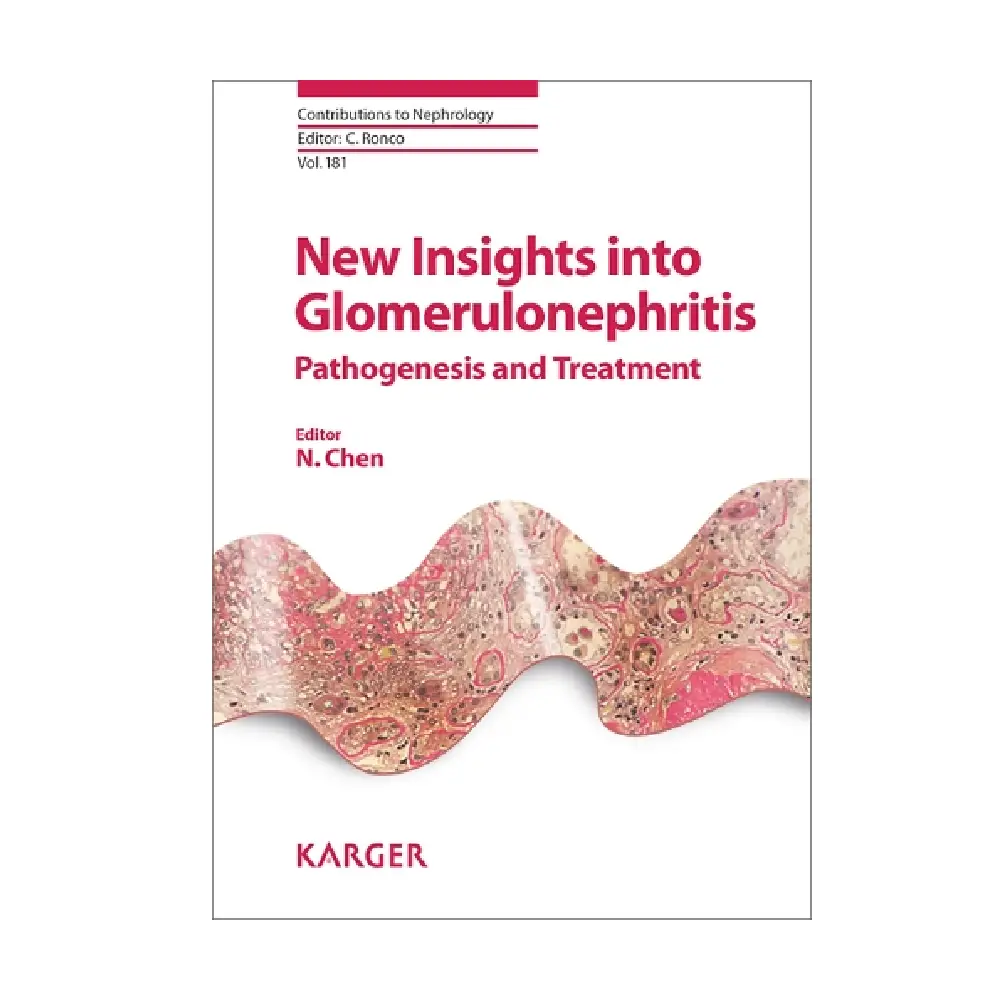


New Insights into Glomerulonephritis: Pathogenesis and Treatment
(Volume 181, Contributions to Nephrology)
Glomerulonephritis (GN) represents a collection of kidney diseases characterized by inflammation of the glomeruli—the tiny filtration units within the kidneys that remove waste and excess fluid from the blood. For decades, glomerulonephritis was broadly considered a single disease entity, but modern research has revealed it to be a diverse group of disorders with distinct immunologic, genetic, and molecular underpinnings. New Insights into Glomerulonephritis: Pathogenesis and Treatment, part of the Contributions to Nephrology series (Volume 181), synthesizes the latest advances in understanding the mechanisms that drive glomerular injury as well as innovations in diagnosis and therapy.
This work serves both clinicians and researchers by bridging basic scientific discoveries with clinical application, highlighting the complexity of glomerular diseases and pointing toward personalized approaches to treatment.
Understanding the Glomerulus: Structure and Function
The glomerulus is a delicate tuft of capillaries encased by Bowman’s capsule. Its unique architecture enables efficient filtration of blood while retaining essential proteins and cells. The glomerular filtration barrier comprises three layers: the fenestrated endothelium, the glomerular basement membrane (GBM), and the podocyte layer with slit diaphragms. Damage to any of these structures—whether through immune attack, metabolic stress, or genetic mutation—disrupts filtration and leads to proteinuria (excess protein in urine), hematuria (blood in urine), and declining kidney function.
Recent research has deepened our understanding of how cellular interactions and signaling pathways maintain glomerular integrity. For example, podocyte injury is now recognized as a central event in many forms of GN; these specialized epithelial cells do not readily regenerate, making their loss a critical determinant of disease progression.
Classification and Key Pathogenic Mechanisms
Historically, glomerulonephritis was classified based on clinical presentation (e.g., nephritic vs nephrotic syndromes) and light microscopy findings. Today, advances in molecular pathology have enabled more nuanced subclassifications that incorporate immunologic and genetic profiles.
-
Immune Complex–Mediated GN
Diseases like lupus nephritis and IgA nephropathy fall into this category. Here, circulating or in situ immune complexes deposit in the glomerulus, triggering complement activation and inflammation. In lupus nephritis, autoantibodies directed against nuclear antigens form immune complexes that accumulate in glomerular capillaries and mesangium, leading to variable patterns of injury.IgA nephropathy, the most common primary GN worldwide, involves aberrant glycosylation of IgA1 molecules, which form immune complexes that deposit in the mesangium. These complexes activate mesangial cells and incite inflammatory cascades that gradually disrupt filtration.
-
Anti-Glomerular Basement Membrane (Anti-GBM) Disease
This condition is driven by autoantibodies targeting the GBM itself, leading to rapidly progressive GN. When accompanied by pulmonary hemorrhage (Goodpasture syndrome), anti-GBM disease becomes a life-threatening vasculitic disorder. Detection of circulating anti-GBM antibodies aids diagnosis and informs prognostic assessments. -
Complement-Mediated GN
Dysregulation of the complement cascade—part of the innate immune system—underlies diseases such as C3 glomerulopathy. Genetic mutations in complement regulatory proteins or autoantibodies that stabilize C3 convertase can lead to uncontrolled complement activation, resulting in glomerular injury. Recognition of complement dysregulation has transformed the understanding and management of these disorders. -
Podocytopathies
Minimal change disease (MCD) and focal segmental glomerulosclerosis (FSGS) illustrate how injury to podocytes can lead to nephrotic syndrome. While some cases result from circulating permeability factors or genetic mutations affecting podocyte structure, others remain idiopathic. Novel research is elucidating the molecular pathways that govern podocyte survival and slit-diaphragm integrity.
Diagnostic Advances
Accurate diagnosis is critical to guiding therapy, and it increasingly relies on integrating clinical features with histologic and molecular data. Kidney biopsy remains the gold standard for classification, but modern techniques have expanded beyond basic light microscopy:
-
Immunofluorescence microscopy detects specific immunoglobulin and complement deposits.
-
Electron microscopy reveals ultrastructural changes such as podocyte foot process effacement or GBM alterations.
-
Genetic testing identifies mutations in genes associated with hereditary GN syndromes, enabling early diagnosis and family counseling.
-
Biomarkers such as urinary cytokines and complement split products are under investigation as noninvasive tools to monitor disease activity and response to therapy.
Therapeutic Innovations
Therapy for glomerulonephritis has historically centered on nonspecific immunosuppression with corticosteroids and cytotoxic agents. While effective in many cases, these treatments carry significant side effects and are not universally successful. New strategies aim to tailor therapy to underlying mechanisms:
-
Targeted immunomodulation
Agents such as rituximab (anti-CD20 monoclonal antibody) deplete B cells and have shown efficacy in lupus nephritis and certain cases of membranous nephropathy. Belimumab, which inhibits B-cell activating factor, is approved for systemic lupus erythematosus with emerging evidence of renal benefit. -
Complement inhibitors
Eculizumab, a monoclonal antibody that blocks terminal complement activation, has transformed treatment for atypical hemolytic uremic syndrome and shows promise in complement-mediated GN. -
Podocyte-Protective Therapies
Research into stabilizing podocyte cytoskeletons and slit diaphragms may lead to therapies that directly address the structural integrity of the filtration barrier. -
Antifibrotic Strategies
Chronic inflammation in GN often leads to fibrosis and irreversible scarring. Novel antifibrotic agents aim to interrupt these pathways and preserve kidney function.
Personalized Medicine and Future Directions
One of the most promising developments in nephrology is the shift toward personalized medicine. Integrating genomic, proteomic, and metabolomic data can reveal individual disease drivers and identify patients likely to respond to specific therapies. For example, genetic variants in complement regulators may indicate which patients will benefit most from complement blockade.
Clinical trials increasingly stratify participants based on molecular profiles rather than clinical syndromes alone—enhancing the precision and effectiveness of new therapies.
Conclusion
Glomerulonephritis encompasses a heterogeneous group of diseases united by glomerular inflammation and dysfunction. New Insights into Glomerulonephritis: Pathogenesis and Treatment captures the remarkable scientific progress in characterizing disease mechanisms, refining diagnosis, and developing targeted treatments. By embracing molecular pathology, immunology, and personalized strategies, nephrology is moving closer to therapies that are both more effective and less toxic, offering hope for improved outcomes in patients with glomerular disease.







Reviews
There are no reviews yet