
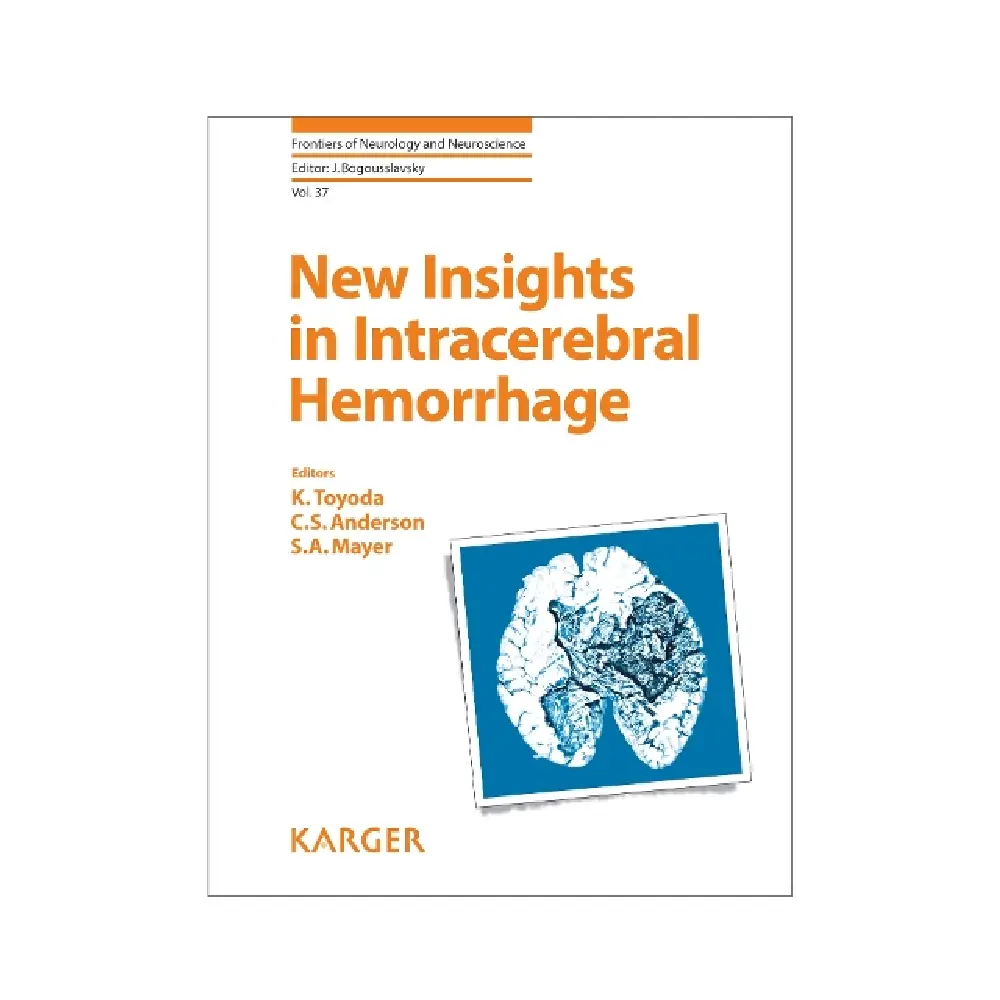

New Insights in Intracerebral Hemorrhage
Intracerebral hemorrhage (ICH) is one of the most devastating forms of stroke, accounting for approximately 10–15% of all strokes worldwide yet responsible for a disproportionately high rate of mortality and long-term disability. Traditionally viewed as a condition with limited therapeutic options, ICH has recently become the focus of intense research. Advances in neuroimaging, molecular biology, critical care, and clinical trial design have generated new insights into its pathophysiology, diagnosis, and management, offering renewed hope for improved outcomes.
Pathophysiology: Beyond the Initial Bleed
The primary injury in ICH results from the rupture of small cerebral vessels, most commonly due to chronic hypertension or cerebral amyloid angiopathy. The immediate effects include mechanical disruption of brain tissue, increased intracranial pressure, and reduced cerebral perfusion. However, contemporary research emphasizes that secondary brain injury plays a crucial role in determining outcome.
Secondary injury mechanisms include hematoma expansion, perihematomal edema, neuroinflammation, oxidative stress, and blood–brain barrier disruption. Breakdown products of blood, such as hemoglobin and iron, trigger inflammatory cascades and neuronal toxicity. Understanding these processes has shifted attention toward therapeutic windows that extend beyond the initial hours after hemorrhage.
Risk Factors and Prevention
Hypertension remains the most important modifiable risk factor for ICH. Improved blood pressure control has reduced ICH incidence in some populations, yet the aging population and widespread use of antithrombotic therapy have introduced new challenges. Cerebral amyloid angiopathy, increasingly recognized in elderly patients, is a major cause of lobar hemorrhage and recurrent bleeding.
Genetic factors influencing vessel integrity and coagulation are emerging areas of research, providing insight into individual susceptibility and potential targets for preventive strategies.
Advances in Neuroimaging
Modern neuroimaging has transformed the evaluation of ICH. Computed tomography (CT) remains the cornerstone for rapid diagnosis, but advanced techniques such as CT angiography have identified imaging markers predictive of hematoma expansion, including the “spot sign.” Magnetic resonance imaging (MRI) provides detailed information on underlying vascular pathology, microbleeds, and secondary injury.
These imaging advances enable better risk stratification, guide therapeutic decisions, and improve patient selection for clinical trials.
Acute Management and Blood Pressure Control
Early management of ICH focuses on stabilizing the patient, preventing hematoma expansion, and minimizing secondary injury. Recent clinical trials have clarified the role of intensive blood pressure lowering, demonstrating that rapid reduction of systolic blood pressure is generally safe and may improve functional outcomes in selected patients.
Reversal of anticoagulation is another critical component of acute care. The development of targeted reversal agents for direct oral anticoagulants has significantly improved the management of anticoagulant-related ICH.
Surgical and Minimally Invasive Approaches
The role of surgery in ICH has long been debated. Traditional open surgery has shown limited benefit in unselected patients. However, minimally invasive surgical techniques, including stereotactic aspiration and endoscopic evacuation, have renewed interest in surgical intervention. When combined with thrombolytic agents to facilitate clot removal, these approaches may reduce perihematomal injury and improve outcomes in carefully selected cases.
Neuroprotection and Emerging Therapies
Research into neuroprotective strategies aims to mitigate secondary brain injury. Experimental therapies targeting inflammation, iron toxicity, and oxidative stress are under investigation. Stem cell therapy and regenerative approaches are also being explored as potential means to promote recovery.
Although no neuroprotective agent has yet achieved definitive clinical success, these efforts reflect a broader shift toward multimodal treatment strategies.
Rehabilitation and Long-Term Recovery
Recovery after ICH is often prolonged and incomplete. Early and intensive rehabilitation is essential for maximizing functional outcomes. Advances in neurorehabilitation, including task-specific training and neuromodulation, are being adapted for ICH survivors.
Conclusion
New Insights in Intracerebral Hemorrhage highlight a paradigm shift in understanding ICH as a dynamic disease process with multiple therapeutic targets. Progress in imaging, acute management, surgical techniques, and rehabilitation has begun to challenge the long-held pessimism surrounding ICH. Continued research and multidisciplinary collaboration are essential to translate these insights into meaningful improvements in patient survival and quality of life.




Reviews
There are no reviews yet