
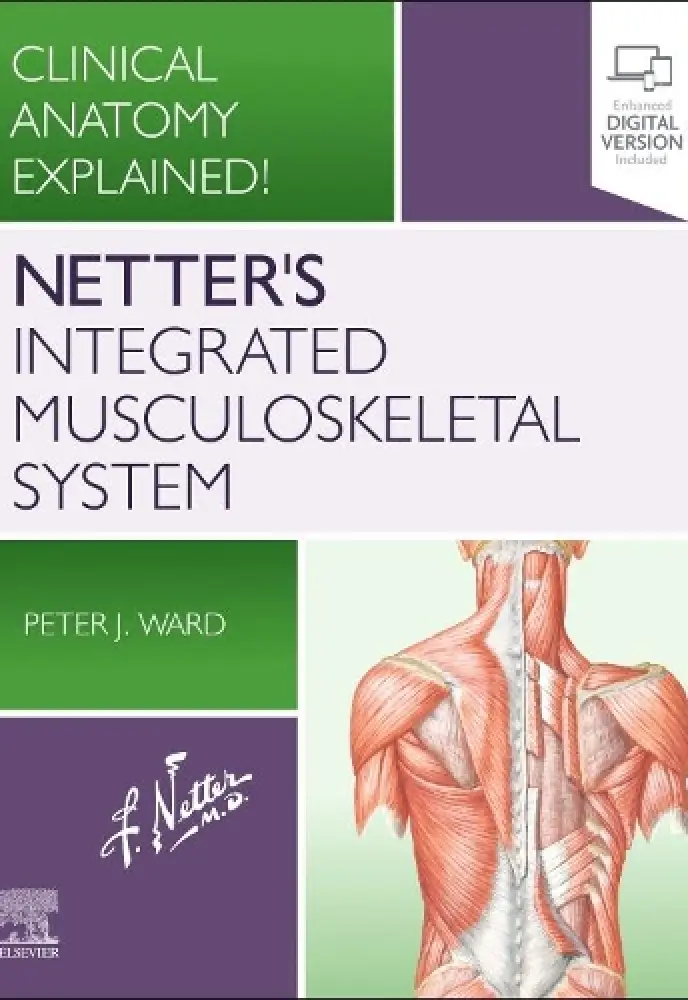

Netter’s Integrated Musculoskeletal System: Clinical Anatomy Explained (PB) is a highly regarded resource designed to simplify and integrate the complex study of musculoskeletal anatomy with clinical application. Inspired by the iconic illustrations of Frank H. Netter, this book combines visual learning with practical explanations, making it an essential guide for medical students, physiotherapy learners, and healthcare professionals.
The book stands out for its integrated approach, bridging the gap between basic anatomical knowledge and clinical relevance. Rather than presenting anatomy in isolation, it connects structure with function and clinical conditions. This method helps readers understand not only where muscles, bones, and joints are located, but also how they work together to produce movement and how they are affected in disease or injury. Rather than presenting anatomy in isolation, it connects structure with function and clinical conditions. By emphasizing clinical correlations, the text prepares students for real-world patient care.
One of the most distinctive features of this book is its use of detailed, high-quality illustrations. These visuals are derived from the classic Netter style, known for clarity, precision, and aesthetic appeal. Each diagram is carefully labeled and accompanied by concise explanations, allowing learners to quickly grasp complex anatomical relationships. The illustrations are particularly helpful for visualizing joint mechanics, muscle attachments, nerve pathways, and vascular supply.
The content is organized in a logical and student-friendly manner, typically structured by anatomical regions such as the upper limb, lower limb, and spine. Each section begins with foundational anatomy and gradually progresses to functional aspects and clinical applications. Topics such as biomechanics, posture, and movement patterns are discussed to provide a deeper understanding of how the musculoskeletal system operates in everyday activities.
Clinical integration is a central theme throughout the book. Common conditions such as fractures, ligament injuries, arthritis, and nerve compressions are explained in relation to the underlying anatomy. For example, the book may illustrate how damage to a specific nerve affects muscle function or how joint degeneration leads to pain and limited mobility. This approach enhances diagnostic reasoning and helps students connect theoretical knowledge with clinical practice.
Another valuable feature is the inclusion of summary tables, key points, and review questions. These elements reinforce learning and make the book an excellent tool for exam preparation. The concise writing style ensures that essential information is highlighted without overwhelming the reader. In addition, the book often includes clinical tips and real-life scenarios, which further enhance understanding and retention.
The paperback (PB) format makes the book portable and accessible, allowing students to use it conveniently during study sessions or clinical rotations. Despite its compact form, it covers a wide range of topics in sufficient depth, making it suitable for both introductory learning and revision.
Furthermore, Netter’s Integrated Musculoskeletal System: Clinical Anatomy Explained! aligns well with modern medical curricula that emphasize problem-based and integrated learning. It supports interdisciplinary education by linking anatomy with physiology, pathology, and clinical medicine. This holistic perspective is particularly beneficial for students preparing for exams such as USMLE, NEET-PG, and other professional assessments. It supports interdisciplinary education by linking anatomy with physiology, pathology, and clinical medicine
Overall, this book is an excellent blend of visual excellence, clear explanations, and clinical relevance. It transforms the study of musculoskeletal anatomy from a memorization-heavy subject into an engaging and practical learning experience. Whether used as a primary textbook or a supplementary review guide, it remains a valuable resource for anyone seeking to master the fundamentals of musculoskeletal anatomy and its clinical applications.





Reviews
There are no reviews yet