
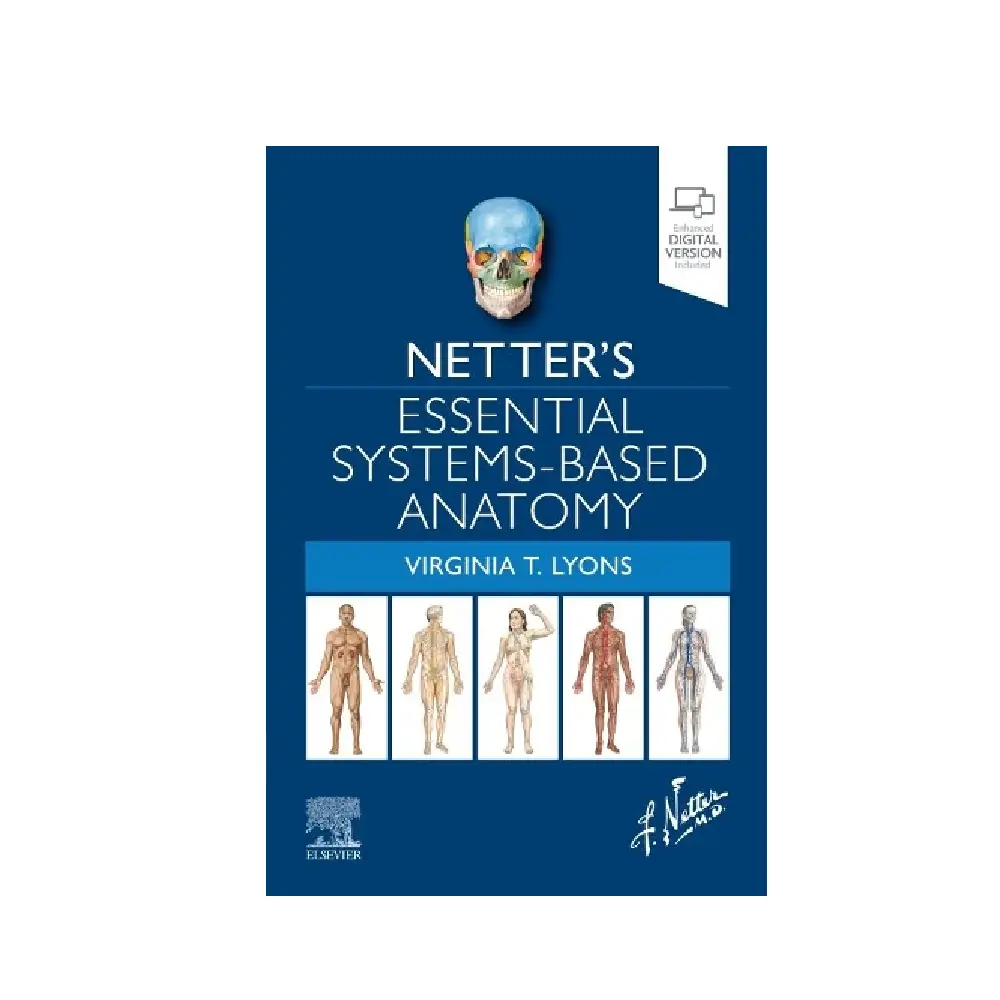


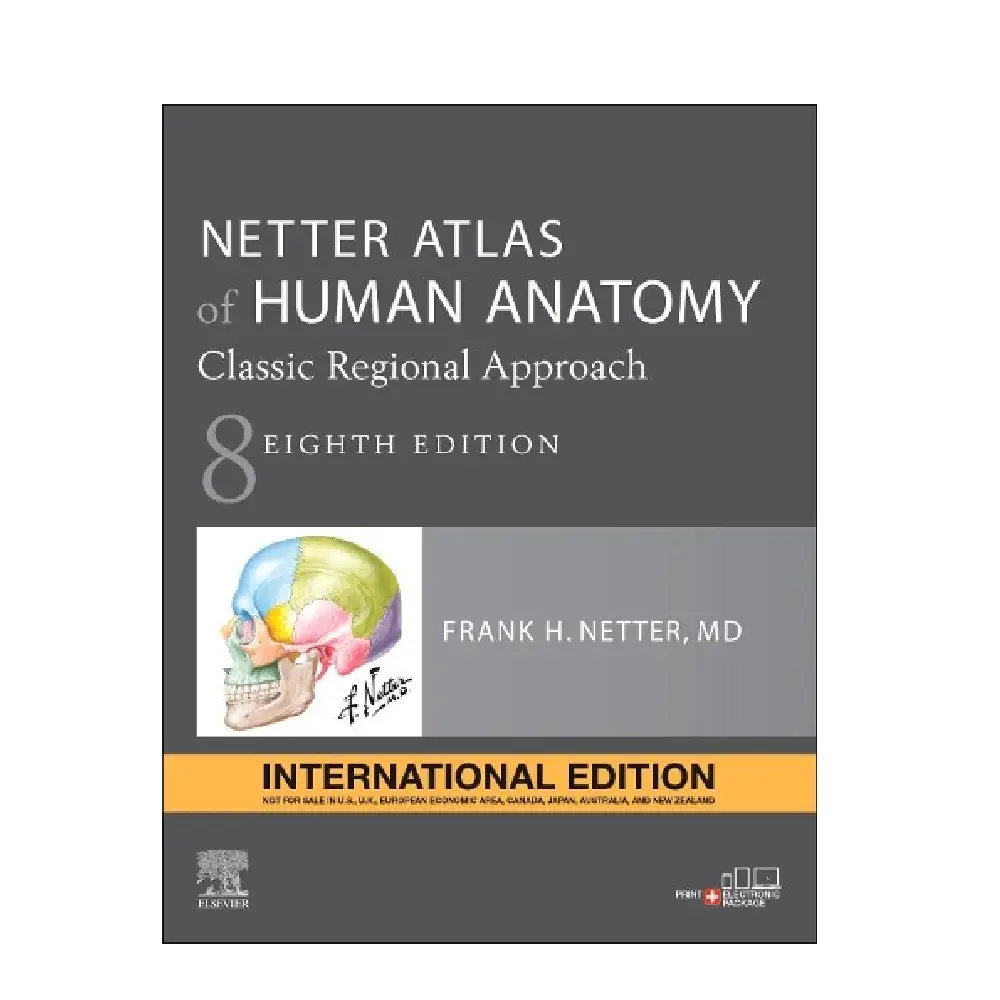
Netter’s Essential Systems-Based Anatomy is a highly regarded medical textbook designed to help students and healthcare professionals build a strong foundation in human anatomy through a systems-based learning approach. Part of the renowned Netter Basic Science series, this book combines detailed anatomical illustrations with clear, clinically relevant explanations, making it an essential resource for modern medical education. The book reflects the legacy of Frank H. Netter, whose medical artwork has long been celebrated for its precision, clarity, and educational value.
The primary strength of this book lies in its organization. Instead of presenting anatomy in a purely regional format, it adopts a systems-oriented structure that allows readers to understand anatomical relationships within functional physiological contexts. This method is particularly beneficial for students who are preparing for clinical practice, as it helps bridge the gap between basic anatomical knowledge and real-world medical application. By focusing on systems such as the cardiovascular, respiratory, digestive, nervous, and musculoskeletal systems, the book ensures that learners can integrate structural information with functional understanding.
Another distinguishing feature of the book is its outstanding visual content. True to the Netter tradition, the textbook includes a large number of detailed anatomical plates that illustrate complex structures with remarkable simplicity. These illustrations are designed not only to present anatomy accurately but also to facilitate long-term retention of information. Medical students often find visual learning particularly helpful when studying intricate structures such as cranial nerves, vascular pathways, and organ microanatomy. The labeled diagrams reduce confusion and help learners grasp spatial relationships between anatomical components.
Clinical correlation is an important component of this textbook. Throughout the chapters, anatomical descriptions are linked with common clinical conditions, diagnostic considerations, and treatment implications. This approach enhances the practical value of the book, making it useful not only for undergraduate medical education but also for allied health sciences and postgraduate review. By understanding how anatomical abnormalities contribute to disease processes, students can develop better diagnostic reasoning skills.
The language used in the book is clear, concise, and student-friendly. Complex anatomical concepts are explained in a straightforward manner without excessive technical jargon. This makes the book suitable for beginners who are just entering the field of medical anatomy as well as for advanced learners who need a quick but reliable reference. Important terminologies are explained in context, helping readers become familiar with standard medical vocabulary.
The coverage of body systems is comprehensive. The cardiovascular section discusses heart anatomy, major vessels, and circulation pathways. The respiratory system chapters explain airway structures, lung organization, and thoracic anatomy. Digestive system anatomy includes details about the gastrointestinal tract, accessory digestive organs, and associated vascular and nerve supply. The nervous system section provides insights into brain structures, spinal cord organization, and peripheral nerve distribution. Musculoskeletal anatomy is presented with emphasis on functional movement and structural support.
The book also supports modern educational requirements by integrating learning objectives, summary points, and review questions in selected sections. These features help students assess their understanding and prepare for examinations. The combination of narrative explanations, clinical examples, and visual aids makes the book an effective self-study resource.
Another advantage is its suitability for interdisciplinary medical education. Students pursuing medicine, dentistry, nursing, physiotherapy, and other allied health programs can benefit from the book’s simplified yet accurate presentation of anatomy. The systematic layout allows learners from different backgrounds to adapt the content according to their academic needs.
Overall, this textbook represents a modern approach to anatomical education by merging classical anatomical knowledge with clinical relevance and visual learning. Its system-based organization, high-quality illustrations, and student-oriented explanation style make it a valuable addition to any medical library. Whether used for classroom learning, clinical reference, or examination preparation, the book serves as a dependable guide to understanding human anatomy in a practical and meaningful way.


Reviews
There are no reviews yet