
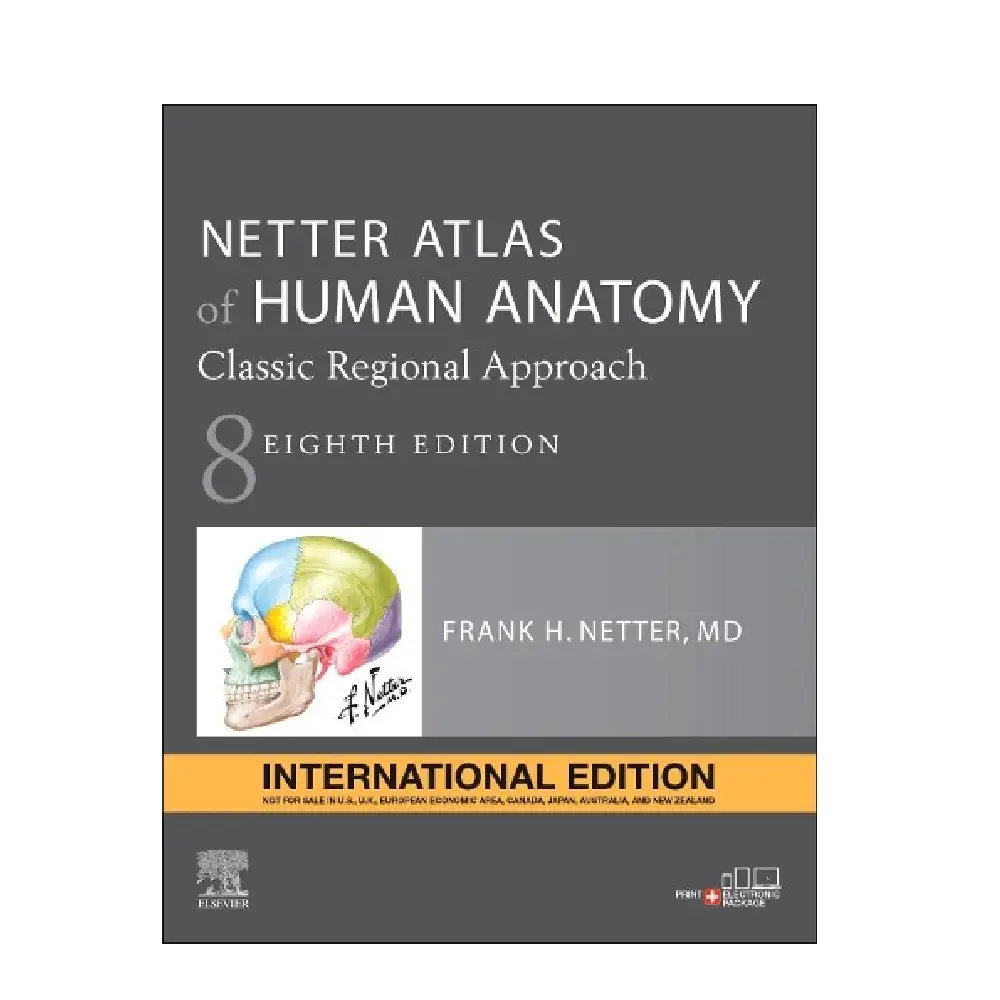


Netter Atlas of Human Anatomy: Classic Regional Approach — 8th Edition
Netter Atlas of Human Anatomy: Classic Regional Approach is a definitive visual reference for human anatomy, renowned for its clinical clarity, artistic excellence, and educational value. Based on the legacy of Frank H. Netter, MD—one of the most influential medical illustrators of the 20th century—this 8th edition presents detailed, full‑color illustrations that make complex anatomical structures easy to visualize and understand. It’s widely used by medical students, allied health students, clinicians, and educators who require an authoritative yet accessible guide to regional anatomy.
Purpose and Audience
The primary aim of this atlas is to bridge foundational anatomy with clinical relevance, helping learners not only memorize structures but also understand how they relate in practice—whether that’s in dissection labs, clinical rotations, or patient education. The region‑by‑region format mirrors how anatomy is typically taught and applied clinically. It’s ideal for:
-
Medical and dental students during gross anatomy and clinical years.
-
Physiotherapy, nursing, and physician assistant students needing a strong anatomical foundation.
-
Practicing clinicians and surgeons who want quick visual reminders of anatomic relationships.
Core Features
World‑Renowned Illustrations
The atlas contains over 550 full‑color, hand‑painted plates primarily drawn by Dr. Netter along with contributions by contemporary medical artist Carlos A. G. Machado, MD. Each illustration shows human anatomy with remarkable clarity and artistic precision, emphasizing relationships between structures that are most meaningful in clinical settings.
Region‑by‑Region Organization
Rather than a systems approach, the classic regional organization breaks anatomy into traditional functional segments:
-
Introduction – Fundamental concepts and conventions of anatomical illustration.
-
Head and Neck – Cranial bones, muscles, neurovascular structures, and sensory organs.
-
Back and Spinal Cord – Vertebral column, spinal nerves, and associated musculature.
-
Thorax – Heart, lungs, ribs, and major circuits of the respiratory and cardiovascular systems.
-
Abdomen – Digestive organs, abdominal muscles, and blood supply.
-
Pelvis and Perineum – Reproductive and excretory systems with supporting anatomy.
-
Upper Limb – Bones, joints, muscles, and neurovasculature of the arm and shoulder.
-
Lower Limb – Hip, thigh, leg, and foot anatomy.
This region‑based layout aligns with dissection labs and surgical approaches, making it easier to learn anatomy in a clinically meaningful sequence.
Clinical and Educational Enhancements
Clinical Correlations
One of the atlas’s key strengths is its integration of clinical insights alongside pure morphology. Each plate or figure often includes:
-
Notes on structures of high clinical significance
-
Correlations with common surgical landmarks
-
Reference to disease‑relevant regions
-
Comparisons with radiographic imaging (e.g., CT or MRI)
Together, these features help users connect textbook anatomy with real‑world clinical cases—crucial for exams like USMLE, NEET PG, and clinical practice.
Updated Terminology
This 8th edition uses updated anatomical terminology aligned with Terminologia Anatomica—the international standard—while still including commonly used eponyms in clinical practice. This makes the atlas both contemporary and practical for global learners.
New and Enhanced Illustrations
New plates and refined artwork provide greater detail in complex regions such as:
-
Cranial and facial cavities
-
Temporal and infratemporal fossae
-
Nasal turbinates
-
Peripheral nerve tables (cranial nerves and plexuses)
These additions reflect up‑to‑date understanding of anatomy and enhance the atlas’s usefulness in advanced clinical training.
Digital and Learning Tools
Purchasers of the 8th edition often receive enhanced digital content, including:
-
Full plate images from the atlas
-
Over 100 bonus plates from previous editions
-
Plate Pearls—concise summaries of key points for each plate
-
Interactive labeling quizzes
-
Over 300 multiple‑choice questions for self‑assessment
This digital support transforms the atlas from a static reference into an interactive study tool, boosting learning efficiency.
Why This Atlas Matters
Unlike rote memorization tools or dry texts, Netter Atlas of Human Anatomy combines art, science, and clinical relevance in a way that supports deep, intuitive understanding. Its illustrations serve as a visual roadmap to the human body—the “map” on which students and clinicians can base their anatomical knowledge. In fields where visual recognition is essential (such as surgery, radiology, and emergency medicine), the clarity of Netter’s plates cannot be overstated.
Practical Applications
1. Medical Education: Helps students learn and recall anatomical relationships during dissection and review sessions.
2. Clinical Practice: Assists clinicians in refreshing regional anatomy prior to procedures or patient consultations.
3. Board Exams: Excellent for anatomy review due to its detailed plates and digital question banks.
4. Patient Education: Clinicians can use illustrations to explain conditions or procedures to patients.
Conclusion
Netter Atlas of Human Anatomy: Classic Regional Approach, 8th Edition, stands as a gold standard anatomical atlas—melding artistic excellence with clinical relevance and educational depth. Its meticulous organization, superb visuals, clear clinical correlations, and modern terminology make it ideal for learners at every stage, from novice anatomy student to seasoned clinician seeking a quick anatomic reference. This atlas isn’t just about memorizing structures; it’s about visualizing how the body works in life and in medicine.


Reviews
There are no reviews yet