
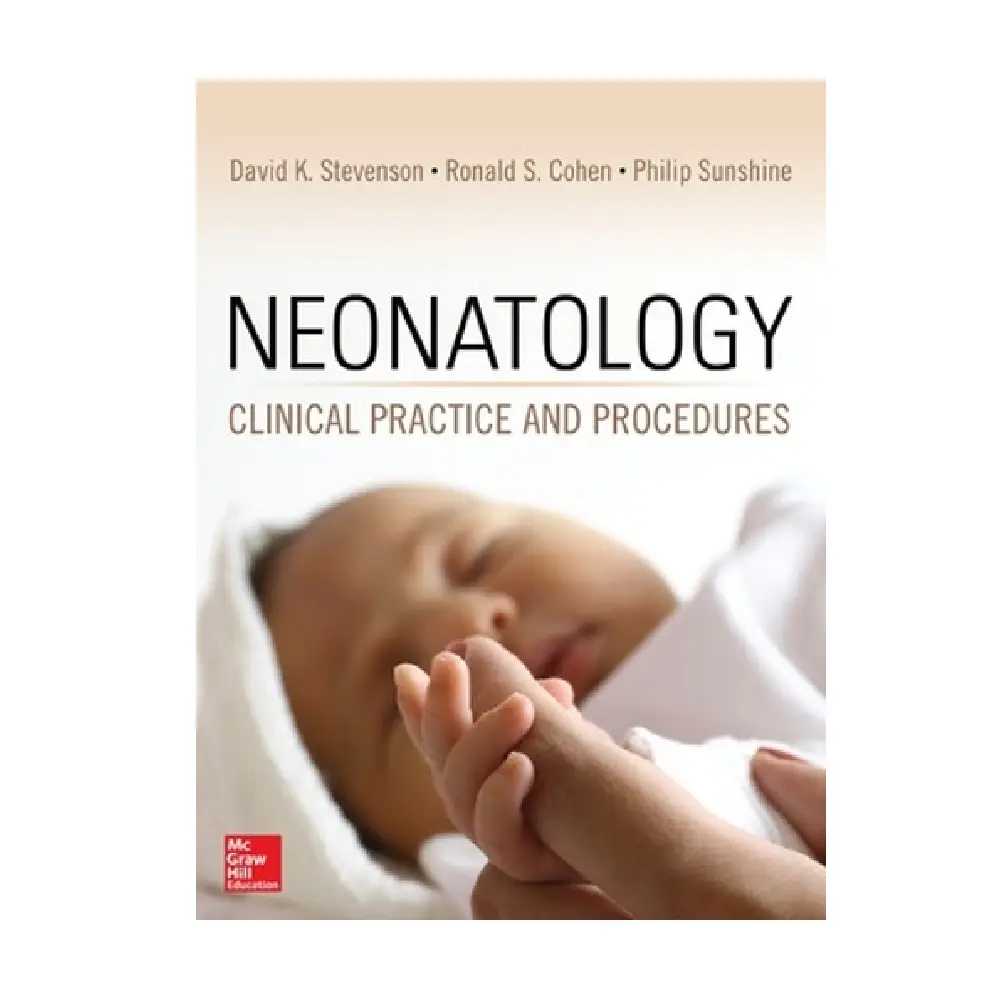


Neonatology: Clinical Practice and Procedures is a comprehensive clinical guide focused on the practice, procedures, and decision-making essential to the care of newborns — particularly those who are preterm, low birth weight, or medically unstable. It serves as a cornerstone reference for pediatricians, neonatologists, neonatal nurse practitioners, residents, and other healthcare professionals involved in neonatal intensive care units (NICUs). By combining evidence-based guidance with practical procedural instruction, this book bridges the gap between theory and bedside care in the high-stakes environment of neonatal medicine.
Purpose and Scope
The primary aim of Neonatology: Clinical Practice and Procedures is to equip clinicians with both conceptual understanding and step-by-step procedural competence. Neonatal medicine encompasses not only disease diagnosis and medical management but also hands-on interventions, procedural skills, and multidisciplinary coordination. The text delivers concise yet thorough coverage of essential topics, helping providers make swift, informed decisions in critical situations.
This book is designed for use in busy clinical settings. Sections are organized logically — starting with neonatal physiology and assessment, progressing to common and complex conditions in the NICU, and concluding with detailed descriptions of procedural techniques. Each chapter integrates clinical pearls, practical tips, and evidence summaries to reinforce best practices.
Foundations: Assessment and Early Care of the Newborn
The opening chapters review normal neonatal physiology, transitional changes after birth, and the initial assessment of newborns. Topics include:
-
Thermoregulation and metabolic adaptation: Newborns are prone to hypothermia and hypoglycemia; understanding metabolic adaptation is crucial.
-
Apgar scoring and initial stabilization: Systematic evaluation of airway, breathing, circulation, and activity sets the stage for subsequent care.
-
Resuscitation principles: The book outlines neonatal resuscitation algorithms, including airway management, positive pressure ventilation, and umbilical catheter placement.
Clear discussion of physiological principles helps clinicians interpret clinical signs and tailor interventions appropriately.
Common Neonatal Conditions
A central component of the text focuses on conditions frequently encountered in neonatal practice. These include:
Respiratory Disorders
-
Respiratory Distress Syndrome (RDS): Pathophysiology and surfactant therapy strategies.
-
Transient Tachypnea of the Newborn (TTN): Recognition and supportive care.
-
Pulmonary Hypertension and Meconium Aspiration Syndrome: Clinical features and management.
Each condition is discussed with emphasis on early recognition, differential diagnosis, and evidence-based treatment.
Cardiovascular and Hemodynamic Issues
-
Patent Ductus Arteriosus (PDA): Diagnosis via echocardiography and indications for medical or surgical closure.
-
Shock and Perfusion Instability: Fluid management and inotropic support protocols.
Neurological and Developmental Concerns
-
Hypoxic-ischemic encephalopathy (HIE): Therapeutic hypothermia and neuroprotective strategies.
-
Seizures and Intracranial Hemorrhage: Diagnostic approaches and anticonvulsant use.
Gastrointestinal and Nutritional Challenges
-
Necrotizing Enterocolitis (NEC): Risk factors, staging, and surgical considerations.
-
Feeding intolerance and parenteral nutrition: Balancing caloric needs with gut development.
The book’s structured approach — combining pathophysiology with clinical guidance — helps clinicians manage these complex problems systematically.
Procedural Mastery in Neonatal Care
A distinguishing feature of this text is its extensive coverage of procedures. Each procedure is presented with clear indications, contraindications, equipment lists, and step-by-step techniques. High-quality illustrations and checklists enhance comprehension and safety.
Procedures include but are not limited to:
-
Airway management: Endotracheal intubation, laryngeal mask airway use, and emergency tracheostomy.
-
Vascular access: Umbilical venous and arterial catheter placement; peripherally inserted central catheter (PICC) techniques.
-
Chest procedures: Thoracentesis, chest tube insertion for pneumothorax.
-
Lumbar puncture: Indications and technique for cerebrospinal fluid sampling.
-
Monitoring and supportive devices: Use of pulse oximetry, capnography, and transcutaneous monitoring.
Safety features such as time-outs, sterile technique reminders, and complication management are highlighted for each intervention.
Advanced Support and Technology in the NICU
The text also addresses sophisticated supportive modalities now integral to modern NICU care:
-
Mechanical ventilation strategies: Conventional and high-frequency modalities; criteria for weaning; ventilator management algorithms.
-
Extracorporeal Life Support (ECLS/ECMO): Indications, patient selection, and complication management.
-
Advanced imaging: Interpretation of head ultrasounds, echocardiography, and neonatal MRI.
By explaining both technology and clinical application, the book prepares clinicians to use these tools effectively.
Family-Centered and Ethical Care
Beyond clinical and procedural issues, Neonatology: Clinical Practice and Procedures emphasizes holistic care, including:
-
Parental communication: How to discuss prognosis, long-term outcomes, and goals of care with families.
-
Ethical dilemmas: Decision-making in extremely preterm infants; redirection of care in incurable conditions.
-
Developmental care practices: Kangaroo care, clustering care to minimize stress, and supporting sensory development.
This humanistic perspective underscores that neonatal care is not only technical but also relational and ethical.
Evidence-Based Recommendations and Clinical Protocols
Throughout the book, evidence levels and guideline recommendations support clinical decision-making. Tables and flowcharts summarize key algorithms — such as sepsis evaluation pathways, hypoglycemia management protocols, and screening schedules for retinopathy of prematurity.
These tools streamline care in fast-paced environments and ensure consistency with current standards.
Conclusion
Neonatology: Clinical Practice and Procedures is an authoritative and practical resource that blends foundational knowledge with procedural instruction and clinical insights. Its organization into physiology, disease management, procedures, advanced technologies, and family care makes it uniquely valuable for both trainees and experienced practitioners. In the high-stakes realm of neonatal care, where rapid assessment and precise procedures can be lifesaving, this text serves as both a reference handbook and a practical guide to excellence in neonatal practice.



Reviews
There are no reviews yet