

Molecular Signaling in Spermatogenesis and Male Infertility
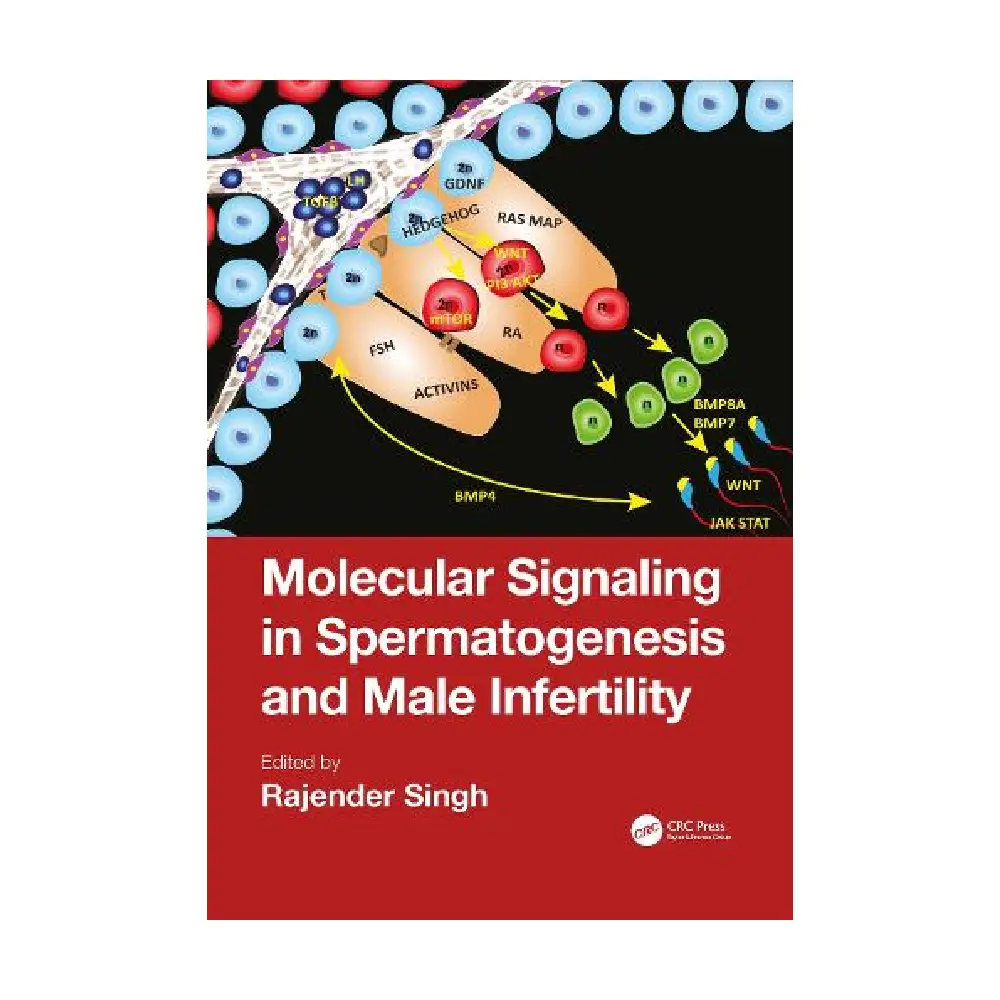
Molecular Signaling in Spermatogenesis and Male Infertility is a specialized academic resource that explores the complex cellular and molecular pathways regulating sperm production and their implications in male reproductive disorders. The book bridges basic science and clinical practice, making it valuable for andrologists, reproductive endocrinologists, embryologists, researchers, and postgraduate students in reproductive medicine.
Spermatogenesis is a tightly regulated, multistep process that occurs within the seminiferous tubules of the testes. It involves the proliferation of spermatogonial stem cells, meiotic division of spermatocytes, and differentiation of spermatids into mature spermatozoa. This intricate process depends on coordinated endocrine, paracrine, and autocrine signaling mechanisms. The book begins by outlining the physiological framework of the hypothalamic–pituitary–gonadal (HPG) axis. Gonadotropin-releasing hormone (GnRH) from the hypothalamus stimulates the release of follicle-stimulating hormone (FSH) and luteinizing hormone (LH) from the pituitary, which in turn regulate Sertoli and Leydig cell function. Testosterone production and intratesticular hormonal balance are described as central to normal spermatogenesis.
A major focus of the text is intracellular signaling pathways. It discusses cyclic adenosine monophosphate (cAMP)-dependent pathways, protein kinase A (PKA) activation, mitogen-activated protein kinase (MAPK) cascades, phosphoinositide 3-kinase (PI3K)/Akt signaling, and transforming growth factor-beta (TGF-β) family pathways. These signaling networks control cell proliferation, differentiation, apoptosis, and cytoskeletal remodeling during germ cell maturation. The book emphasizes how dysregulation of these pathways can lead to impaired sperm production, abnormal morphology, or defective motility.
The role of Sertoli cells as “nurse cells” is extensively explored. Their involvement in the formation of the blood–testis barrier, secretion of growth factors, and regulation of germ cell survival is explained in molecular detail. Junctional proteins, adhesion molecules, and gap junction communication are highlighted as critical components in maintaining the microenvironment required for spermatogenesis.
The text also delves into genetic and epigenetic regulation. It examines transcription factors such as CREM (cAMP response element modulator), SOX family proteins, and DMRT1 in germ cell differentiation. Epigenetic modifications—including DNA methylation, histone modifications, and chromatin remodeling—are discussed in relation to sperm maturation and imprinting. Errors in these processes are linked to infertility, recurrent pregnancy loss, and transgenerational effects.
Another key section addresses oxidative stress and apoptosis signaling. Reactive oxygen species (ROS), when produced in excess, can damage sperm DNA and membranes. The balance between pro-apoptotic and anti-apoptotic pathways (e.g., Bcl-2 family proteins and caspases) is examined to illustrate mechanisms of germ cell loss. Environmental toxins, endocrine disruptors, infections, and lifestyle factors are presented as modulators of these molecular pathways.
Clinical correlations form a strong component of the book. Conditions such as non-obstructive azoospermia, oligozoospermia, varicocele-associated infertility, hypogonadotropic hypogonadism, and genetic syndromes are analyzed in light of molecular signaling defects. The text explains how abnormalities in androgen receptor signaling, Y-chromosome microdeletions, and mutations in key regulatory genes contribute to male infertility.
Emerging diagnostic tools are covered, including sperm DNA fragmentation testing, proteomics, transcriptomics, and molecular biomarkers. The book explores how advances in assisted reproductive technologies (ART) intersect with molecular understanding. It discusses how intracytoplasmic sperm injection (ICSI) may bypass certain functional defects but does not correct underlying molecular abnormalities.
Therapeutic implications are also addressed. Hormonal therapies, antioxidant supplementation, targeted molecular treatments, and experimental gene-editing strategies are evaluated. The potential of stem cell research and regenerative approaches for restoring spermatogenesis is presented as an evolving frontier in reproductive medicine.
Illustrations of signaling pathways, diagrams of seminiferous tubule architecture, and schematic representations of gene regulation enhance comprehension. Each chapter integrates basic science with translational relevance, making complex molecular concepts accessible to clinicians.
Overall, Molecular Signaling in Spermatogenesis and Male Infertility provides a comprehensive and up-to-date exploration of the cellular communication networks governing male reproductive function. By linking molecular biology with clinical infertility, the book deepens understanding of pathophysiology and supports the development of innovative diagnostic and therapeutic strategies in andrology.




Reviews
There are no reviews yet