
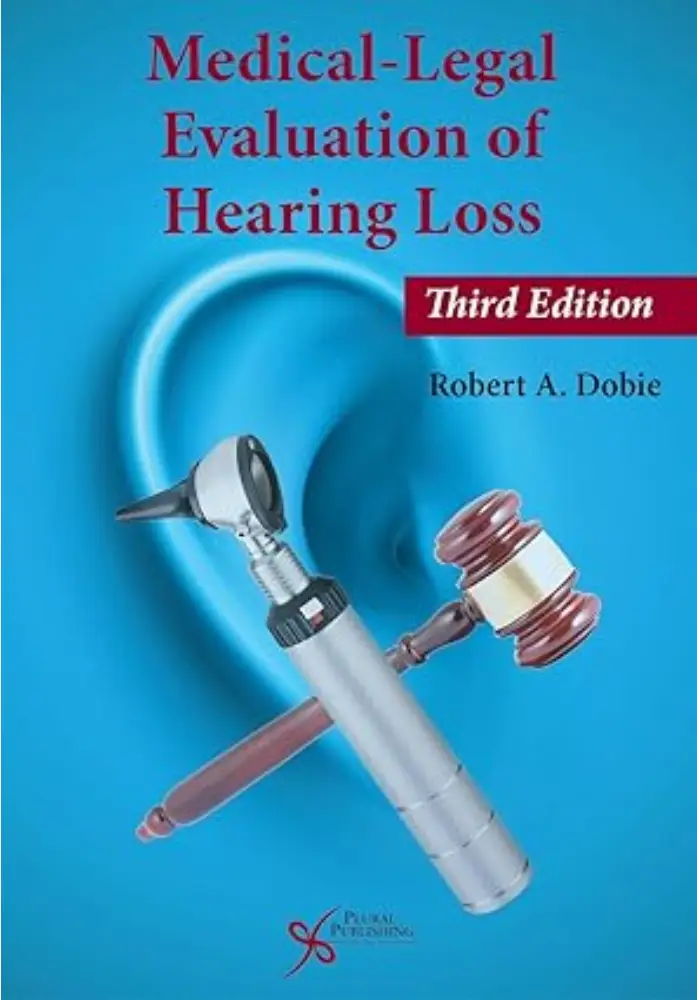
Medical-Legal Evaluation of Hearing Loss (3rd Edition) is a comprehensive and authoritative resource that bridges the gap between clinical audiology and legal practice. The book is designed to assist healthcare professionals, legal experts, and insurance specialists in understanding, assessing, and interpreting hearing loss within a medico-legal context. As hearing impairment cases often involve compensation claims, workplace injuries, disability assessments, and litigation, this text provides essential guidance on evaluating such cases accurately and fairly.
The third edition expands on previous versions by incorporating updated standards, modern diagnostic techniques, and evolving legal frameworks. It reflects current practices in audiology, occupational health, and forensic medicine, making it highly relevant for today’s professionals. One of the primary strengths of the book lies in its interdisciplinary approach, combining medical science with legal principles to ensure comprehensive evaluation.
A key focus of the book is the accurate assessment of hearing loss. It explains the anatomy and physiology of the auditory system, helping readers understand how hearing functions under normal conditions. From there, it explores various types of hearing loss, including conductive, sensorineural, and mixed hearing loss. Each type is discussed in detail, along with its causes, diagnostic methods, and implications in legal cases.
The text emphasizes the importance of objective and reliable testing methods. Audiometric evaluations, such as pure-tone audiometry, speech audiometry, and tympanometry, are thoroughly explained. The book also discusses advanced diagnostic tools like otoacoustic emissions (OAE) and auditory brainstem response (ABR) testing. These methods are critical in medico-legal cases, as they provide measurable and reproducible evidence of hearing impairment.
Another important aspect covered is the differentiation between genuine and non-organic (feigned or exaggerated) hearing loss. In legal settings, there may be instances where individuals overstate their impairment for financial compensation. The book provides practical techniques and clinical indicators to detect inconsistencies in test results, ensuring that evaluations remain fair and unbiased.
The medico-legal framework surrounding hearing loss is also explored in depth. The book outlines how hearing impairment is quantified and expressed as a percentage of disability, which is crucial for compensation claims. Various international standards and guidelines are discussed, helping practitioners understand how impairment ratings are determined. The text also explains how to prepare medical reports that can withstand legal scrutiny, emphasizing clarity, accuracy, and objectivity.
Occupational hearing loss is a major topic in the book, particularly noise-induced hearing loss (NIHL). It examines how prolonged exposure to high noise levels in workplaces such as factories, construction sites, and industrial environments can lead to permanent damage. The book provides guidance on assessing workplace-related claims, including how to evaluate exposure history, use audiometric data, and determine causation.
In addition, the book addresses age-related hearing loss (presbycusis) and its distinction from occupational or injury-related causes. This differentiation is critical in legal cases, as it affects liability and compensation decisions. The text helps professionals separate natural aging effects from external factors contributing to hearing impairment.
Case studies and real-world examples are included throughout the book to illustrate practical applications. These examples demonstrate how clinical findings are interpreted in legal contexts, making complex concepts easier to understand. They also highlight common challenges faced by practitioners and provide strategies to address them effectively.
Overall, Medical-Legal Evaluation of Hearing Loss (3rd Edition) serves as an indispensable guide for professionals dealing with hearing loss in legal contexts. By combining clinical expertise with legal knowledge, it equips readers with the tools needed to conduct accurate assessments, prepare defensible reports, and contribute effectively to the resolution of medico-legal cases.



Reviews
There are no reviews yet