
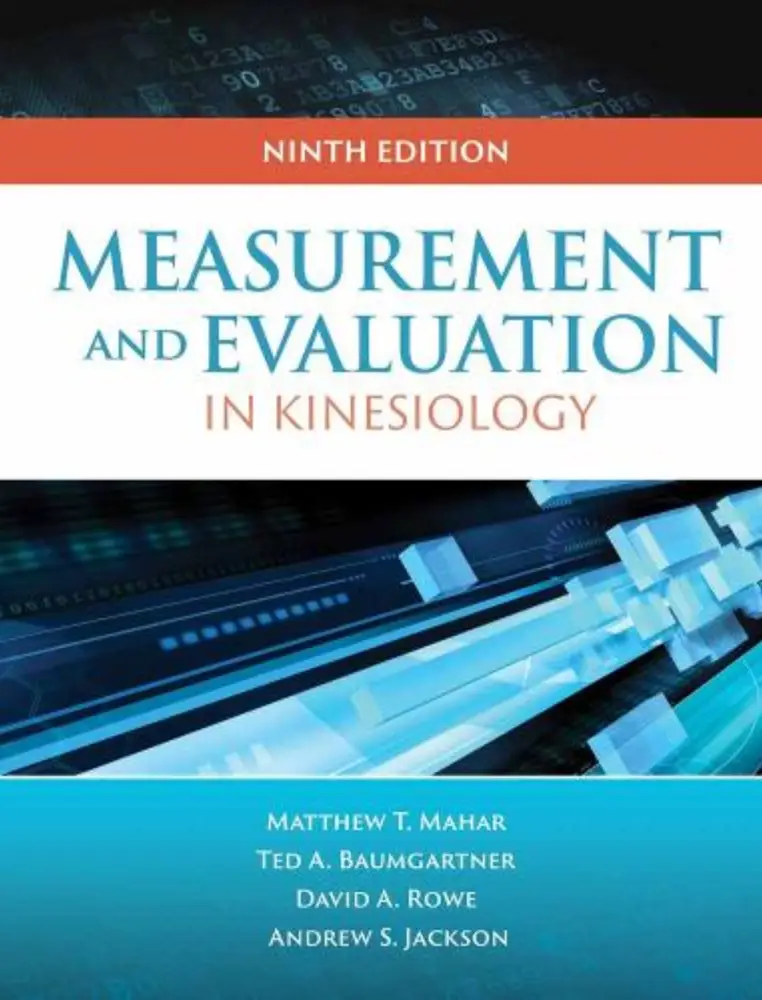

Measurement for Evaluation in Kinesiology, 9th Edition
Measurement for Evaluation in Kinesiology, 9th Edition is a comprehensive and authoritative resource that focuses on the principles and practices of measurement, testing, and evaluation within the field of kinesiology. Widely used in physical education, sports science, and exercise science programs, this book equips students, educators, and professionals with the knowledge and tools needed to assess physical performance, fitness levels, and motor skills effectively.
The primary objective of this textbook is to provide a clear understanding of how to design, administer, and interpret various physical fitness tests and assessments. It begins with foundational concepts such as the importance of measurement in kinesiology, types of variables, and the role of evaluation in improving performance and guiding training programs. The book emphasizes the scientific basis of measurement, ensuring that assessments are both reliable and valid.
A key feature of the ninth edition is its detailed explanation of statistical concepts relevant to kinesiology. Topics such as mean, median, standard deviation, correlation, and percentiles are presented in a simplified manner, making them accessible even to students with limited mathematical background. These statistical tools are essential for analyzing test results and making informed decisions based on data.
The book covers a wide range of fitness components, including cardiovascular endurance, muscular strength and endurance, flexibility, body composition, and agility. For each component, standardized tests are described along with their procedures, scoring methods, and interpretation guidelines. This allows readers to select appropriate tests based on their specific needs and objectives. The inclusion of normative data helps in comparing individual performance with established benchmarks.
Another important aspect of the text is its focus on motor skill assessment. The book provides methods for evaluating skills such as balance, coordination, speed, and reaction time. These assessments are particularly useful in sports training and physical education settings, where skill development is a primary goal. The authors also discuss techniques for observing and recording performance, ensuring accurate and consistent evaluation.
The ninth edition incorporates updated content that reflects current trends and advancements in kinesiology. It includes modern testing protocols and highlights the use of technology in measurement, such as digital fitness trackers and computer-based analysis tools. These additions make the book relevant to contemporary practice and prepare students for the evolving demands of the field.
Ethical considerations and safety guidelines are also emphasized throughout the book. The authors stress the importance of conducting assessments in a safe and respectful manner, particularly when working with diverse populations such as children, older adults, and individuals with disabilities. Guidelines for obtaining informed consent and maintaining confidentiality are also discussed, ensuring that evaluations are conducted responsibly.
Practical application is a major strength of this textbook. It provides step-by-step instructions for administering tests, along with sample forms and data recording sheets. These resources make it easier for students and practitioners to implement assessments in real-world settings. Additionally, the book includes review questions and practical exercises that reinforce learning and encourage critical thinking.
The writing style is clear and organized, with diagrams, tables, and charts used effectively to enhance understanding. Complex concepts are broken down into manageable sections, making the material approachable and easy to follow. This user-friendly approach makes the book suitable for both beginners and advanced learners.
In conclusion, Measurement for Evaluation in Kinesiology, 9th Edition is an essential guide for anyone involved in assessing physical performance and fitness. Its comprehensive coverage, practical focus, and integration of theory with application make it a valuable resource in the field of kinesiology. By providing the tools needed for accurate and meaningful evaluation, the book supports the development of effective training programs and contributes to improved health and performance outcomes.






Reviews
There are no reviews yet