
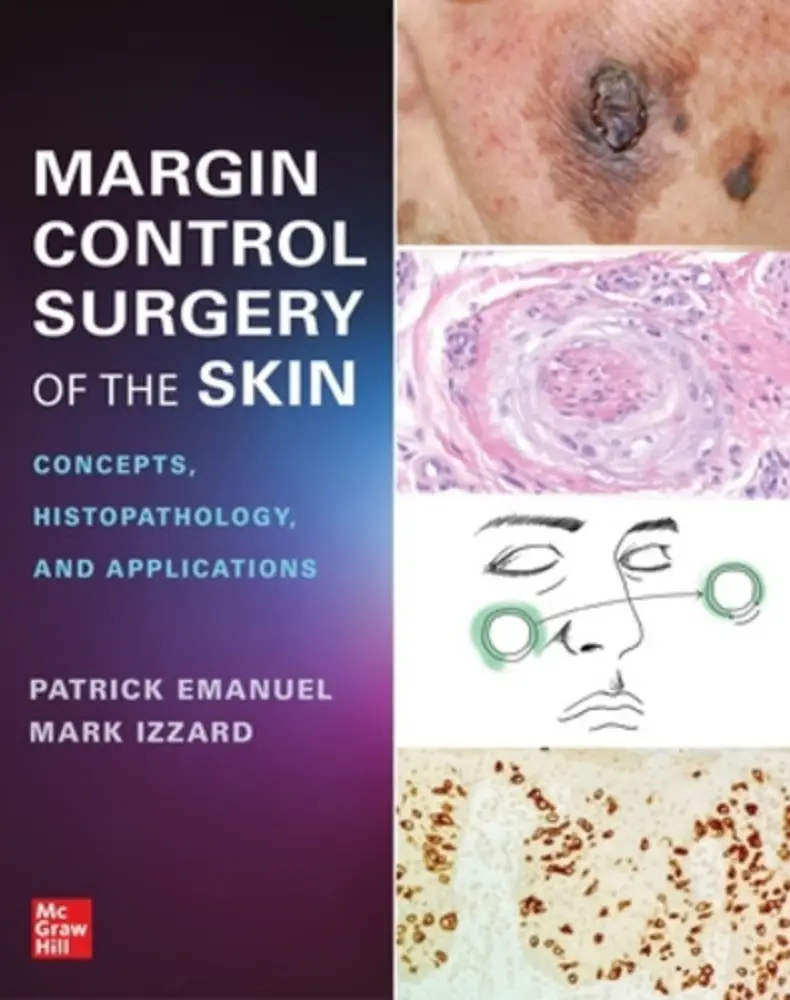


Margin Control Surgery of the Skin: Concepts, Histopathology, and Applications (PB)
Margin Control Surgery of the Skin: Concepts, Histopathology, and Applications is a specialized and clinically oriented textbook that provides a comprehensive understanding of margin-controlled surgical techniques used in the treatment of skin cancers. Designed for dermatologists, surgeons, pathologists, and trainees, the book offers a multidisciplinary perspective that integrates surgical practice with histopathological analysis, ensuring precise and effective cancer management.
The core concept of the book revolves around margin control surgery (MCS)—a technique that ensures complete removal of malignant tissue while preserving as much healthy tissue as possible. In skin cancer treatment, achieving clear surgical margins is crucial, as incomplete excision can lead to recurrence. The text explains how MCS differs from traditional excision by emphasizing microscopic examination of the entire surgical margin rather than sampling selected areas. Control Surgery of the Skin This approach significantly improves accuracy in detecting residual tumor cells and enhances patient outcomes.
The book begins by introducing the principles and rationale behind margin control surgery. It explains why conventional wide local excision may sometimes fail due to incomplete margin assessment and highlights the advantages of techniques such as complete circumferential peripheral and deep margin assessment (CCPDMA) and Mohs micrographic surgery. These methods involve stepwise removal and examination of tissue until no cancer cells remain, offering high cure rates and minimal tissue loss.
A major strength of this textbook is its integration of histopathology, the microscopic study of diseased tissue. Understanding histopathological patterns is essential for surgeons to plan appropriate excision strategies and interpret margin status accurately. The book provides detailed explanations of tissue processing, slide preparation, and microscopic interpretation, helping readers bridge the gap between surgical technique and pathological diagnosis. It emphasizes how close collaboration between surgeons and pathologists leads to better clinical decision-making and improved patient care.
The text covers a wide range of skin tumors, including common malignancies such as basal cell carcinoma and squamous cell carcinoma, as well as less common and more aggressive tumors. Each condition is discussed in terms of clinical presentation, histological features, and appropriate surgical management. The book highlights how different tumors require tailored approaches based on their growth patterns, invasiveness, and likelihood of recurrence. For example, tumors with unpredictable subclinical spread benefit significantly from margin-controlled techniques.
Another important feature of the book is its case-based approach. Clinical scenarios are presented to illustrate real-world challenges encountered during skin cancer surgery. These cases guide readers through decision-making processes, from diagnosis to treatment planning and postoperative evaluation. By combining theoretical knowledge with practical examples, the book enhances clinical reasoning and prepares practitioners for complex surgical situations.
The book also addresses technical aspects of surgery, including specimen handling, orientation, mapping, and laboratory processing. Detailed illustrations and photographs support the text, making complex procedures easier to understand. These visual aids are particularly valuable for learners who are new to margin-controlled techniques.
In addition to surgical techniques, the book emphasizes the importance of a multidisciplinary approach. Effective management of skin cancer often involves collaboration between dermatologists, plastic surgeons, oncologists, and pathologists. The text encourages teamwork and communication among healthcare professionals to achieve optimal outcomes.
The writing style is clear and concise, making the book accessible despite the complexity of the subject. It balances scientific depth with practical guidance, ensuring that readers can apply the concepts in clinical practice. The inclusion of both traditional chapters and case-based discussions enhances engagement and facilitates learning.




Reviews
There are no reviews yet